RARE EARTH MAGNETS : OPPOTUNITY & CHALLENGES

Rare earth magnets are high-performance materials essential for electric vehicles, wind turbines, electronics, and defence systems, making them critical for India’s clean energy transition and technological growth. With China dominating global processing, India’s push for domestic manufacturing, critical mineral processing, and recycling aims to reduce import dependence and build a self-reliant mine-to-magnet ecosystem to strengthen economic and strategic security.
Description

Copyright infringement not intended

Picture Courtesy: The Hindu

Context:

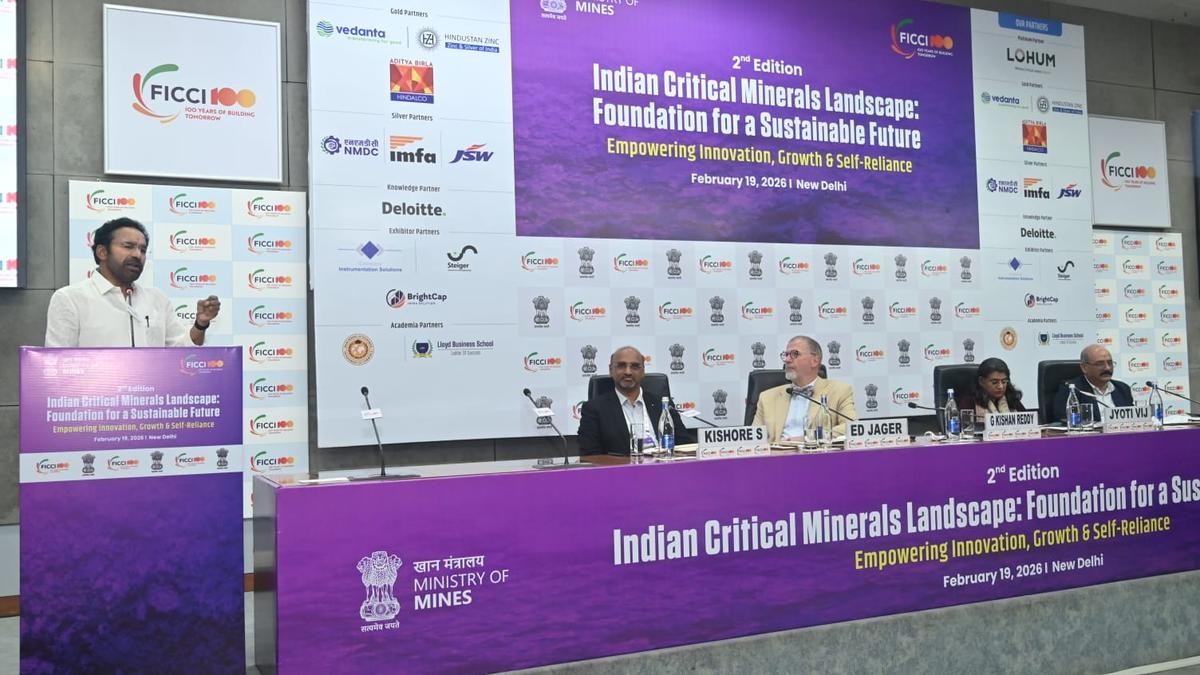
India will commence domestic production of rare-earth permanent magnets within 2026, as announced by Union Mines Minister G. Kishan Reddy.

Must Read: RARE EARTH MAGNETS | RARE EARTH PERMANENT MAGNET MANUFACTURING SCHEME | TRADE WAR & RARE EARTH MINERALS |

What are Rare Earth Magnets?

Rare earth magnets are high-performance permanent magnets produced using alloys of rare earth elements, mainly from the lanthanide group. They generate exceptionally strong magnetic fields and are significantly more powerful, often about 10 to 15 times stronger than traditional ferrite or alnico magnets. Their high strength allows modern devices and machines to become smaller, lighter, and more energy efficient. 

Major types of Rare Earth Magnets

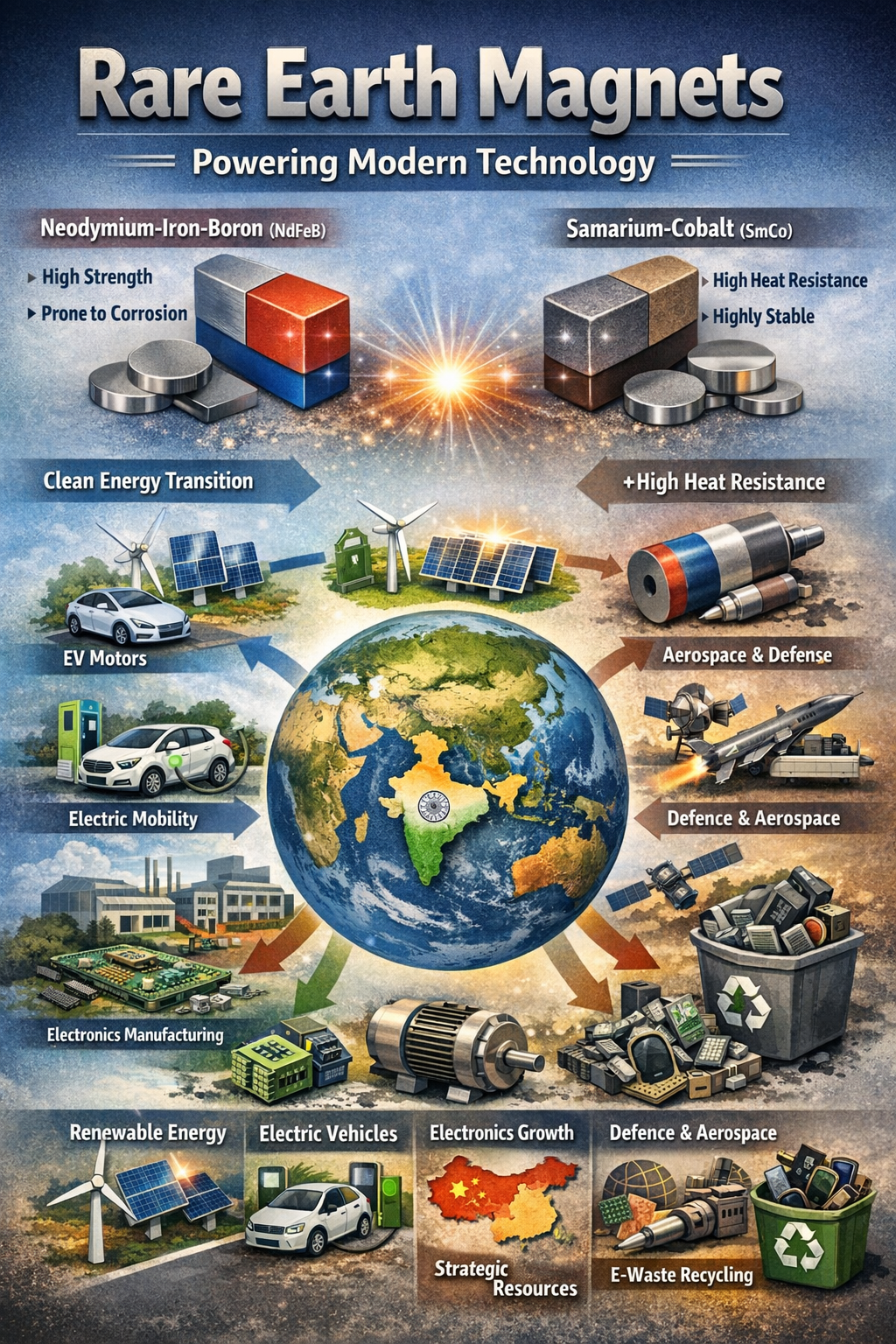
Neodymium–Iron–Boron (NdFeB) Magnets

Composition
These magnets are made from an alloy of neodymium, iron, and boron. Small quantities of elements such as dysprosium or praseodymium may be added to improve performance at elevated temperatures.

Key Features
NdFeB magnets offer the highest magnetic strength among commercially available permanent magnets. They have strong resistance to demagnetisation and allow compact, lightweight designs.

Advantages
Their high power relative to size makes them ideal for energy-efficient and miniaturised technologies. They are widely used and comparatively economical for large-scale industrial applications.

Limitations
They can lose magnetic strength at high temperatures unless enhanced with additional rare earth elements. These magnets are also susceptible to corrosion and therefore require protective coatings such as nickel or epoxy. Their production depends on critical minerals, making supply chains vulnerable.

Applications
NdFeB magnets are widely used in electric vehicle motors, wind turbine generators, smartphones, earphones, computer drives, cooling systems, robotics, industrial automation, medical imaging equipment, drones, and satellite components.
 

Samarium–Cobalt (SmCo) Magnets

Composition
SmCo magnets are produced using samarium and cobalt, sometimes with small additions of iron, copper, or zirconium to enhance performance.

Key Features
Although slightly less powerful than NdFeB magnets, they are highly stable under extreme conditions. They offer excellent resistance to corrosion and oxidation and maintain magnetic properties at very high temperatures.

Advantages
These magnets can operate efficiently at temperatures as high as 300–350°C. They perform reliably in harsh environments and are less likely to lose magnetism due to heat, radiation, or chemical exposure.

Limitations
Their production cost is higher because of cobalt supply constraints. They are also brittle and require careful handling during manufacturing and assembly.

Applications
SmCo magnets are used in aerospace and defence systems, jet engines, missile guidance systems, satellites, high-temperature sensors and actuators, oil and gas drilling equipment, specialised medical devices, and high-performance industrial motors.
Significance of Rare Earth Magnets:

  • Enabler of clean energy transition: Rare earth magnets are critical for renewable energy technologies, as permanent magnet wind turbines require about 500–700 kilograms of rare earth materials per megawatt, and India’s target of 500 gigawatts of non-fossil fuel capacity by 2030 will substantially increase their demand.
  • Backbone of electric mobility: Rare earth permanent magnets enhance motor efficiency, vehicle range, and energy performance, and since a typical electric vehicle uses around 1–2 kilograms of rare earth magnets, India’s goal of 30 percent electric vehicle penetration by 2030 makes them strategically essential.
  • Driver of electronics manufacturing growth: Rare earth magnets are widely used in smartphones, speakers, vibration motors, and data storage devices, and with India’s electronics manufacturing sector expected to reach 300 billion dollars by 2026 and more than 4 billion mobile connections, their industrial importance is rapidly expanding.
  • Strengthening defence and aerospace capabilities: Rare earth magnets are indispensable for radar systems, missile guidance, aircraft actuators, satellites, and electronic warfare equipment, as they ensure reliable performance under extreme temperature, vibration, and radiation conditions. 
  • Improving industrial energy efficiency: High-efficiency motors using rare earth magnets can reduce electricity consumption by 15–20 percent, which is significant because electric motors account for nearly 70 percent of industrial power use. 
  • Strategic importance for supply chain security: The global supply chain is highly concentrated, with China controlling nearly 85–90 percent of rare earth processing, and although India possesses about 9 million tonnes of rare earth reserves, limited domestic processing makes local manufacturing crucial for reducing import dependence. 
  • Supporting circular economy and urban mining: India generates over 6 million tonnes of electronic waste annually, and recovering rare earth elements from discarded devices promotes resource efficiency, environmental sustainability, and supply security. 

Challenges associated with Rare Earth Magnets:

  • High import dependence: India remains highly dependent on imports for rare earth magnets, while China accounts for nearly 85–90 percent of global processing capacity, creating significant supply chain vulnerabilities and geopolitical risks. 
  • Limited domestic processing and manufacturing capacity: Although India possesses about 9 million tonnes of rare earth reserves, the country has limited separation, refining, and magnet manufacturing facilities, leading to the export of raw materials and the import of high-value finished products.
  • Technological and skill gaps: Rare earth magnet production requires advanced metallurgical processes, precision engineering, and specialised manufacturing technologies, and India currently faces technology gaps and a shortage of skilled expertise in high-performance magnet fabrication. 
  • Regulatory challenges: Rare earth extraction and processing involve chemical-intensive separation processes that generate hazardous waste, raising concerns about soil and water contamination, radioactive residues, and environmental compliance, which can delay project approvals. 
  • High capital requirements: Establishing rare earth processing and magnet manufacturing facilities requires significant capital investment, long gestation periods, and uncertain market returns, which limits large-scale private sector participation.  

Government initiatives for rare earth magnets and critical minerals:

  • Scheme for Domestic Manufacturing of Rare Earth Magnets: The Union Cabinet has approved a scheme to promote domestic production of rare earth permanent magnets with a planned capacity of 6,000 metric tonnes per year and a financial outlay of ₹7,280 crore, aimed at reducing import dependence and strengthening the domestic value chain. 
  • Establishment of critical mineral processing parks: The government has announced the development of dedicated critical mineral processing parks in Odisha, Andhra Pradesh, Maharashtra, and Gujarat to promote refining, separation, and value-added manufacturing, with some states already initiating implementation. 
  • National Critical Minerals Mission: India has launched the National Critical Minerals Mission to ensure secure supply chains, promote domestic exploration and processing, encourage overseas asset acquisition, and support research, technology development, and private sector participation. 
  • Strengthening domestic mining through policy reforms: The government has amended the Mines and Minerals (Development and Regulation) Act to facilitate auction of critical mineral blocks, enhance private sector participation, and accelerate exploration and production of strategic minerals. 

Conclusion:

India’s move to begin rare-earth permanent magnet production marks a crucial shift from resource extraction to strategic manufacturing. Combined with processing parks and recycling initiatives, it can enhance technological sovereignty and support the country’s clean energy and industrial ambitions.

Source: The Hindu  

Practice Question

Q. Rare earth magnets have emerged as strategic materials for clean energy, advanced manufacturing, and national security. Discuss their significance for India. Also examine the challenges in developing a domestic rare earth magnet ecosystem and the steps taken by the government to address them. (250 words)

Frequently Asked Questions (FAQs)

Rare earth magnets are high-strength permanent magnets made from alloys of rare earth elements such as neodymium, samarium, and dysprosium, and they are 10–15 times stronger than conventional magnets.

They are essential for electric vehicles, wind turbines, consumer electronics, defence systems, and industrial automation, making them critical for the clean energy transition, digital economy, and national security.

The two major types are Neodymium–Iron–Boron (NdFeB) magnets, known for maximum strength and widespread industrial use, and Samarium–Cobalt (SmCo) magnets, valued for their high temperature stability and resistance to corrosion.


Free access to e-paper and WhatsApp updates

Let's Get In Touch!