Description
Copyright infringement not intended
Picture Courtesy: The Hindu
Context:
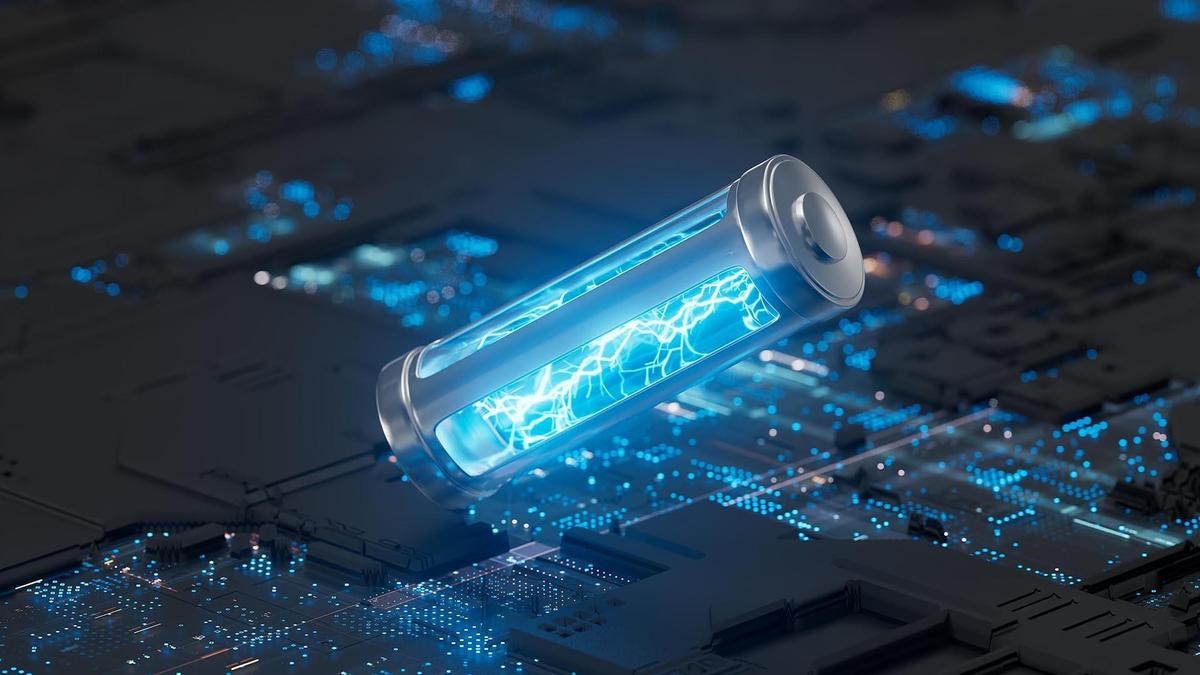
India’s reliance on lithium-ion batteries leading to import dependence and critical mineral risks. To address this issue sodium-ion batteries (SiBs) are emerging as a safer and more resilient alternative.
Sodium-Ion Batteries:
Sodium-ion batteries (SiBs) are rechargeable electrochemical energy storage systems in which sodium ions (Na⁺) shuttle between the cathode and anode during charge–discharge cycles. While their working principle is similar to lithium-ion batteries, their significance lies less in chemistry alone and more in their strategic, economic, and technological implications.
Working mechanism:
At the core, sodium-ion batteries function through reversible intercalation:
- During charging, sodium ions move from the cathode to the anode and are stored in hard carbon.
- During discharge, the ions return to the cathode, releasing electrical energy.
- Common materials:
- Cathode: Layered metal oxides, Prussian blue analogues, or polyanionic compounds
- Anode: Hard carbon
- Electrolyte: Sodium-based salt solution
Difference between sodium and Lithium-ion batteries:
|
Basis
|
Lithium-ion Batteries
|
Sodium-ion Batteries
|
|
Energy density
|
Lithium-ion batteries provide higher energy density, making them suitable for applications that require lightweight and compact energy storage.
|
Sodium-ion batteries offer lower energy density, making them relatively heavier and more suitable for applications where space and weight are less critical.
|
|
Raw material availability
|
Lithium-ion batteries depend on critical minerals such as lithium, cobalt, and nickel, which are limited and geographically concentrated.
|
Sodium-ion batteries use sodium and other widely available materials, reducing dependence on scarce and geopolitically sensitive resources.
|
|
Cost structure
|
Lithium-ion battery costs have declined due to large-scale production, but they remain vulnerable to fluctuations in critical mineral prices.
|
Sodium-ion batteries have the potential for lower and more stable costs because they rely on abundant and low-cost raw materials.
|
|
Supply chain risk
|
The lithium-ion supply chain is exposed to geopolitical risks and import dependence due to concentrated mining and refining capacities.
|
Sodium-ion technology offers greater supply security as sodium resources are widely distributed across the world.
|
|
Safety
|
Lithium-ion batteries carry a higher risk of thermal runaway and require strict safety measures during storage, transport, and operation.
|
Sodium-ion batteries demonstrate better thermal stability and can be handled, stored, and transported with comparatively lower safety risks.
|
|
Transportation and storage
|
Lithium-ion batteries are classified as hazardous goods and must be transported under regulated conditions with limited state of charge.
|
Sodium-ion batteries can be safely transported and stored even at zero state of charge, reducing logistical complexity and cost.
|
|
Manufacturing ecosystem
|
Lithium-ion batteries have a mature global manufacturing ecosystem with established technology and large-scale production capacity.
|
Sodium-ion batteries are an emerging technology but can be produced using existing lithium-ion manufacturing lines with minor modifications.
|
|
Resource intensity
|
Lithium-ion batteries are resource-intensive and rely on metals that involve environmentally and socially challenging mining processes.
|
Sodium-ion batteries reduce environmental and ethical concerns by minimizing the use of critical and high-impact metals.
|
|
Application suitability
|
Lithium-ion batteries are preferred for high-performance applications such as long-range electric vehicles, consumer electronics, and aerospace systems.
|
Sodium-ion batteries are better suited for grid storage, short-range mobility, backup power, and other cost-sensitive large-scale applications.
|
|
Strategic importance
|
Lithium-ion technology is essential for high-energy applications but increases long-term dependence on global mineral supply chains.
|
Sodium-ion technology supports energy security, domestic manufacturing potential, and long-term sustainability for countries like India.
|
Significance of Sodium-Ion Batteries (SiBs):
- Strengthening energy security and reducing import dependence: India’s battery sector relies heavily on imported lithium, cobalt, and nickel, creating exposure to supply disruptions and price volatility. Sodium-ion batteries use abundantly available resources such as salt and soda ash, thereby reducing dependence on critical mineral imports and enhancing long-term energy security.
- Enabling affordable energy storage: Sodium-ion batteries are based on low-cost and widely available materials and use aluminium instead of copper, offering the potential for lower and more stable costs. This makes them suitable for India’s price-sensitive segments such as electric two- and three-wheelers, rural electrification, and backup power systems.
- Supporting renewable energy expansion: With the rapid growth of solar and wind power, India requires large-scale storage to manage intermittency and ensure grid stability. Since stationary applications prioritize cost, safety, and durability over high energy density, sodium-ion batteries are well suited for grid-scale and distributed energy storage.
- Promoting domestic manufacturing and self-reliance: These batteries can be produced using existing lithium-ion manufacturing lines with minor modifications, enabling technology diversification without significant additional investment and supporting the development of a domestic battery ecosystem.
- Improving safety and deployment flexibility: Sodium-ion batteries offer better thermal stability and can be stored and transported at zero state of charge, reducing handling risks and logistical complexity for large-scale deployment across diverse conditions.
Constraints in expanding sodium-ion battery deployment in India:
- Lower energy density and performance limitations: Sodium-ion batteries currently have lower energy density compared to lithium-ion batteries, making them heavier and bulkier for the same energy output. This limits their suitability for high-performance applications such as long-range electric vehicles and premium mobility segments.
- Early stage of commercialisation: Unlike lithium-ion technology, which has a mature global ecosystem, sodium-ion batteries are still at a relatively early stage of commercial deployment. Limited large-scale production experience creates uncertainty regarding long-term performance, reliability, and bankability.
- Underdeveloped manufacturing ecosystem: India’s battery manufacturing ecosystem is still evolving and largely oriented toward lithium-ion technology. Dedicated supply chains for sodium-ion components such as cathode materials, hard carbon anodes, electrolytes, and separators are not yet fully developed.
- Limited private investment and market confidence: Since sodium-ion technology is still emerging, private investors and manufacturers remain cautious due to uncertain demand, evolving standards, and the absence of proven large-scale commercial success in India.
- Lack of standards and certification frameworks: Safety standards, testing protocols, and certification pathways specific to sodium-ion batteries are still evolving. The absence of clear regulatory frameworks can delay product approval and commercial adoption.
- Technology and R&D constraints: Further research is needed to improve energy density, cycle life, fast-charging capability, and performance under Indian climatic conditions. Domestic R&D capacity in advanced battery materials and cell chemistry remains limited.
Key Government efforts to boost battery production in India:
- Production Linked Incentive (PLI) Scheme for Advanced Chemistry Cells (ACC): The Government launched the PLI scheme for ACC batteries (2021) to create 50 GWh of domestic manufacturing capacity with additional provisions for expansion. The scheme provides performance-linked financial incentives to promote large-scale manufacturing of advanced batteries, reduce import dependence, and attract global and domestic investment.
- National Programme on Advanced Chemistry Cell (ACC) battery storage: This programme aims to establish a complete domestic battery ecosystem, covering cell manufacturing, pack assembly, and integration. It focuses on promoting next-generation battery technologies, including lithium-ion and emerging chemistries such as sodium-ion.
- FAME India scheme (Faster Adoption and Manufacturing of Electric Vehicles): Through demand incentives for electric vehicles, the FAME scheme creates a stable domestic market for batteries, encouraging local manufacturing and economies of scale in cell and pack production.
- National Mission on transformative mobility and battery storage: This mission promotes localisation across the battery value chain, including cell manufacturing, battery management systems, and recycling. It also supports the creation of battery giga-factories and encourages technology development within India.
Key interventions needed to promote sodium-ion technology in India:
- Build a domestic raw material ecosystem: India should develop indigenous sources for key battery materials such as hard carbon and battery-grade sodium chemicals using locally available resources like agricultural residues and industrial soda ash. This will reduce import dependence, lower costs, and strengthen supply-chain security.
- Develop location-specific manufacturing clusters: Sodium-ion manufacturing units should be established in climate- and resource-advantaged regions to improve efficiency and reduce production costs. Integrating these facilities with existing chemical and materials hubs can help create strong industrial clusters.
- Prioritise high-impact early markets: Deployment should initially focus on grid storage, public transport, commercial fleets, telecom backup, and renewable energy parks, where cost, safety, and durability matter more than high energy density. Early scaling in these sectors will improve commercial viability and investor confidence.
- Promote standardisation and interoperability: Developing standard battery formats for segments such as three-wheelers, buses, and fleet vehicles can reduce manufacturing complexity, enable battery swapping, and achieve economies of scale.
- Encourage flexible and hybrid technology adoption: Industry should adopt application-based battery selection and develop hybrid energy storage systems, where sodium-ion handles routine energy needs and lithium-ion supports peak performance. This approach can optimise cost without compromising efficiency.
- Support R&D for Indian conditions: Focused research is needed to improve energy density, cycle life, fast charging, and performance under high temperature and humidity, ensuring the technology is adapted to Indian operating conditions.
Conclusion:
Sodium-ion batteries are not merely an experimental alternative but a strategic opportunity for India. With abundant raw materials, strong safety characteristics, compatibility with existing infrastructure, and growing global momentum, sodium-ion technology can enhance India’s energy security and industrial competitiveness. A balanced, technology-neutral policy approach today can position India for a resilient and future-ready energy storage ecosystem.
Source: The Hindu
|
Practice Question
Q. Discuss the strategic importance of sodium-ion battery technology for India’s energy security. (250 words)
|
Frequently Asked Questions (FAQs)
Because sodium is abundant domestically and reduces dependence on imported critical minerals.
Grid storage, electric two- and three-wheelers, backup power systems, and rural energy applications.
They are not universally superior but offer advantages in cost, safety, and material availability, especially for stationary storage and low-cost mobility.