C. Rajagopalachari (Rajaji) was a prominent freedom fighter, close associate of Gandhi, and the only Indian to serve as the Governor-General of India. A lawyer-turned-nationalist, he played key roles in major movements, led the Vedaranyam Salt March, and proposed the Rajaji Formula to break the Congress–Muslim League deadlock. After independence, he served as West Bengal’s Governor, Union Home Minister, and Chief Minister of Madras. Disillusioned with socialism, he founded the Swatantra Party, advocating economic freedom and limited state control. A respected writer and thinker, Rajaji left a legacy of moral leadership, political pragmatism, and intellectual clarity.
Copyright infringement not intended
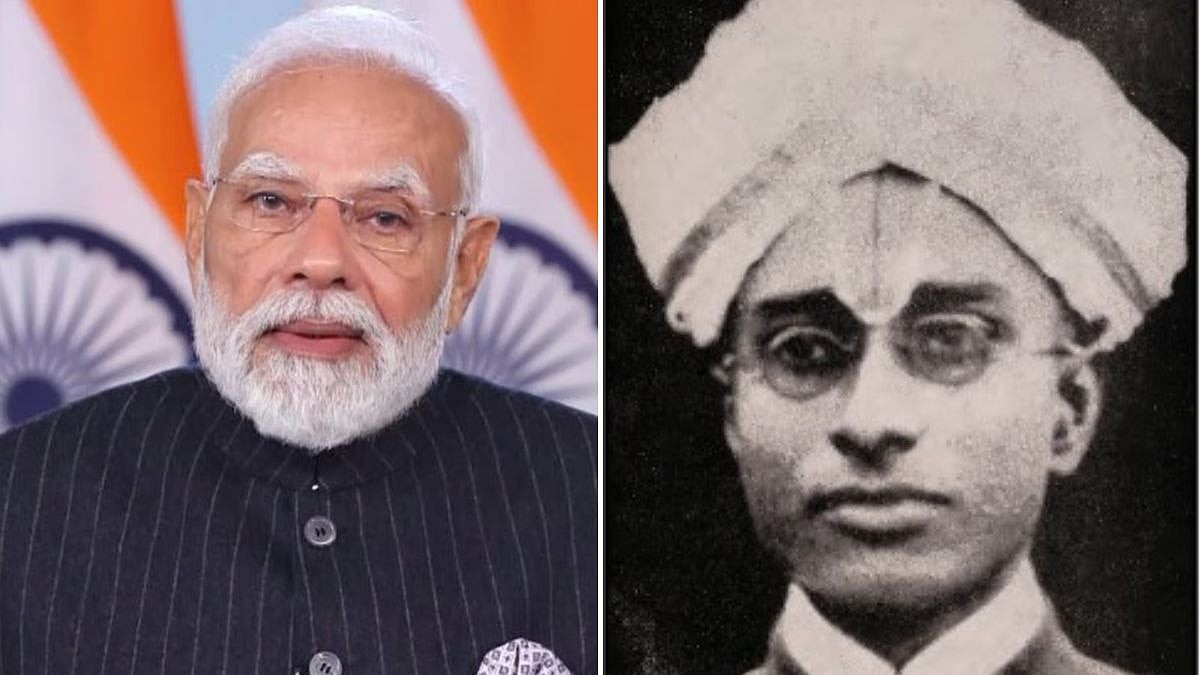
Picture Courtesy: The Free Press Journal
Context:
Prime Minister Narendra Modi honoured the memory of C. Rajagopalachari (Rajaji) on his 147th birth anniversary, describing him as one of the finest minds of the 20th century and a steadfast champion of human dignity.
|
Must Read: RAJAGOPALACHARI | C. RAJAGOPALACHARI | |
Early Life and Education:
Role in the Indian Freedom Movement:
Early Association with Congress and Gandhi
Participation in Mass Movements
Vedaranyam Salt March (1930)
Political Leadership:
Congress President (1939)
Opposition to Quit India (1942)
Role in Partition and the Rajaji Formula (1944):
By the 1940s, negotiations between the Congress and the Muslim League were deadlocked over the demand for Pakistan. Rajaji, known for his realism and political pragmatism, attempted to break this stalemate.
Core Features of the Rajaji Formula
Reactions
Post-Independence Journey:
Governor of West Bengal (1947–48): Rajaji managed the sensitive administrative transition in West Bengal after Partition, working to stabilise a region dealing with communal upheaval.
Last Governor-General of India (1948–1950): He succeeded Lord Mountbatten and presided over the final phase before India became a republic, ensuring continuity in constitutional operations.
Union Home Minister (1950–52): After Sardar Patel’s death, Rajaji became Home Affairs Minister, handling key internal security and administrative responsibilities in the early Nehru government.
Chief Minister of Madras (1952–54)
Founder of the Swatantra Party (1959)
Later Years
Literary Contributions:
Legacy
Conclusion:
Source: The Free Press Journal
|
Practice Question With reference to C. Rajagopalachari, consider the following statements: 1. He was the only Indian to serve as the Governor-General of India. 2. He led the Salt Satyagraha march at Vedaranyam in Tamil Nadu. 3. He founded the Swatantra Party in opposition to the socialist economic policies of the Congress. 4. He fully supported the Quit India Movement in 1942. Which of the statements given above are correct? (a) 1 and 2 only Answer: (b) Explanation: Statement 1 Correct: He was the only Indian to serve as the Governor-General of India. · After Lord Mountbatten stepped down in 1948, C. Rajagopalachari became the Governor-General of India, serving from 1948 to 1950. · He was the first and only Indian to hold this post. · The office itself was abolished after India became a republic in 1950. Statement 2 Correct: He led the Salt Satyagraha march at Vedaranyam in Tamil Nadu. · In 1930, as part of the Civil Disobedience Movement, Rajaji led a regional Salt March starting from Tiruchirapalli to Vedaranyam on the Tamil coast. · It became a major symbol of southern India’s participation in the national struggle and paralleled Gandhi’s Dandi March. Statement 3 Correct: He founded the Swatantra Party in opposition to the socialist economic policies of the Congress. · In 1959, disillusioned with the Congress Party's growing tilt toward state-led economic planning and socialism, Rajaji established the Swatantra Party. · The party advocated for: o Free markets o Limited government o Protection of individual liberties · It became one of the strongest national-level opposition parties in the 1960s. Statement 4 Incorrect: He fully supported the Quit India Movement in 1942. · Rajaji opposed the Quit India Movement, arguing that a mass revolt during World War II would worsen the political deadlock and delay constitutional negotiations. · He believed a more negotiated approach with the British and the Muslim League would secure independence faster. · His stand led to strong criticism within Congress and caused temporary political isolation. |
C. Rajagopalachari, or Rajaji, was a freedom fighter, statesman, administrator, writer, and social reformer who played a major role in both the national movement and post-independence governance
He was the last Governor-General of India and the only Indian to hold the post. He also shaped India’s political thought through his administrative roles, reform initiatives, and writings.
He joined the Congress early, worked closely with Gandhi, participated in major movements like the Non-Cooperation and Civil Disobedience movements, led the Vedaranyam Salt March, and was jailed multiple times.

© 2026 iasgyan. All right reserved