MGNREGA, renamed Pujya Bapu Gramin Rozgar Yojana, expands workdays to 125 and raises wages to boost rural livelihoods. While reforms promise stronger asset creation and women’s empowerment, delays in payments, employment gaps and administrative inefficiencies persist. Effective planning, transparency and accountability remain crucial for impact.
Copyright infringement not intended
Picture Courtesy: BUSINESSTODAY
Context
The Union Government has approved a proposal to rename the Mahatma Gandhi National Rural Employment Guarantee Act (MGNREGA) as the Pujya Bapu Gramin Rozgar Yojana (PBGRY).
|
Read all about: MGNREGS | NATIONAL INITIATIVE ON WATER SECURITY UNDER MGNREGA l CENTRE'S SPENDING CAP ON MGNREGS |
The scheme, based on the "right to work," guarantees wage employment for rural adults doing unskilled manual labor to boost their livelihood security.
It is implemented by the Ministry of Rural Development.
Evolution
2005: Launched as the National Rural Employment Guarantee Act (NREGA) to provide a legal guarantee for wage employment.
2009: Renamed the Mahatma Gandhi National Rural Employment Guarantee Act (MGNREGA) to honor Mahatma Gandhi.
2025: To be renamed Pujya Bapu Gramin Rozgar Yojana (PBGRY).
Key Features
Demand-Driven Scheme: It is a legal entitlement where work must be provided to anyone who demands it. If work is not provided within 15 days of application, the applicant is entitled to an unemployment allowance.
Eligibility: Adult members (18+) of rural households are eligible. A Job Card, received within 15 days of registration, serves as the legal right to demand work.
Wage Rate: Set by the Central Government (minimum Rs 240) and varies from state to state, linked to the Consumer Price Index for Agricultural Labourers (CPI-AL).
Decentralized Planning: The Gram Sabha recommends the works to be taken up, and at least 50% of the works must be executed by them. This strengthens Panchayati Raj Institutions (PRIs).
Focus on Women: The act mandates that at least one-third of the beneficiaries must be women. In FY 2024-25, women's participation was over 58%. (Source: PIB)
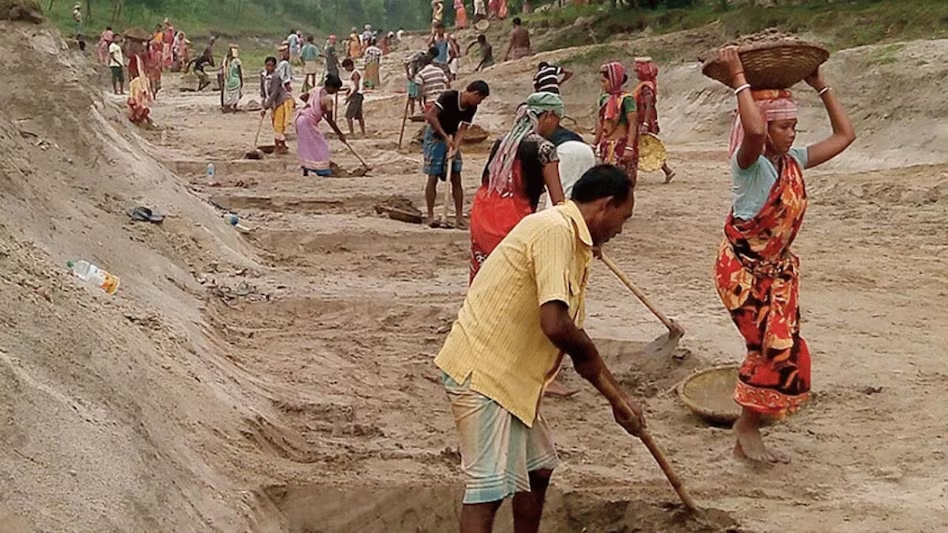
Nature of Work: Projects focus on creating durable community assets like water conservation, rural roads, irrigation, and afforestation. Contractor and machinery use is banned to maintain labour intensity.
Transparency: Payments are made directly to beneficiary accounts through the Aadhaar-Based Payment System (ABPS) to curb leakages.
Accountability: Provisions like Social Audits by the Gram Sabha are mandatory to ensure public accountability.
Budget Allocation: Rs 86,000 crore was allocated for FY 2025-26.
|
Recent Amendments (December 2025): Guaranteed employment days for every rural household has been increased from 100 to 125 days per financial year, to provide more stable income support, especially during lean agricultural seasons. |
The government is planning to implement Amarjeet Sinha Committee recommendations to address inter-state variations in scheme performance, which may include:
The transition from MGNREGA to Pujya Bapu Gramin Rozgar Yojana retains the 'right to work' while strengthening the social security measure through expanded workdays and standardized wages, focusing on rural empowerment and poverty reduction.
Source: BUSINESS TODAY
|
PRACTICE QUESTION Q. Analyze the reforms in the new Pujya Bapu Gramin Rozgar Yojana. Are these changes enough to fix its persistent implementation issues? Justify your answer. 250 words |
The Pujya Bapu Gramin Rozgar Yojana is the new name for the Mahatma Gandhi National Rural Employment Guarantee Scheme (MGNREGA). It is India's flagship rural employment programme that legally guarantees a certain number of workdays to every rural household whose adult members volunteer to do unskilled manual work.
The primary changes include an increase in the guaranteed workdays from 100 to 125 days per household per year, a revised higher minimum wage (reportedly ₹240 per day), and a strong emphasis on creating assets related to water conservation, especially in groundwater-stressed areas.
The renaming is part of a broader government effort to recalibrate the scheme's focus and renew its commitment to Gandhian ideals of self-reliant rural livelihoods. The core objectives of enhancing livelihood security and creating durable community assets remain the same.





© 2026 iasgyan. All right reserved