The TRAI report shows Indian telecom base crossing 1.3 billion phone and 1 billion internet users, yet the rural-urban digital divide persists. Despite improved AGR and ARPU, challenges remain in rural connectivity, 5G rollout, and digital literacy. BharatNet and GatiShakti Sanchar aim to enable meaningful connectivity.
Copyright infringement not intended
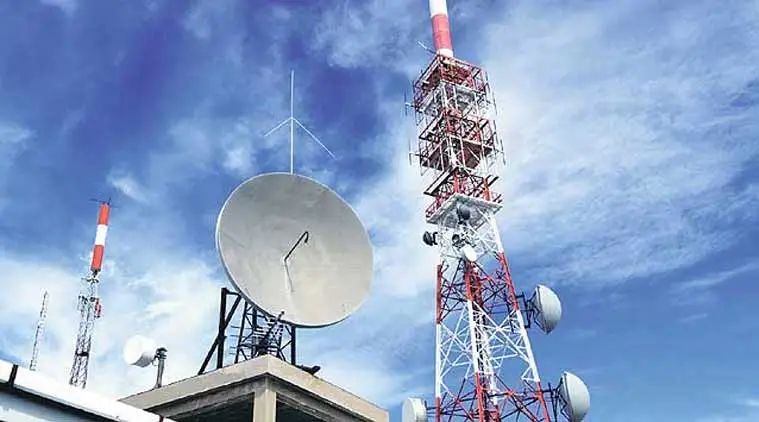
Picture Courtesy: indianexpress
Context
The Telecom Regulatory Authority of India (TRAI) released the “Indian Telecom Services Performance Indicator Report” for the quarter ending 31st December 2025 on 3rd March 2026.
Subscriber Base & Teledensity
Total Telephone Subscribers: Increased to 1,306.14 million, marking a quarterly growth rate of 6.28%.
Overall Teledensity: Reached 91.74%, up from 86.65% in the previous quarter.
Urban vs Rural Divide:
Market Share: Private sector operators dominate the market with a 92.17% share, while Public Sector Undertakings (PSUs) hold the remaining 7.83%.
Internet & Broadband Penetration
Broadcasting & Cable Services
The broadcasting sector includes a mix of satellite TV channels, DTH services, and radio channels, with a large number of Free-to-Air (FTA) options available to consumers.
Financial Stress and High Debt: Operators struggle with substantial debt and low Average Revenue Per User (ARPU) due to intense competition and price wars.
AGR Dues and Spectrum Costs: High spectrum fees and a long-standing, contentious definition of Adjusted Gross Revenue (AGR) have burdened companies with massive financial liability.
Rural-Urban Digital Divide: Rural teledensity severely lags urban, hindering comprehensive digital access.
Infrastructure and Quality of Service: Issues include poor infrastructure in rural areas, inadequate fiberization, and challenges with service quality, such as high call drop rates.
Regulatory and Policy Challenges: The sector navigates complex regulations on data privacy, security, and rapid technological shifts, now addressed by the new Telecommunication Act, 2023.
Emerging Technology Demands: The high cost of 5G rollout and the need for AI-driven infrastructure upgrades place further strain on finances.
OTT Competition: Over-the-Top (OTT) applications, which provide voice and messaging services without paying licensing fees, further disrupt traditional telecom revenues.
Despite these challenges, the sector is investing in AI, 6G research, and expanding 5G networks, with government support to improve ease of doing business.
Financial and Regulatory Reforms
Rationalizing Spectrum Pricing: Moving away from high upfront costs to a revenue-sharing model and offering longer payment periods (e.g., 20 years) to ease financial pressure on operators.
Restructuring AGR Dues: Implementing long-term, sustainable plans for AGR dues to alleviate the debt burden on Telecom Service Providers (TSPs).
Streamlining Licenses and Approvals: Using digital platforms like the Saral Sanchar Portal for faster, automated licensing, reducing regulatory hurdles, and promoting the Ease of Doing Business.
Infrastructure and Technology Upgradation
Accelerating 5G and Rural Connectivity: Expanding fiber-optic networks, deploying satellite-based internet, and strengthening rural tower infrastructure to close the digital divide.
Encouraging Infrastructure Sharing: Incentivizing active and passive infrastructure sharing among telcos to reduce capital expenditure.
Indigenous Manufacturing (Atmanirbhar Bharat): Boosting local production of 5G equipment, semiconductors, and IoT devices to reduce dependency on foreign vendors.
Policy and Security Enhancements
Regulating OTT Services: Ensuring a fair revenue-sharing mechanism between Telecom Service Providers and Over-the-Top (OTT) platforms (e.g., Netflix).
Cybersecurity and Data Protection: Implementing robust frameworks, such as Zero Trust Architecture and AI-driven threat detection, to protect critical digital infrastructure.
Focus on Meaningful Connectivity
Shift from merely providing connections to ensuring quality, affordability, and utility. This involves scaling up digital literacy programs like the Pradhan Mantri Gramin Digital Saksharta Abhiyan (PMGDISHA).
Strengthen Public-Private Partnerships (PPPs)
Utilize the BharatNet infrastructure to incentivize private telecom operators and internet service providers to deliver last-mile connectivity in rural and remote areas.
Ensure a Stable Policy Environment
A predictable regulatory framework for spectrum allocation, pricing, and usage rights is crucial to attract long-term investments required for next-generation technologies like 6G.
Boost Domestic Manufacturing
Continue the momentum of the PLI scheme to build supply chain resilience, enhance national security, and position India as a global manufacturing hub for telecom equipment.
Source: PIB
|
PRACTICE QUESTION Q. Discuss the key challenges impeding the growth of the Indian telecom sector. 150 words |
The report shows strong growth in telephone (1.3B) and internet (1B) subscribers, improved financial health of the sector (higher AGR and ARPU), but also a widening rural-urban digital divide and a consumer shift from DTH to OTT platforms.
The digital divide refers to the significant gap in digital access and usage between different groups. The report highlights a stark contrast between urban teledensity (148.92%) and rural teledensity (59.63%), with the share of rural subscribers declining, indicating that rural India is lagging in digital inclusion.
BharatNet is a flagship government project aiming to connect all 2.5 lakh Gram Panchayats in India with a high-speed optical fibre network. It serves as the digital backbone to provide affordable broadband connectivity in rural areas.





© 2026 iasgyan. All right reserved