Parliamentary privileges under Articles 105 and 194 protect legislators’ independence. However, their uncodified nature creates ambiguity and potential conflict with fundamental rights. The Supreme Court, overruling the P.V. Narasimha Rao case, held privileges subject to judicial review, stressing the need for codification to ensure accountability.
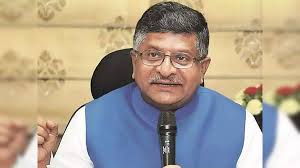
Copyright infringement not intended
Picture Courtesy: INDIAN EXPRESS
The Lok Sabha Speaker nominated 15 members to the Committee of Privileges to examine cases of breach of privilege of the House and its members.
Parliamentary Privileges are a set of special rights, immunities, and exemptions enjoyed by the Houses of Parliament, their Committees, and their members.
The primary purpose of these privileges is not to elevate lawmakers above citizens, but to secure their independence and effectiveness.
This allows them to perform their constitutional duties of debate, deliberation, and holding the government accountable without fear or external interference.
Constitutional and Legal Framework
Article 105: Grants privileges to the Parliament, its members, and committees. It explicitly guarantees freedom of speech within Parliament and immunity from court proceedings for anything said or any vote given in the House.
Article 194: Provides the same privileges to State Legislative Assemblies, their members, and committees.
Uncodified Nature: For all other privileges not explicitly mentioned, the Constitution states they shall be the same as those of the British House of Commons as of 1950. To date, Parliament has not enacted a law to codify them.
 Breach of Privilege and Redressal Mechanism
What Constitutes a Breach?
A breach of privilege is any act or omission that obstructs the Parliament or its members from performing their duties. Key examples include:
Role of the Committee of Privileges
When a breach is suspected, a member can initiate a privilege motion. The process is handled by a dedicated committee with semi-judicial powers.
|
House |
Committee Composition |
|
Lok Sabha |
Consists of 15 members nominated by the Speaker. |
|
Rajya Sabha |
Consists of 10 members nominated by the Chairman. |
Judicial Intervention
M.S.M. Sharma vs Sri Krishna Sinha (Searchlight Case), 1959
The Court initially held that the legislature's privilege to prohibit the publication of its proceedings could override the press's freedom of speech (Article 19(1)(a)). This stance has been modified in later judgments.
Expulsion of Indira Gandhi, 1978
A political event where the 6th Lok Sabha expelled former PM Indira Gandhi based on the Privileges Committee's findings of obstructing government officials, demonstrating the House's power to take punitive action.
Raja Ram Pal vs Hon’ble Speaker (Cash for Query Case), 2007
The Supreme Court affirmed that while courts cannot interfere with procedural irregularities in Parliament (Article 122), they can review parliamentary proceedings on grounds of unconstitutionality or illegality. It upheld Parliament's power to expel its members.
Sita Soren vs Union of India, 2024
Overturning its 1998 verdict (P.V. Narasimha Rao case), the Court ruled that legislators cannot claim immunity from bribery charges under parliamentary privileges. This reinforces that privileges are not a shield against criminal law.
Conflict with Fundamental Rights: The uncodified nature of privileges creates a potential conflict with citizens' rights, especially the freedom of speech and expression.
Lack of Codification: The failure to define privileges by law leads to ambiguity and uncertainty. The National Commission to Review the Working of the Constitution (NCRWC) recommended codification for clarity and transparency.
Potential for Misuse: Critics argue that privileges are sometimes used as a political tool to silence journalists and dissenters, creating a chilling effect on public scrutiny.
Codify Privileges: Acting on the recommendation of the NCRWC to create a comprehensive law that clearly defines the rights, immunities, and penalties.
Judicious Application: Privileges should be invoked only in cases of genuine obstruction of parliamentary functions, not to suppress criticism.
Strengthen Ethics Committees: Promote self-regulation by strengthening internal ethics committees to enforce a code of conduct for members.
Uphold Constitutional Supremacy: Reinforce the principle established by the Supreme Court that parliamentary privileges are subject to the fundamental rights and overall framework of the Constitution.
Learn from Global Practices
|
Country |
Approach to Privileges |
Key Takeaway for India |
|
United Kingdom |
Largely uncodified and based on strong conventions. The Parliament uses its penal powers with great restraint. |
Emphasizes the importance of self-regulation and judicious application. |
|
Australia |
Privileges are codified under the Parliamentary Privileges Act of 1987, providing clear definitions and procedures. |
Serves as a successful model that codification is feasible and brings legal certainty. |
Parliamentary privileges are essential for democracy but must be clearly defined, applied with restraint, and align with constitutional rights to remain legitimate in the 21st century.
Source: INDIAN EXPRESS
|
PRACTICE QUESTION Q. With reference to the Committee of Privileges in the Indian Parliament, consider the following statements: 1. It is an ad hoc committee constituted only when a breach of privilege motion is admitted by the Presiding Officer. 2. The Committee of Privileges in the Lok Sabha consists of 15 members nominated by the Speaker. 3. The Committee of Privileges in the Rajya Sabha consists of 10 members and is chaired by the Deputy Chairman of the Rajya Sabha. Which of the statements given above is/are correct? A) 1 and 2 only B) 2 and 3 only C) 3 only D) 1, 2 and 3 Answer: B Explanation: Statement 1 is incorrect: The Committee of Privileges is a Standing Committee, not an ad hoc committee. It is constituted from time to time (usually annually) to inquire into questions of privilege, rather than being created only when a specific motion is admitted. Statement 2 is correct: In the Lok Sabha, the Committee of Privileges consists of 15 members who are nominated by the Speaker of the Lok Sabha. Statement 3 is correct: In the Rajya Sabha, the Committee of Privileges consists of 10 members and is usually headed by the Deputy Chairman of the Rajya Sabha. |
Parliamentary privileges are a set of special rights, immunities, and exemptions enjoyed by the Houses of Parliament, their committees, and their members, as defined under Article 105 (for Parliament) and Article 194 (for State Legislatures) of the Constitution. Their primary purpose is to enable legislators to perform their duties without fear or interference.
Despite constitutional provisions for it, privileges have not been codified primarily due to a political consensus that codification might subject these privileges to judicial scrutiny and potentially curtail the legislature's powers. Lawmakers often argue that the uncodified nature provides the flexibility needed to deal with unforeseen situations.
Article 122 of the Constitution bars courts from inquiring into parliamentary proceedings on grounds of "procedural irregularity." However, the Supreme Court in the Raja Ram Pal case (2007) held that proceedings can be subject to judicial review on grounds of illegality, unconstitutionality, or gross procedural impropriety.



© 2026 iasgyan. All right reserved