Geopolitical tensions in the Strait of Hormuz expose India’s reliance on imported fertilizers like Urea, DAP, and MOP, risking higher freight costs, subsidy pressure, and inflation. India is responding through Aatmanirbhar initiatives, alternative fertilizers, Nano Urea/DAP, and expanded domestic production.
Copyright infringement not intended
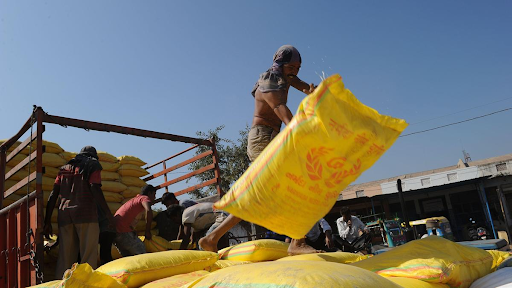
Picture Courtesy: THEHINDUBUSINESSLINE
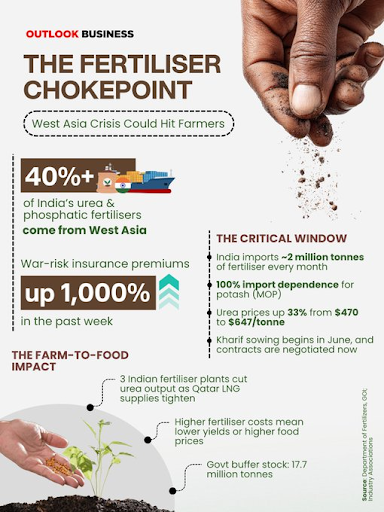
India's heavy dependence on West Asian fertilizer imports, transported via the Strait of Hormuz, makes its food security and economy vulnerable to regional geopolitical turmoil.
|
Read all about: Fertilizer Sector in India: Explained l Fertiliser Sector Crisis & Reforms |
While India is approaching Urea self-sufficiency, its extreme dependence on imports for phosphatic and potassic nutrients remains a structural vulnerability.
|
Fertilizer Type |
Level of Import Dependency |
Key Suppliers & Geopolitical Risks |
|
Nitrogenous (Urea) |
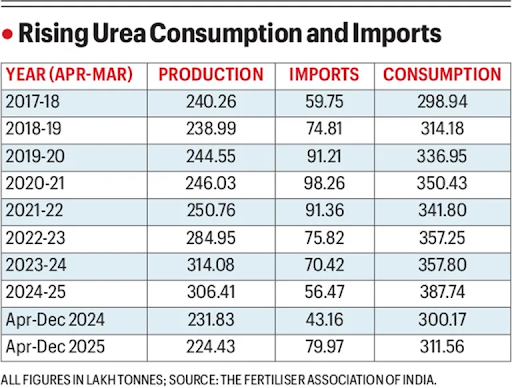
20-25% of demand is met through imports. India is the world's largest consumer. |
Oman (supplying 46% of imports), Qatar, Saudi Arabia. All shipments pass through the Strait of Hormuz. |
|
Phosphatic (DAP) |
50-60% of demand is met through imports. This is the most acute vulnerability. |
Saudi Arabia, Morocco. Supplies are affected by conflicts in the Red Sea and the Gulf region. |
|
Potassic (MOP) |
Near-total dependency at 95-100%. |
Saudi Arabia, Russia, Canada. Supplier concentration in sensitive regions is a major risk. |
|
Raw Materials & Feedstock |
Imports include 95% of Phosphate Rock and a significant volume of Liquefied Natural Gas (LNG). |
LNG, the primary feedstock for domestic urea production, is largely sourced from Qatar in the Gulf region. |
Surging Logistics Costs
Geopolitical risks drive up freight costs and war-risk insurance premiums. Red Sea issues recently tripled shipping costs on some routes, and similar disruptions in the Hormuz region are projected to raise India's fertilizer import costs by 25-30%.
Increased Subsidy Burden
The government shields farmers from price shocks via a massive subsidy program (₹1.64 lakh crore allocated in Budget 2024-25).
Impact on Domestic Production
Disruption in LNG supplies from the Gulf directly threatens India's domestic urea manufacturing.
Cost-Push Inflation
Higher input costs for agriculture can lead to increased food prices, creating broader cost-push inflation that affects the entire economy.
Promoting Alternative Fertilizers: PM-PRANAM
The PM Programme for Restoration, Awareness, Nourishment and Amelioration of Mother Earth (PM-PRANAM) scheme, launched in 2023, aims to reduce the consumption of chemical fertilizers.
Technological Interventions: Nano Fertilizers
Focusing on efficient nutrient delivery, Indian Farmers Fertiliser Cooperative Limited (IFFCO) has launched Nano Urea and Nano DAP.
Boosting Domestic Production
Under the 'Aatmanirbhar Bharat' initiative, the government is focused on reviving closed fertilizer units and establishing new plants to increase domestic production capacity and cut down on the higher subsidy paid for imported fertilizers.
Diversify Import Sources
Reduce over-reliance on the Gulf region by strengthening long-term contracts with stable suppliers like Russia, Canada, and exploring partnerships in Africa and South America.
Invest in Overseas Assets
Acquire stakes in overseas fertilizer plants and mines to create a captive supply source. The Oman India Fertiliser Company (OMIFCO) is a successful model to replicate. A recent MoU with Russia to establish a urea plant is a positive step.
Enhance Domestic Innovation
Investing in modernizing plants and scaling up the production and adoption of next-generation fertilizers like Nano Urea, Nano DAP, and Sulphur-Coated Urea.
Build Strategic Reserves
Develop a policy for maintaining strategic reserves of critical fertilizers like DAP and MOP, similar to the strategic petroleum reserves, to cushion against sudden supply shocks.
Promote Sustainable Agriculture
Strengthen schemes like the Soil Health Card to encourage balanced nutrition, promote organic manure and bio-fertilizers, and support the cultivation of nitrogen-fixing crops like pulses to reduce overall chemical fertilizer demand.
The threat of a "Hormuz choke" highlights India's deep fertilizer vulnerabilities, making long-term food security dependent on diplomatic diversification, strategic overseas investments, domestic manufacturing enhancement, and aggressive agricultural innovation for self-reliance.
Source: THEHINDUBUSINESSLINE
PRACTICE QUESTIONQ. India’s fertilizer supply chain is highly vulnerable to global geopolitical conflicts and price volatility. Analyze. 150 words |
The Strait of Hormuz is a vital maritime chokepoint through which a significant portion of India's fertilizer imports, particularly Urea and raw materials like LNG, are shipped from key suppliers in the Gulf region like Oman, Qatar, and Saudi Arabia. Any disruption there directly threatens this supply chain.
India has a near-total import dependence (95-100%) for Muriate of Potash (MOP) and imports 50-60% of its Di-ammonium Phosphate (DAP) requirement. While it is a large producer of Urea, it still imports 20-25% of its total demand.
The PM Programme for Restoration, Awareness, Nourishment and Amelioration of Mother Earth (PM-PRANAM) is a scheme launched in 2023. It aims to reduce the consumption of chemical fertilizers by incentivizing states that successfully lower their usage. The scheme is financed by the savings generated from the reduced subsidy outgo.



© 2026 iasgyan. All right reserved