Copyright infringement not intended
Picture Courtesy: INDIAN EXPRESS
Context
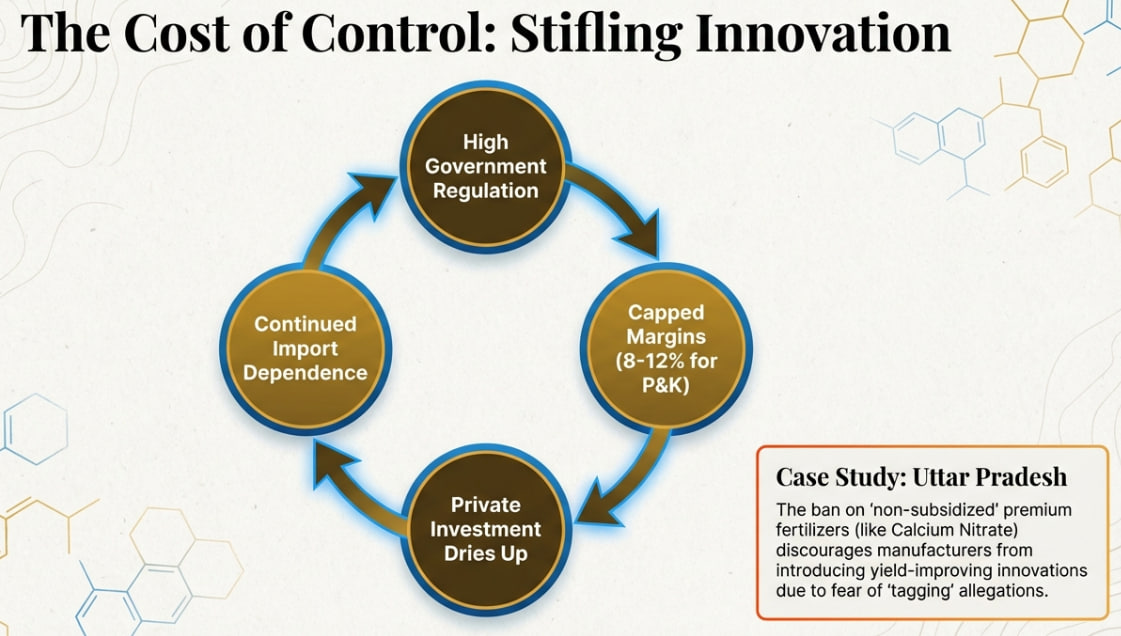
The Uttar Pradesh government's ban on the sale of non-subsidised fertilisers by urea suppliers, intended to curb 'tagging', highlights how state intervention can hinder innovation and erode investor confidence.
|
Read all about: Fertilizer Sector in India l Fertilizer Crisis in India Explained |
What are Fertilizers?
Fertilizers are concentrated nutrient sources, both mineral and organic. They replenish the soil with primary macronutrients—Nitrogen (N), Phosphorus (P), and Potassium (K)—crucial for crop growth, quality, and yield.
The fertiliser sector is the backbone of the Indian economy, directly linked to food security, farmer welfare, and the nation's fiscal health.
Fertilisers have played a crucial role in boosting crop yields, increasing farmer incomes and sustaining the large population dependent on agriculture.
Types of Fertilisers Used in India
|
Nutrient Category |
Examples |
Key Role |
|
Macronutrients |
Nitrogen (N): Urea Phosphorus (P): Di-Ammonium Phosphate (DAP), Single Super Phosphate (SSP) Potassium (K): Muriate of Potash (MOP) |
These are required in large quantities for fundamental plant processes like vegetative growth, root development, and flowering. |
|
Micronutrients |
Zinc (Zn), Boron (B), Iron (Fe), etc. |
Required in small amounts but are vital for enzyme activation and overall plant health. Their deficiency is a growing concern in Indian soils. |
|
Complex Fertilisers |
Contain two or more macronutrients (e.g., DAP contains both Nitrogen and Phosphorus). |
Provide a balanced mix of nutrients in a single application, improving convenience and nutrient distribution. |
Green Revolution Era (1960s - 1990s): High-Yielding Variety (HYV) seeds drove demand for chemical fertilizers.
Era of Reforms and Imbalance (1991 - 2010s): Decontrol of Phosphatic (P) and Potassic (K) fertilizer prices in 1991 led to a sharp price rise, while urea remained subsidized.
Self-Reliance and Sustainability (2015 - Present): India is the world's second-largest user and third-largest producer, achieving near self-sufficiency in many areas:
|
How the Subsidy Works? For Urea: Urea is the most subsidized and cheapest fertilizer, as the government sets a low Maximum Retail Price (MRP) and pays the cost difference to manufacturers as a subsidy. For P&K Fertilisers: The Nutrient Based Subsidy (NBS) scheme provides a fixed subsidy per kilogram of nutrient (N, P, K, S). Manufacturers can set the Maximum Retail Price (MRP), though it is indirectly affected by the subsidy and global market rates. |
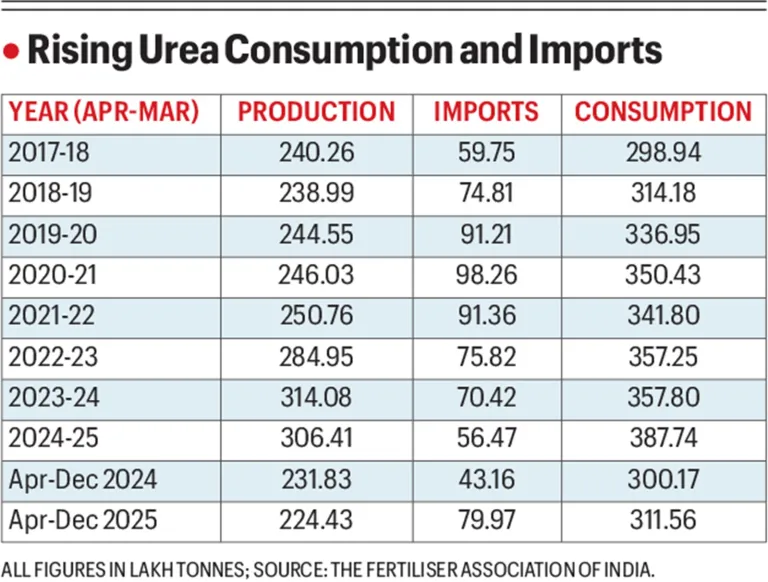 Structure of Indian Fertiliser Industry
The sector is a mix of public, cooperative, and private players, but it is heavily dependent on imports for raw materials and finished goods.
Fiscal Burden
The Union Budget 2026-27 allocates about 1.71 lakh crore for the fertiliser subsidy, a major expenditure strain on the fiscal deficit, to support farmers and maintain affordable input costs.
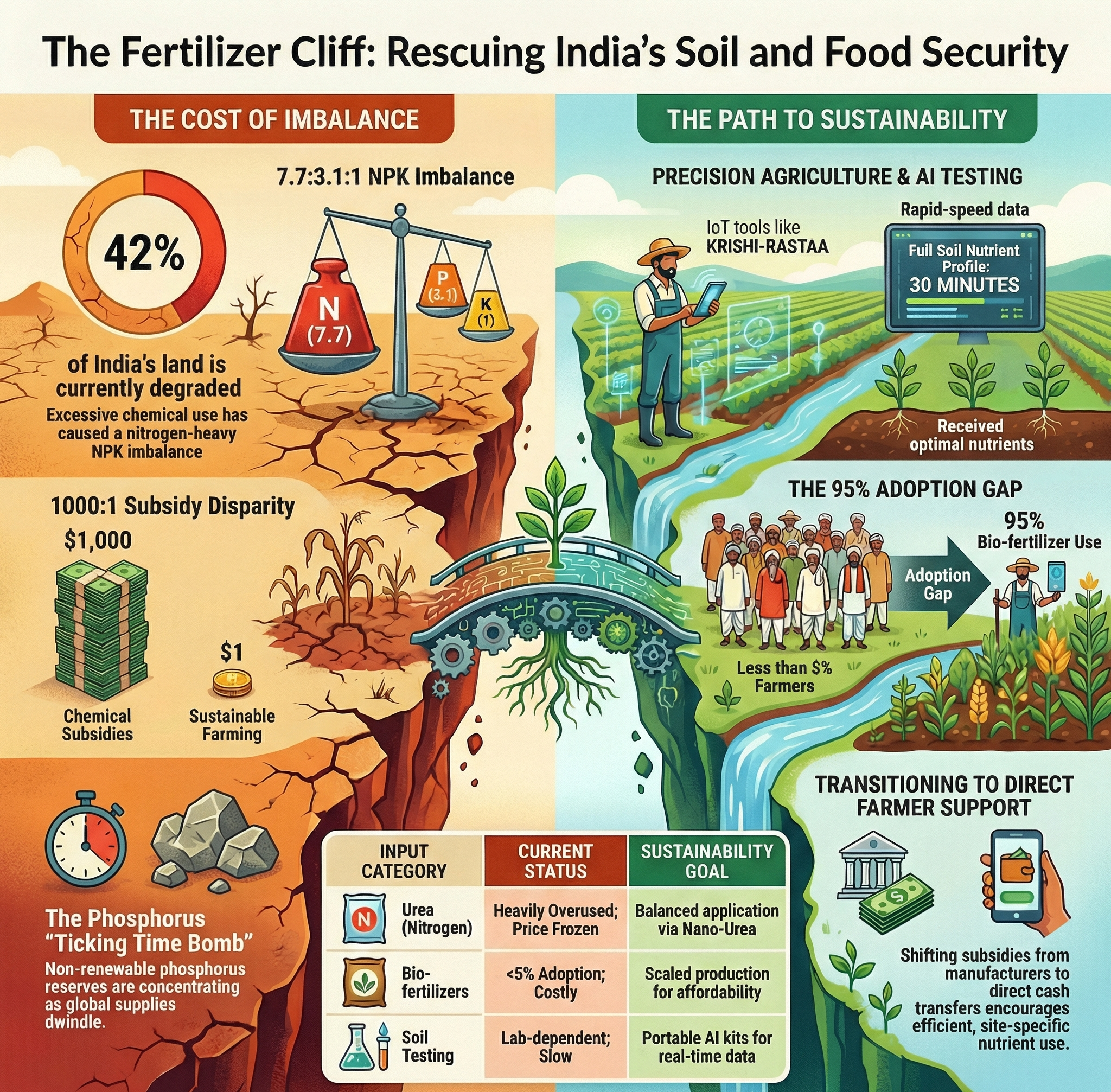
Imbalanced Nutrient Use
Urea's heavy subsidy makes it cheaper than P&K fertilisers, leading to its overuse and the underuse of other essential nutrients. The ideal NPK ratio for Indian soils is 4:2:1, but the actual consumption ratio is severely skewed, often exceeding 8:3:1.
Environmental Degradation: The overuse of nitrogenous fertilisers leads to:
 Global Vulnerability
High reliance on imported raw materials means global events, like the Russia-Ukraine conflict, immediately inflate international prices, increasing India's subsidy bill.
Mandating urea to be coated with neem oil. This slows down the release of nitrogen, improving Nitrogen Use Efficiency (NUE). It also prevents the illegal diversion of subsidised urea for industrial use.
Direct Benefit Transfer (DBT)
The subsidy is released to fertiliser companies after retailers sell the fertilisers to farmers through Point of Sale (PoS) machines, verified by Aadhaar authentication. This has reduced leakages and improved transparency.
Provides farmers with a 'report card' of their soil's nutrient status and recommends a customized dose of fertilisers. It aims to promote judicious and balanced fertiliser application.
Self-Reliance in Urea Production
Reviving closed fertiliser plants like those in Gorakhpur (UP), Sindri (Jharkhand), and Barauni (Bihar) to boost domestic production and reduce import dependency under the 'Atmanirbhar Bharat' mission.
(PM Programme for Restoration, Awareness, Nourishment and Amelioration of Mother Earth) Aims to incentivize states and union territories to reduce the use of chemical fertilisers and promote alternative fertilisers like organic manure and bio-fertilisers.
Promotion of Nano Fertilisers
Encouraging the use of next-generation fertilisers like Nano Urea and Nano DAP, developed by Indian Farmers Fertiliser Cooperative Limited (IFFCO), to promise higher nutrient efficiency, lower application volume, and reduced environmental impact.
Shift to Direct Benefit Transfer (DBT)
As recommended by the Shanta Kumar Committee, the subsidy should be transferred directly into farmers' bank accounts. This would empower farmers to choose the right fertilisers, allow for market-based pricing, and curb diversion.
Promoting Precision Agriculture
Encouraging the use of technology like drones for spraying nano-fertilisers, soil sensors, and GPS-based variable-rate application can optimize fertiliser use, reduce waste, and improve crop yields.
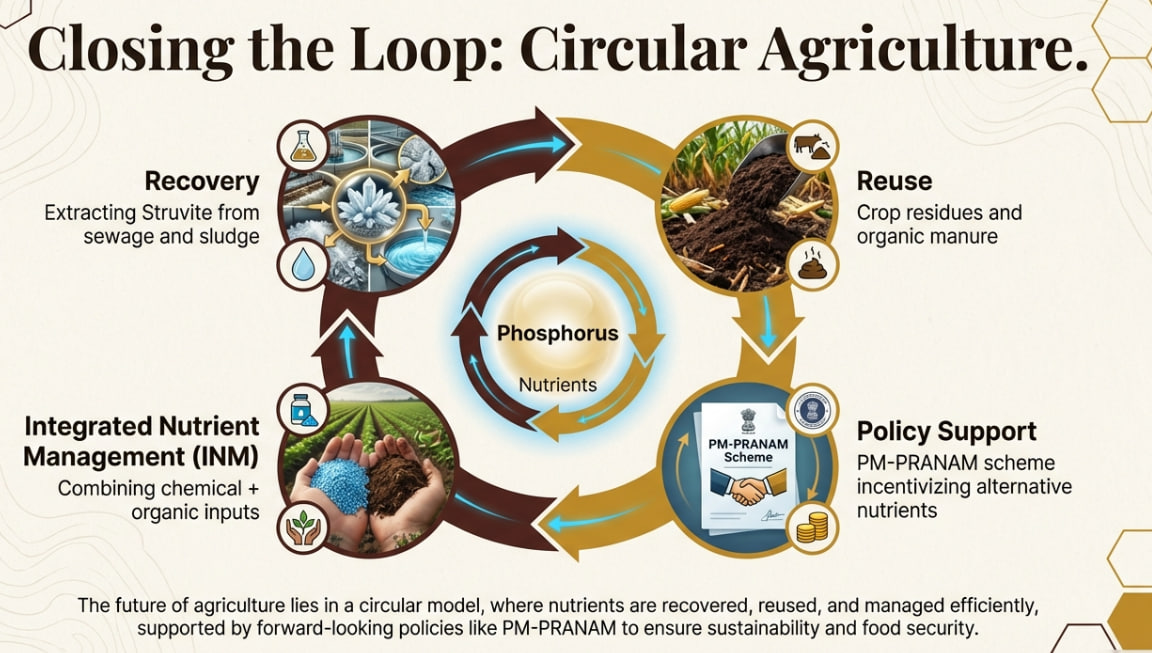
Diversifying Nutrient Sources
Scaling up the production and use of bio-fertilisers, organic manure (through schemes like GOBAR-Dhan), and fortified fertilisers can reduce dependence on chemical inputs and improve long-term soil health.
Strengthening Farmer Awareness
Enhancing the role of Krishi Vigyan Kendras (KVKs) and Farmer Producer Organizations (FPOs) in educating farmers about balanced nutrition and the benefits of integrated nutrient management is crucial.
Innovating for Self-Reliance
Investing in R&D for technologies like coal gasification (e.g., Talcher Fertilizers Ltd) and exploring the potential of green hydrogen as a feedstock for ammonia production can secure India's long-term fertiliser security.
Learn from Global Best Practices
Conclusion
Reforming the Indian fertiliser sector for sustainable food security requires rationalizing subsidies, embracing innovations like nano-fertilisers, promoting balanced nutrient use through the Soil Health Card, and empowering farmers.
Source: INDIAN EXPRESS
|
PRACTICE QUESTION Q. "The fertiliser subsidy is a double-edged sword that ensures affordability but compromises soil health and fiscal prudence." Critically analyze. 150 words |
The NBS scheme, launched in 2010, provides a fixed rate of subsidy (in Rs per kg) on nutrients (Nitrogen, Phosphate, Potash, and Sulphur) contained in P&K fertilisers. Unlike Urea, where the MRP is fixed by the government, NBS was intended to allow market-driven pricing for P&K fertilisers, though the government still exerts indirect control.
Urea is the most widely used fertiliser in India and is politically sensitive. The government keeps Urea under statutory price control to ensure it remains highly affordable for farmers. The MRP is fixed at a low rate (approx ₹266/bag), and the government pays the difference between production cost and MRP to manufacturers.
PM-PRANAM stands for "PM Programme for Restoration, Awareness, Nourishment and Amelioration of Mother Earth." It aims to incentivize states and Union Territories to promote alternative fertilisers and balanced use of chemical fertilisers. States that save on the subsidy bill are granted a portion of those savings as a grant.
© 2026 iasgyan. All right reserved