Green industrialisation is an emerging development strategy that integrates climate action with industrial growth by promoting low-carbon, resource-efficient manufacturing. It recognises that achieving decarbonisation requires building domestic clean-technology capabilities, creating green jobs, and restructuring supply chains. For countries like India, green industrialisation offers a pathway to balance climate commitments with economic development, competitiveness, and inclusive growth, provided it is supported by coherent policies, adequate finance, and global cooperation.
Copyright infringement not intended
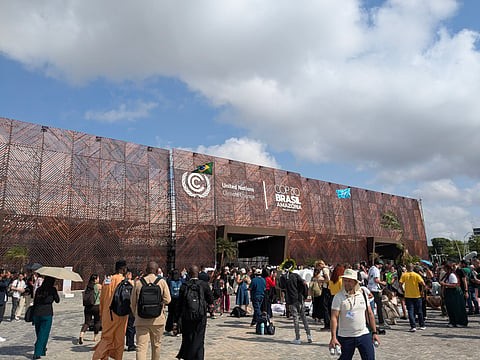
Picture Courtesy: Down to Earth
Green industrialisation is rapidly becoming the organising principle of global economic strategy, yet the international climate regime, anchored in the United Nations Framework Convention on Climate Change (UNFCCC) has not meaningfully integrated this shift, creating a growing mismatch between climate governance and real-world decarbonisation pathways.
|
Must Read: INDIA'S CLIMATE FINANCE TAXONOMY | GREEN INDIA MISSION |
Green industrialisation refers to a development strategy in which countries build, expand, and transform their industrial base in ways that are low-carbon, resource-efficient, and environmentally sustainable, while also generating jobs, income, and economic resilience. It combines industrial policy with climate and environmental objectives, ensuring that economic growth and decarbonisation proceed together rather than in conflict.
Key Components
Green industrialisation involves the deliberate use of policy tools—such as subsidies, public procurement, standards, trade measures, and finance—to promote:
Economic Implications: Green industrialisation reshapes growth models by shifting investment towards clean manufacturing, renewable energy, and low-carbon infrastructure, while generating new employment opportunities and value chains. It enhances industrial competitiveness, export potential, and supply-chain resilience, but also demands high upfront capital, fiscal support, and long-term policy certainty.
Climate Implications: By promoting clean technologies, energy efficiency, and circular production systems, green industrialisation directly supports emissions reduction, pollution control, and resource conservation. However, it also raises concerns around land use, water stress, mining of critical minerals, and lifecycle environmental impacts if sustainability safeguards are weak.
Employment Implications: Green industrialisation creates new jobs in renewables, EVs, batteries, hydrogen, and recycling, while enabling skill upgrading and workforce formalisation. At the same time, it can lead to job displacement in fossil-fuel-dependent sectors, making reskilling, social protection, and a just transition essential to prevent inequality and social unrest.
Developmental Implications: For developing countries, green industrialisation offers a pathway to combine climate action with poverty reduction, industrial diversification, and economic resilience. Without adequate policy space, finance, and technology access, however, it risks reinforcing dependency on imported green technologies rather than fostering domestic manufacturing capabilities.
Technological Implications: It accelerates innovation in clean energy, storage, materials, and manufacturing processes, strengthening national technological capabilities. At the same time, intellectual property regimes and technology concentration in advanced economies may limit technology diffusion to the Global South.
Investment constraints: Green industrialisation requires large upfront capital investment in clean technologies, infrastructure, and R&D, while returns are often long-term and uncertain. Developing countries face high cost of capital, limited access to concessional finance, and inadequate global climate finance flows, making large-scale green manufacturing financially risky.
Limited policy Space for developing countries: Trade rules, investment agreements, and intellectual property regimes often restrict the use of subsidies, local content requirements, and technology-sharing mechanisms. While advanced economies actively deploy industrial policy, many developing countries operate under tighter multilateral constraints, creating an uneven playing field.
Technology access and capability gaps: Key green technologies such as advanced batteries, electrolysers, and power electronics are concentrated in a few countries. Limited technology transfer, strict IPR regimes, and weak domestic R&D ecosystems hinder the ability of late-industrialising countries to build competitive clean manufacturing capabilities.
Supply-Chain and Critical Minerals Dependence: Green industrialisation depends heavily on critical minerals like lithium, cobalt, nickel, and rare earths, whose extraction and processing are geographically concentrated. This creates vulnerabilities related to price volatility, geopolitical risk, environmental degradation, and social conflict in mining regions.
Green industrialisation represents a decisive shift in development thinking by integrating economic growth with climate action and environmental sustainability. It recognises that decarbonisation cannot succeed without building domestic industrial capabilities, creating green jobs, and restructuring global supply chains. For countries like India, green industrialisation offers a pathway to achieve climate commitments while strengthening manufacturing competitiveness, energy security, and inclusive development. Its success ultimately depends on coherent policies, adequate finance, technological innovation, skilled human capital, and effective global cooperation to ensure a just and equitable transition.
Source: Down to Earth
|
Practice Question Q. “Green industrialisation is emerging as a bridge between climate action and economic development.” Discuss. (250 words) |
Green industrialisation refers to a development approach that promotes industrial growth while ensuring low-carbon, resource-efficient, and environmentally sustainable production, so that economic development and climate goals are achieved simultaneously.
Traditional industrialisation focused primarily on output and growth, often ignoring environmental costs, whereas green industrialisation integrates climate mitigation, sustainability, and resource efficiency into industrial policy from the outset.
Achieving climate targets requires large-scale production of clean technologies such as renewable energy equipment, EVs, batteries, and green hydrogen, which is only possible through strong industrial ecosystems.


© 2026 iasgyan. All right reserved