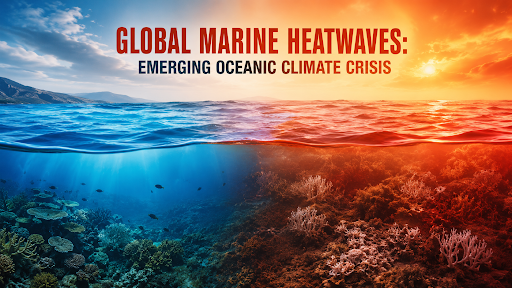
Amid the Fourth Global Mass Coral Bleaching Event, scientists found a resilient 1.8 km reef near Kalpeni Island, Lakshadweep, hosting 35 species despite global heat stress. It offers genetic hope against marine heatwaves. The discovery strengthens India’s conservation push, including Biorock restoration and Wildlife Protection Act safeguards.
Copyright infringement not intended
Picture Courtesy: DOWNTOEARTH
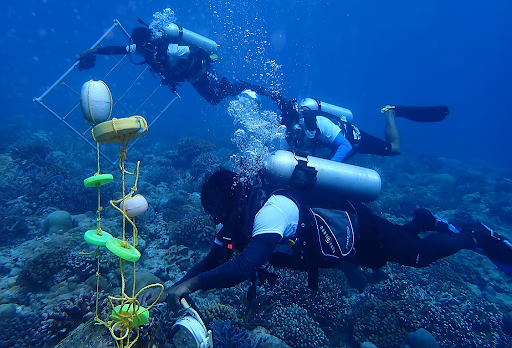
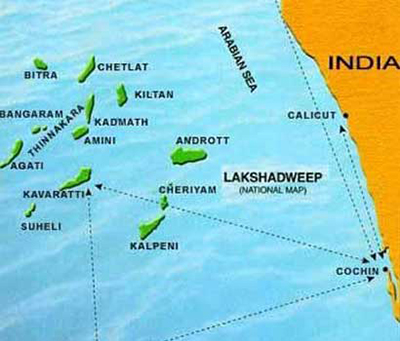
Researchers found a healthy, thriving coral reef near Kalpeni Island in Lakshadweep, creating a vital "live laboratory" for studying coral resilience during the Fourth Global Mass Coral Bleaching Event.
|
Read all about: Coral Bleaching & Climate Change l CORAL AND CORAL BLEACHING |
It is an ongoing ecological crisis confirmed by the U.S. National Oceanic and Atmospheric Administration (NOAA) and the International Coral Reef Initiative (ICRI) in 2024.
It is the largest and most extensive bleaching event in recorded history, a direct consequence of climate change and rising ocean temperatures, which threatens marine ecosystems worldwide.
Unprecedented Scale: From January 2023 to September 2025, bleaching-level heat stress has affected nearly 84.4% of the world's coral reef areas across at least 83 countries. (Source: NOAA)
Tipping Point Warning: Earth has already reached 1.4°C of long-term warming, pushing warm-water corals dangerously close to a functional collapse (Source: Global Tipping Points Report).
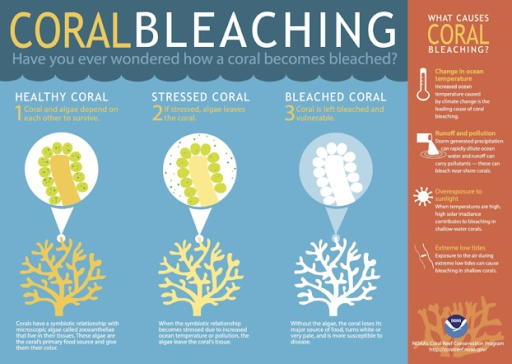
Mechanism of Bleaching: Rising sea temperatures stress corals, causing them to expel the symbiotic algae, Zooxanthellae, and turn white (bleach). Bleached corals are not immediately dead but are highly susceptible to disease and starvation.
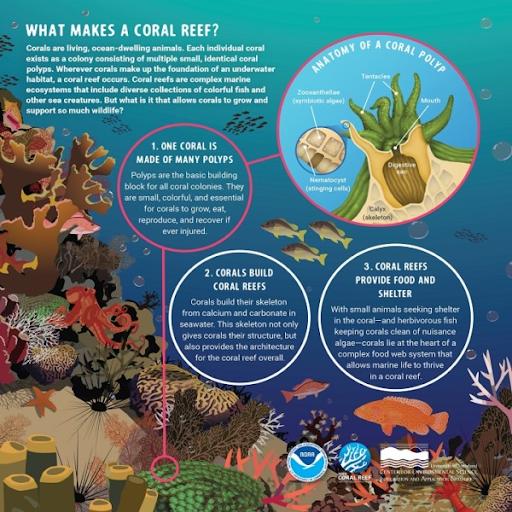
Despite covering less than 1% of the ocean floor, coral reefs are fundamental to marine biodiversity and human well-being.
Biodiversity Hub: They support nearly 25% of all marine life, acting as critical nurseries and feeding grounds for countless species. (Source: IUCN)
Coastal Protection: Reefs act as natural barriers, reducing wave energy by up to 97%. This protects coastal communities, especially in atoll islands like Lakshadweep, from erosion and storm surges.
Pillar of the Blue Economy: They support millions of livelihoods through fisheries and tourism, particularly in coastal regions like Lakshadweep, Andaman & Nicobar, and the Gulf of Mannar.
India's coral ecosystems face a combination of global and local pressures.
Technological & Scientific Interventions
Policy and Legal Frameworks in India
Adopt Global Best Practices
India must involve a dedicated strategy to protect such "hope spots" by declaring them as Marine Sanctuaries, funding long-term research to understand their resilience, and integrating conservation with the principles of a sustainable blue economy, such as those outlined in Mission LiFE (Lifestyle for Environment).
Source: DOWNTOEARTH
|
PRACTICE QUESTION Q. ‘Biorock technology’ is frequently seen in the news, in the context of: A) Restoration of coral reefs. B) Production of biofuels. C) Treatment of industrial effluents. D) Remediation of oil spills. Answer: A Explanation: Biorock technology is a method that uses low-voltage electrical currents to promote the growth of corals and other marine organisms. It is used for the restoration of damaged coral reefs. |
The resilient coral reef was discovered northeast of Kalpeni Island in the Lakshadweep Archipelago. It stretches for 1.8 kilometers and covers approximately 12.99 hectares.
Corals have a symbiotic relationship with microscopic algae called Zooxanthellae, which give them color and food. When stressed by high temperatures, corals expel these algae, revealing their white calcium carbonate skeletons.
Biorock is a method used for coral restoration. It involves passing a low-voltage electrical current through a submerged steel structure. This causes minerals to precipitate onto the steel, forming a limestone layer that accelerates coral growth and increases resilience.



© 2026 iasgyan. All right reserved