India's family planning programme, anchored by Mission Parivar Vikas, has achieved TFR 2.0 and CPR 69.1% (NFHS-6), yet regional disparities persist. The shift from population control to reproductive rights demands expanded reversible contraceptive access, male participation, and digital health integration for sustainable demographic management.
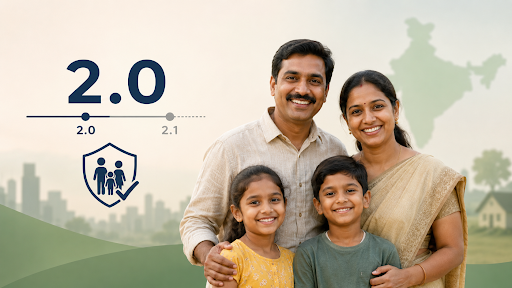
India's Total Fertility Rate (TFR) has stabilized at 2.0, dropping below the replacement level of 2.1, highlighting success of Family Planning, according to the National Family Health Survey-6 (NFHS-6).
Family Planning refers to the ability of individuals and couples to anticipate and attain their desired number of children and the spacing and timing of their births.
It includes contraceptive services, fertility treatment, sexual health education, and reproductive healthcare.
The WHO defines it as a human right central to gender equality and women's empowerment.
Objectives
|
Reproductive Rights
|
National Family Planning Programme (1952)
Shift from Population Control to Reproductive Health
Rights-Based Approach
Maternal Health
Preventing adolescent pregnancies directly mitigates the physiological burdens of severe anaemia, obstetric complications, and maternal mortality.
Child Health and Nutrition
Well-spaced pregnancies reduce the Infant Mortality Rate (IMR) and ensure universal immunization against vaccine-preventable diseases.
Women's Empowerment
Postponing marriage and childbearing allows women to complete secondary education, enter the paid workforce, and build long-term financial security.
Poverty Reduction
Family planning lowers out-of-pocket health spending and channels household resources towards better nutrition security and standard of living.
Demographic Dividend
Managing the fertility transition empowers India to harness its demographic dividend by converting a large working-age population into productive economic growth before the society ages.
Temporary Methods
The government expanded the contraceptive basket in 2016 to include Injectable Contraceptives (Antara/MPA), Progestin Only Pills (POPs), and Centchroman.
Permanent Methods
Female sterilisation accounts for 36.5% of all contraceptive use nationally and 38.1% in rural zones. Male sterilisation (vasectomy) remains stagnant at a negligible 0.5%.
Modern Contraceptives
The utilization of modern reversible methods recently experienced a slight decline to 52.7%, signaling an urgent need to promote copper-Ts and oral pills.
Natural Methods
The use of less effective, traditional family planning methods surged from 10.3% to 16.4%, indicating that some women step back from surgical sterilization without adopting modern medical alternatives.
|
Family Planning and Sustainable Development Goals SDG 3 (Health): Family planning ensures Good Health and Well-Being by lowering maternal and infant mortality rates through accessible reproductive healthcare services. SDG 5 (Gender Equality): Balancing the asymmetrical burden of contraception builds equal partnership, directly advancing gender equality and female bodily autonomy. SDG 10 (Reduced Inequalities): Targeted health interventions bridge the severe rural-urban divide in contraceptive access and correct systemic socio-economic imbalances. |
Unmet Need for Contraception
A persistent unmet need for family planning leaves vulnerable populations exposed to unprotected health risks, standing at 9.4% in non-intervention districts and 11.4% in high-focus districts.
Gender Bias
Deep-rooted cultural biases force women to bear nearly all the responsibility for contraception, while myths regarding loss of libido deter men from safe vasectomy procedures.
Lack of Awareness
Early marriages persist as a structural crisis; 20.1% of women aged 20–24 marry before the legal age of 18, cutting short their education and restricting contraceptive awareness.
Regional Disparities
Uneven fertility rates trigger demographic anxieties and political debates over Lok Sabha delimitation, as southern States achieve TFRs as low as 1.3 while others remain at replacement levels.
Mission Parivar Vikas
The government launched Mission Parivar Vikas (MPV) in 2016 across 146 high-fertility districts to distribute NAYI PAHEL kits to newlyweds and organize Saas Bahu Sammelans.
Family Planning Logistics Management Information System
The Health Ministry introduced FP-LMIS in 2017 to completely streamline the supply and availability of family planning commodities at all levels of service delivery.
National Health Mission
ASHA workers act as crucial grassroots liaisons under the National Health Mission (NHM), distributing contraceptives and mobilizing rural communities for maternal health education.
Expanding Access to Contraceptives
Policy must shift away from permanent sterilization campaigns toward expanding free access to reliable, scientific reversible methods at community clinics.
Male Participation in Family Planning
The state must design active public health campaigns to dismantle misconceptions and normalize male sterilisation as a shared family responsibility.
Strengthening Reproductive Healthcare
The government must strictly implement the Prohibition of Child Marriage Act, upgrade community-based public health infrastructure, and institutionalize unbiased informed-choice counseling frameworks.
India should move from coercive population control to a rights-based family planning framework that secures women’s reproductive autonomy.
Source: THEHINDU
|
PRACTICE QUESTION Q. "Family planning is not merely a health intervention but a critical enabler of sustainable development, gender equality, and poverty reduction."Discuss. 150 words |
Family planning is the conscious practice of allowing individuals and couples to anticipate and attain their desired number of children through the voluntary use of contraceptive methods and the treatment of involuntary infertility.
India launched its National Family Planning Programme in 1952 because the newly independent nation faced extreme population pressures that severely strained public resources, food security, and socio-economic development.
The primary bottlenecks include deep-rooted patriarchal preferences for male children, limited access to modern contraceptive methods in remote rural areas, social stigma, and high dropout rates due to misinformation regarding side effects.
Voluntary family planning directly accelerates global goals by stabilizing population growth to reduce environmental resource strain, improving maternal and child health outcomes, and empowering women to pursue education and economic opportunities.




© 2026 iasgyan. All right reserved