What is Alaknanda Galaxy?
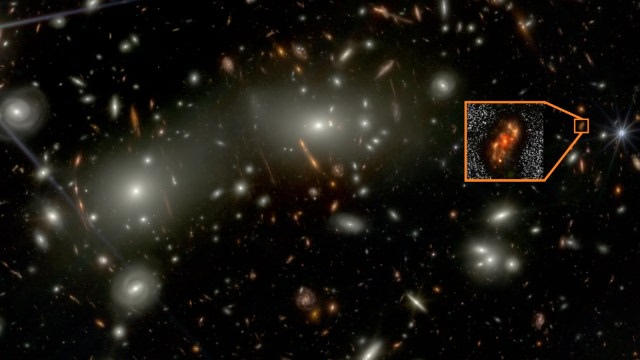
Indian astronomers from the National Centre for Radio Astrophysics (NCRA-TIFR), Pune, have discovered a spiral galaxy named 'Alaknanda'.
Context
Indian astronomers from the National Centre for Radio Astrophysics (NCRA-TIFR), Pune, have discovered a massive, well-structured spiral galaxy named 'Alaknanda'.
What is Alaknanda Galaxy?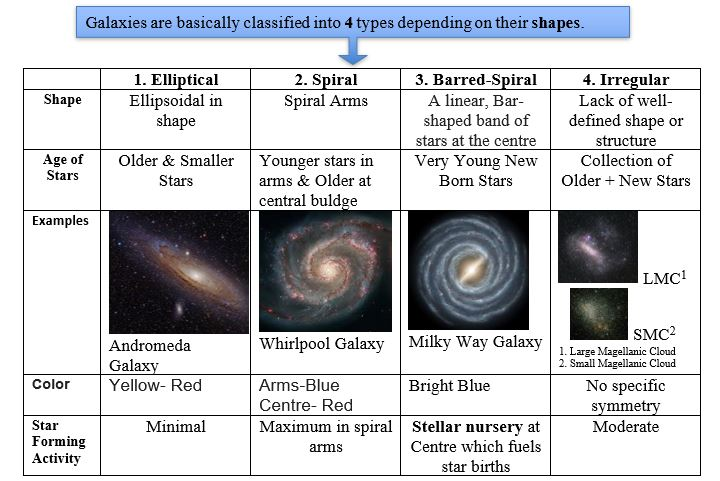
stronomers from the National Centre for Radio Astrophysics (NCRA-TIFR), Pune, have discovered a spiral galaxy named 'Alaknanda'.
Data from the James Webb Space Telescope (JWST), operated by NASA, led to this discovery. It challenges current understanding of the speed at which intricate galaxies could have developed in the early universe.
Key Characteristics of Alaknanda
It is a 'grand-design' spiral galaxy with two clear, symmetric arms, similar in structure to our own Milky Way galaxy. Named after River Alaknanda.
Location & Age: It is located approximately 12.4 billion light-years away.
Mass & Size: It has a stellar mass about 10 billion times that of our Sun and spans approximately 30,000 light-years in diameter.
Star Formation Rate: The galaxy is a powerhouse of star creation, forming new stars at a rate of about 60-63 solar masses per year. This is nearly 20 to 30 times the current rate in the Milky Way (which is 1-2 solar masses per year).
Rapid Formation: Analysis suggests that about half of Alaknanda's stars formed in a very short cosmic timeframe of just 200 million years.
Source: INDIANEXPRESS
|
PRACTICE QUESTION Q. With reference to the recently discovered Alaknanda galaxy, consider the following statements: 1. It is an irregular galaxy discovered using the Giant Metrewave Radio Telescope (GMRT). 2. Its discovery supports the hierarchical or "bottom-up" model of galaxy formation. 3. It is observed as it was when the universe was approximately 10% of its current age. Which of the statements given above is/are correct? (a) 1 and 2 only (b) 3 only (c) 2 and 3 only (d) 1, 2 and 3 Answer: B Explanation: Statement 1 is incorrect. The Alaknanda galaxy is a grand-design spiral galaxy, not an irregular one, and was discovered using the powerful James Webb Space Telescope (JWST), not the Giant Metrewave Radio Telescope (GMRT). Statement 2 is incorrect. The discovery of such a well-ordered and mature spiral galaxy so early in the universe's history challenges the conventional "bottom-up" (hierarchical) model of galaxy formation, which predicted that early galaxies would be chaotic, clumpy, and irregular, with well-defined spirals forming much later. Statement 3 is correct. The galaxy is located about 12 billion light-years away and is observed as it was when the universe was approximately 1.5 billion years old, which is indeed about 10% of its current age (the universe is currently 13.8 billion years old). |
Title:
Alaknanda Galaxy: Indian Scientists Spot Milky Way Twin
TAG:
UPSC GS 3, Science and Technology, Space, Alaknanda Galaxy, James Webb Space Telescope (JWST), Galaxy Formation
Summary:
Indian astronomers at NCRA-TIFR discovered “Alaknanda,” a massive grand-design spiral galaxy, using James Webb data. Seen as it existed 12 billion years ago, its mature structure challenges merger-based galaxy formation models and shows that complex galaxies formed far earlier than previously believed.
The Alaknanda Galaxy is a massive, well-structured 'grand-design' spiral galaxy discovered by Indian astronomers. It is located approximately 12 billion light-years away and is observed as it was when the universe was only 1.5 billion years old. Its structure is remarkably similar to our own Milky Way galaxy.
The discovery was made by a team of Indian astronomers from the National Centre for Radio Astrophysics (NCRA-TIFR), Pune.
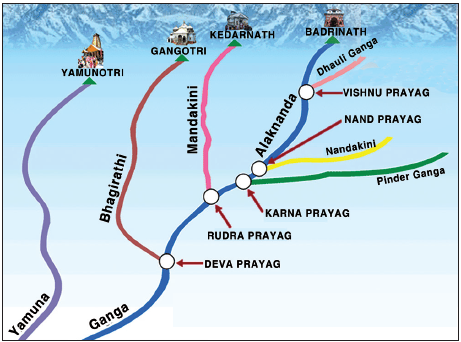
The galaxy was named 'Alaknanda' after the Alaknanda river, a tributary of the Ganga. This name was chosen because the Milky Way galaxy is known as 'Mandakini' in Hindi, and Alaknanda is considered a sister river to Mandakini, reflecting the structural similarity between the newly discovered galaxy and our own.



© 2026 iasgyan. All right reserved