Urban air pollution (PM2.5) breaches the placental barrier, causing inflammation and inhibiting the crucial IGFBP3 growth protein. This leads to restricted foetal development, low birth weight, and lifelong neurological risks, highlighting a severe maternal-foetal health crisis.
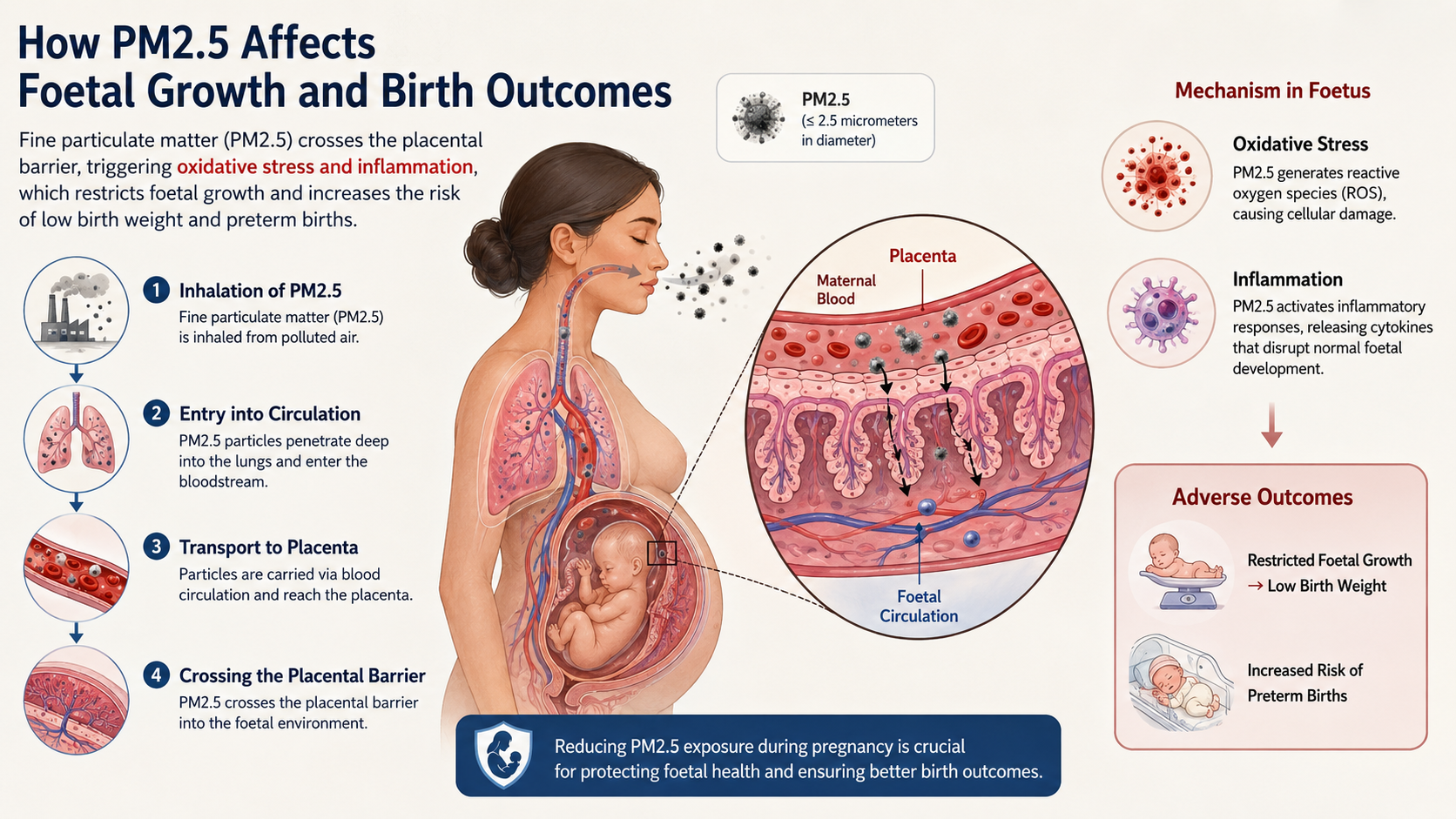
An Indian Council of Medical Sciences (ICMR)-funded study by researchers at AIIMS Delhi has mapped the exact step-by-step molecular pathway showing how fine particulate matter (PM2.5 and PM10) from urban air pollution crosses the placenta to stunt foetal growth.
Breaches the Placental Barrier
Fine particulate matter like PM2.5 and PM10 infiltrates the maternal bloodstream, bypassing the placental filter to directly reach the foetal system.
Triggers Biological Disruption
Pollutants induce severe oxidative stress and inflammation, which alter epigenetic switches—turning developmental genes on or off without altering the underlying DNA.
Escalates Pregnancy Loss
A Lancet study estimates that PM2.5 exposure above WHO guidelines contributes to 29% of pregnancy losses (miscarriages and stillbirths) in South Asia, causing nearly 3.5 lakh losses annually.
Drives Long-Term Health Burdens
The Developmental Origins of Health and Disease (DOHaD) theory validates that toxic exposures in the womb permanently shape a child's lifelong chronic disease risks.
Identifies the Molecular Pathway
AIIMS Delhi researchers map the exact biological chain reaction linking urban particulate matter (UPM) to restricted foetal growth.
Inhibits Crucial Growth Proteins
Pollution-induced inflammation suppresses IGFBP3 expression, a protein that governs placental equilibrium and embryo growth.
Impairs Placental Function
The reduction in IGFBP3 limits nutrient exchange, prevents proper blood vessel formation (angiogenesis), and damages the placenta's ability to anchor to the uterine wall.
Restricts Physical Development
Delhi's pollution levels demonstrate that offspring weigh 34% less at full term, possess smaller placentas, and experience a 25% reduction in litter sizes.
Causes Neurological Deficits
Prenatally exposed offspring exhibit lasting neurological harm, including poor motor coordination, heightened anxiety-like behaviour, and altered stress responses.
Increases Maternal Complications
High PM2.5 exposure acts as a risk factor for low birth weight and triggers dangerous spikes in maternal blood pressure, known as preeclampsia.
Severe Mortality Burden
The Lancet Countdown on Health and Climate Change reports over 1.7 million deaths in India during 2022 due to PM2.5 exposure.
Massive Economic Cost
Premature mortality linked to outdoor air pollution inflicts a $339.4 billion financial loss, equating to 9.5% of India's GDP.
Widespread NAAQS Violations
The Centre for Research on Energy and Clean Air (CREA) 2026 NCAP Progress Report reveals that 190 out of 229 monitored Indian cities exceed the National Ambient Air Quality Standards (NAAQS) for PM10.
Worst Affected Cities
Delhi, Ghaziabad, and Greater Noida rank as the most polluted cities, with Delhi recording annual average PM10 concentrations of 197 µg/m³ and PM2.5 concentrations of 96 µg/m³.
Primary Pollution Sources
Fossil fuels cause 44% of pollution deaths (via coal power plants and road transport). Local factors like agricultural stubble burning, biomass combustion, and road dust degrade air quality, especially during winter.
National Clean Air Programme (NCAP)
The Ministry of Environment, Forest and Climate Change (MoEFCC) targeting a 40% reduction in PM10 levels by 2025-26.
Pradhan Mantri Ujjwala Yojana (PMUY)
Combats indoor air pollution by providing clean cooking fuel (LPG) to women from Below Poverty Line (BPL) households.
Strict Emission Regulations
Transitions vehicles to BS6 emission standards and enforces bans on older, highly polluting vehicles (diesel vehicles older than 10 years and petrol vehicles older than 15 years).
Emergency Action Protocols
During severe smog events, state governments execute emergency measures, including halting construction and demolition activities, banning commercial diesel vehicles, and shutting down educational institutions to limit public exposure.
Source: THEHINDU
|
PRACTICE QUESTION Q. "Air pollution is not merely an environmental issue but a public health crisis." Discuss. 150 words |
Fine particulate matter (PM2.5) crosses the placental barrier, triggering oxidative stress and inflammation, which restricts foetal growth and increases the risk of low birth weight and preterm births.
The study mapped the exact molecular pathway showing how urban air pollution suppresses vital placental functions, leading to 34% lower birth weights and 25% smaller litters in rodent studies.
IGFBP3 is a protein governing placental equilibrium and embryo growth; it is severely inhibited by pollution-induced inflammation, impairing nutrient exchange and blood vessel formation.


© 2026 iasgyan. All right reserved