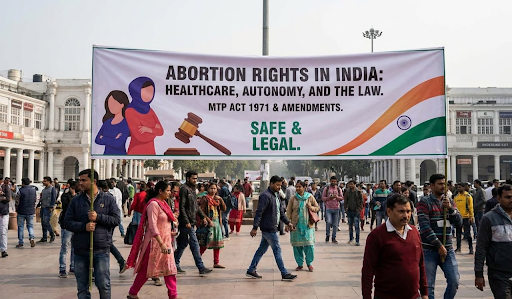
The MTP Amendment Act 2021 and Supreme Court rulings expanded women's reproductive rights in India. However, mandatory reporting under the POCSO Act and severe systemic healthcare barriers continue to restrict safe abortion access for vulnerable, young adolescents today
The Supreme Court allowed a 15-year-old to terminate a 30-week pregnancy, prioritizing bodily autonomy over fetal viability.
Abortion is a healthcare procedure for safely terminating a pregnancy. A voluntary termination performed by a provider is an induced abortion, while a natural loss is a miscarriage.
Abortion falls into two categories:
Abortion laws, centered on the Medical Termination of Pregnancy (MTP) Act, 1971 and its 2021 Amendment, provide legal exceptions to IPC Sections 312-318 which criminalize miscarriage.
The Supreme Court recognized that reproductive rights are an essential part of the right to personal liberty, dignity, and privacy under Article 21 of the Constitution. Forcing a woman to continue an unwanted pregnancy is a violation of her bodily integrity.
Shortage of qualified providers: 75% shortage of obstetricians and gynecologists in rural community health centers. (Source: All-India Rural Health Statistics)
Provider Bias and Extra-legal Requirements: Doctors often act as gatekeepers by imposing personal moral views, demand illegal third-party consents (like spousal or parental approval), Aadhaar cards, or court orders due to social stigma or fear of legal repercussions.
Conflation with the PCPNDT Act: Fear of prosecution under the Pre-Conception and Pre-Natal Diagnostic Techniques (PCPNDT) Act (aimed at stopping sex-selective abortion) restricts access to safe second-trimester abortions.
Conflation with the POCSO Act: Mandatory reporting of underage sexual activity deters minors from seeking safe abortion care due to the fear of criminalizing their partners or facing police involvement.
Financial Barriers: Inaccessible public services force vulnerable women into the expensive private sector, further marginalizing the poor.
Red Tape: Terminations beyond 24 weeks require mandatory judicial authorization and medical board evaluations.
|
Judicial Intervention The Supreme Court in the X vs Principal Secretary case, affirmed that unmarried women have equal access to abortion up to 24 weeks and included marital rape under the definition of sexual assault for the purposes of the MTP Act. In K.S. Puttaswamy vs Union of India (2017): Supreme Court bench affirmed that reproductive decisional autonomy is a core component of the fundamental right to privacy. |
Full Decriminalization: Remove abortion from the Penal law to eliminate the pressure on doctors and recognize abortion as a fundamental healthcare right.
Rights-Based Framework: Shift decision-making power from doctors and medical boards back to the pregnant person.
Expand the Provider Base: Amend the law to allow trained nurses, midwives, and AYUSH practitioners to provide early medical abortions, addressing shortage of doctors in rural areas.
Harmonize Conflicting Laws: Clarify the overlap between the MTP Act, PCPNDT Act, and POCSO Act. Remove mandatory police reporting for consenting adolescents seeking reproductive healthcare.
Audit Medical Education: Revise medical curriculum to remove patriarchal biases and abortion stigma from the training of healthcare professionals.
Gender-Neutral and Inclusive Policies: Modernize abortion laws to be gender-neutral, protecting the reproductive rights of transgender, and intersex individuals to ensure equitable, safe, and discrimination-free healthcare access.
The MTP Act must transition from a doctor-controlled legal exception to a rights-based framework that decriminalizes abortion and prioritizes the pregnant person’s absolute autonomy over medical and legal gatekeeping.
Source: INDIANEXPRESS
|
PRACTICE QUESTION Q. "Reproductive choice is an inseparable part of a woman’s personal liberty under Article 21." Critically analyze. 150 words |
The 2021 amendment increased the upper gestation limit from 20 weeks to 24 weeks for special categories of women. There is no upper gestational limit for abortions required due to substantial foetal abnormalities diagnosed by a Medical Board.
Unmarried women are legally permitted to seek safe abortion services on the grounds of contraceptive failure. The Supreme Court of India has also ruled that marital status cannot be a ground to deny or limit access to abortion services up to 24 weeks.
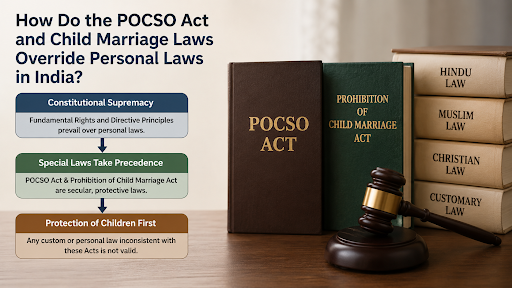
The POCSO Act criminalizes all sexual activity involving minors and mandates that doctors report such cases to the police. This mandatory reporting requirement often deters adolescents from accessing safe healthcare facilities, pushing them toward clandestine and unsafe abortions due to fear of social stigma and legal harassment.



© 2026 iasgyan. All right reserved