The Supreme Court is reviewing THOTA 1994 protocols, balancing clinical tests with objective diagnostics like EEGs to prevent malpractice. Addressing infrastructure gaps through videography and models like TRANSTAN is vital to ethically streamlining donations for 80,000+ waiting patients
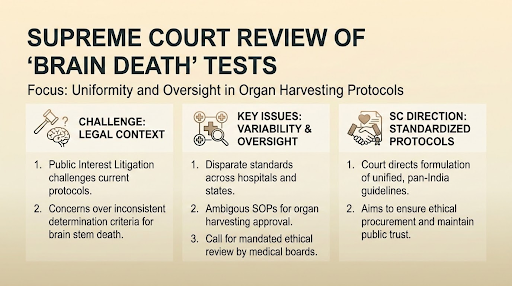
The Supreme Court reviewed the scientific and ethical reliability of the brain death certification protocols.
Brain death, legally defined as 'brain-stem death' under the Transplantation of Human Organs and Tissues Act (THOTA), 1994, is the irreversible and permanent cessation of all brain functions.
This includes the loss of the capacity to breathe automatically. Although a ventilator can keep the heart beating and blood circulating, the individual is legally and clinically considered deceased.
The Certification Process (as per THOTA Rules, 2014)
Medical Board: A mandatory board of four doctors must be constituted, including the hospital in-charge, an independent medical specialist, a neurologist/neurosurgeon, and the treating physician.
Clinical Testing: The board performs bedside tests to confirm absent brain stem reflexes (e.g., pupil, gag, and pain responses) while ruling out reversible factors like drug overdose or hypothermia.
The Apnea Test: This step involves temporarily disconnecting the ventilator to check for spontaneous breathing as carbon dioxide levels rise. Its absence confirms brain-stem death.
Mandatory Repetition: To ensure an irreversible diagnosis, all tests, including the apnea test, must be performed twice with at least a six-hour interval .
Apnea Test Subjectivity: Critics note a heavy reliance on clinical observation over machine data, risking human error.
Ethical and Legal Allegations: Concerns exist regarding premature brain-death declarations to favor organ donation, occasionally involving bill-waiver incentives.
Infrastructure and Equity Divide: Mandating advanced tests like EEG would be impractical for smaller organ retrieval centers lacking such facilities, potentially crippling the organ donation network in rural and Tier-2 areas.
Medical Training Deficit: Only 41.8% of specialists received formal certification training during MBBS, with many faculty members admitting to a lack of protocol training for residents. (Source: Neurology India Journal)
Public Trust Deficit: Poor compliance with mandatory videography of the apnea test and lack of transparent communication leads to mistrust.
Ensure Transparency: Mandate apnea test videography nationwide to improve accountability and trust.
Standardize Training: The National Medical Commission (NMC) should add simulation-based organ donation and brain death protocols to medical curricula.
Adopt Technology: Use a "Hub and Spoke" model for remote specialist oversight of clinical tests via telemedicine.
Enhance Counseling: Train staff in empathetic communication and grief counseling to boost family consent rates.
Learning from Best Practices
Spain has the world's highest deceased organ donation rate. Its success is attributed to:
In India, Tamil Nadu leads in deceased organ donations. The success of its Transplant Authority of Tamil Nadu (TRANSTAN) is based on:
India needs a credible organ donation framework that balances rigorous brain death certification with practical infrastructure. By standardizing medical training and enforcing ethical protocols, the nation can protect citizen rights while addressing the urgent needs of thousands on transplant waitlists.
Source: INDIANEXPRESS
|
PRACTICE QUESTION Q. Critically examine the systemic and ethical bottlenecks hindering deceased organ donation in India. 150 words |
In India, brain death is legally termed 'brain-stem death' under the Transplantation of Human Organs and Tissues Act (THOTA), 1994. It is defined as the irreversible cessation of all activities of the brain stem, including automatic functions like breathing, even if the patient's heart continues to pump blood via life support.
The Apnea Test is a cornerstone clinical bedside test for declaring brain death. It involves temporarily disconnecting the patient from a ventilator to observe whether the brain stem triggers spontaneous breathing in response to rising carbon dioxide levels in the blood.
The Supreme Court is reviewing the process due to a petition alleging medical malpractices, such as forced organ harvesting and hasty brain death declarations by private hospitals. The plea argues that the Apnea test is too subjective and advocates for mandatory, objective machine-driven tests like EEGs and cerebral angiograms.



© 2026 iasgyan. All right reserved