The 2024 Supreme Court ruling permits SC sub-classification to ensure substantive equality, targeting the most marginalized groups. To achieve true equity, states must rely on quantifiable data and independent commissions, moving beyond political tokenism toward holistic development for the most deprived.
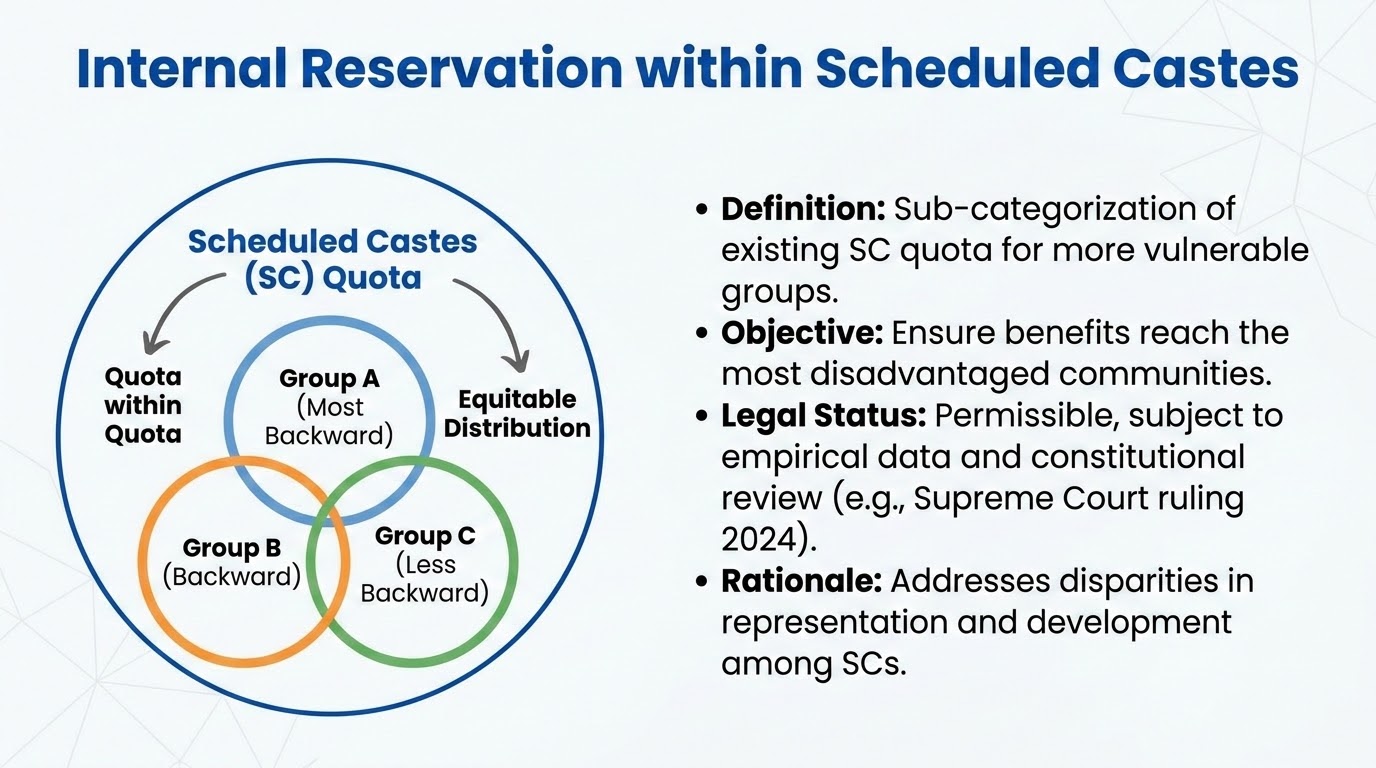
The Karnataka Cabinet approved an internal reservation formula, dividing the 15% Scheduled Caste (SC) quota into three categories—5.25% for SC Left, 5.25% for SC Right, and 4.5% for others/nomadic tribes.
|
Read all about: SUB-CATEGORISATION AMONG SCs |
What is “internal reservation” within SCs?
Internal reservation, also known as sub-classification, refers to the practice of dividing the Scheduled Caste (SC) quota into sub-groups to create separate reservation percentages for the most backward or underrepresented castes within the larger SC category.
This mechanism aims to ensure that reservation benefits are not cornered by a few dominant or relatively advanced sub-castes, but trickle down to the "weakest of the weak".
Power to Sub-Classify (Articles 15 & 16)
Current Status: States have the constitutional power to sub-classify Scheduled Castes.
The "Presidential List" (Article 341)
According to the 2024 Constitution Bench judgment, states must adhere to specific limits when implementing internal reservation:
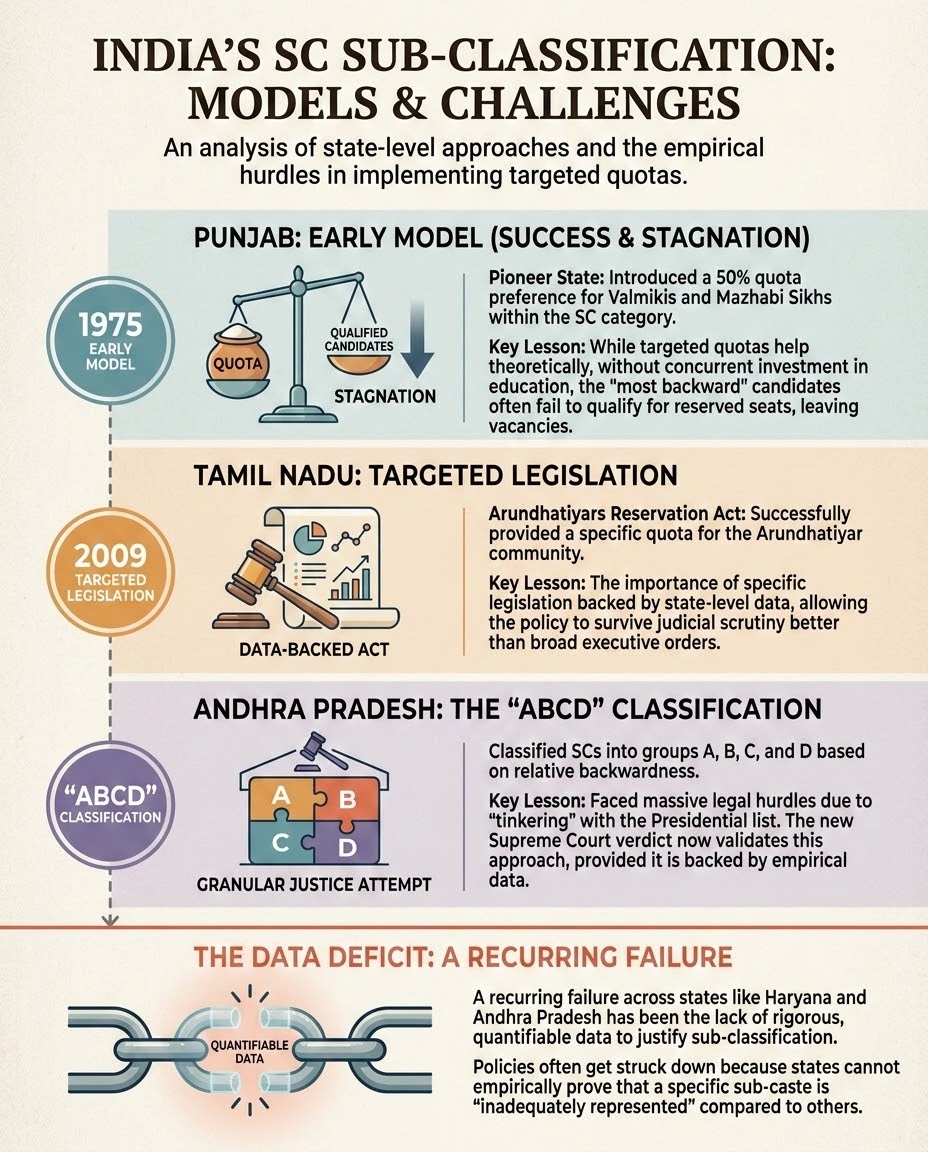
Disproportionate Representation: Relatively advanced sub-castes (e.g., the Mala community in Andhra Pradesh) have secured a high percentage of government jobs and seats, leaving the most marginalized groups (Arundhatiyars in Tamil Nadu) with little to no representation.
Failure of "Trickle Down": Reservation system assumed benefits would reach everyone in the SC category. However, in practice, the "weakest of the weak" lack the educational and social capital to compete even against other SC candidates, effectively locking them out of the quota.
Political Advocacy: Organizations like the Madiga Reservation Porata Samiti (MRPS) have long argued that sub-quotas are essential for their population to gain genuine political and administrative power.
Social Justice Mandate: Articles 15(4) and 16(4) empower the State to prioritize highly marginalized groups, ensuring they are not overshadowed by more advanced sections within the backward classes.
Eroding Dalit Unity: Sub-classification may fracture the movement by inciting internal competition, reducing collective bargaining power against systemic dominance.
Political Manipulation: There is a risk that states will use these quotas for partisan "vote bank politics" rather than data-driven welfare.
Lack of Empirical Data: Without a comprehensive Caste Census, arbitrary classifications based on outdated or flawed information remain a significant concern.
Creamy Layer Controversy: Critics argue SC reservation addresses social stigma, which economic status does not erase. Excluding successful members could deprive the community of bureaucratic leadership.
 What should be the way forward?
Data Collection: States must commission independent bodies to gather quantifiable data on the backwardness and representation of SC sub-castes, fulfilling a mandatory Supreme Court requirement.
Classification Criteria: Methodologies must be transparent, using indicators like literacy and land ownership alongside social stigma to ensure they survive judicial review.
Phased Strategy: Implementing changes gradually, such as starting with education quotas, allows for impact monitoring and prevents "creamy layer" dominance.
Targeted Support: To ensure seats are filled, states should provide scholarships and coaching for the most marginalized sub-castes prior to their entry into the job market.
Internal reservation shifts focus from broad discrimination protection to "targeted upliftment" for the most marginalized. While the Supreme Court's 2024 judgment confirmed its validity, success requires unbiased data and a focus on substantive equality over political interests.
Source: THE HINDU
|
PRACTICE QUESTION Q. How does sub-classification address the historical "crowding out" effect within the Scheduled Caste quota? 150 words |
Internal reservation is the policy of dividing an overarching reserved category (like the 15% SC quota) into specific sub-groups based on varying degrees of socio-economic and educational backwardness. It functions as a "quota within a quota" to ensure the weakest sections receive targeted benefits.
In the 2024 sub-classification ruling, concurring judges strongly recommended the application of the 'creamy layer' principle to SCs and STs to ensure that affluent individuals do not corner the reservation benefits meant for the truly deprived sections of their communities.
It was a massive grassroots movement launched in 1994 in Andhra Pradesh demanding internal reservation for the historically marginalized Madiga community, who remained impoverished while the dominant Mala community captured a disproportionate share of public employment and political seats.




© 2026 iasgyan. All right reserved