Regulated by the Constitution and Citizenship Act (1955), Indian citizenship is granted via birth, descent, registration, naturalization, or territory incorporation. Key developments include the Assam Accord’s Section 6A and the 2019 CAA for persecuted religious minorities.
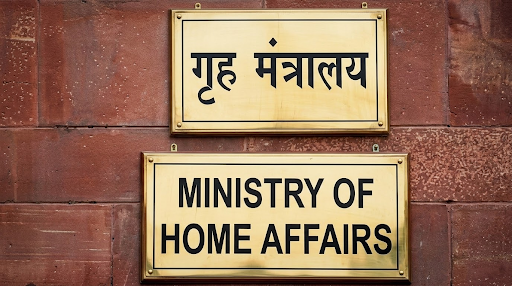
The Ministry of Home Affairs notified the Citizenship (Amendment) Rules 2026, introducing revised provisions related to Overseas Citizen of India (OCI) cardholders and citizenship applications.
|
Read all about: Citizenship Amendment Act (CAA) Explained l Indian Citizenship Law |
Citizenship is the legal status that grants an individual full membership in a state, entailing specific rights (like voting) and duties (like allegiance).
Constitutional Provisions (Articles 5 to 11)
The Constitution does not define the term "citizen" permanently but identifies who became a citizen at the commencement of the Constitution (January 26, 1950) The provisions are:
The Citizenship Act, 1955: Acquisition of Citizenship
The Parliament enacted the Citizenship Act, 1955 to regulate citizenship post-commencement of the Constitution. Citizenship can be acquired in five ways:
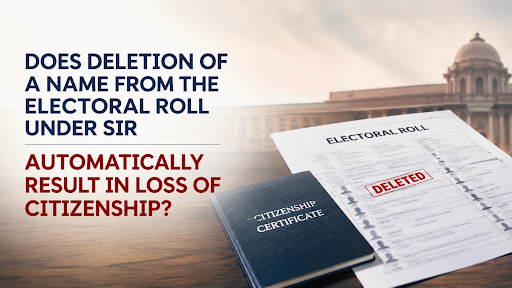
Termination of Citizenship
Under the Citizenship Act, 1955, citizenship can be lost in three ways:
Assam Accord and Section 6A
Section 6A was added to the Citizenship Act in 1985 to fulfill the Assam Accord, resolving mass protests against undocumented immigration from Bangladesh. It created special categories for migrants to Assam:
Citizenship (Amendment) Act (CAA), 2019
The CAA 2019 provided an accelerated pathway to naturalization (reducing the residency requirement from 11 years to 5 years) for persecuted religious minorities from Afghanistan, Bangladesh, and Pakistan.
NRI, PIO, and OCI Status
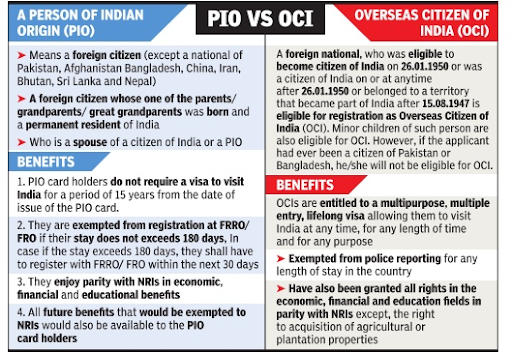
Digital-First OCI Process & e-OCI
Online Application Requirement: OCI registration must now be submitted digitally via ociservices.gov.in. Physical "in duplicate" document submissions have been eliminated to minimize paperwork.
e-OCI Launch: Applicants may now opt for a digital Electronic OCI (e-OCI) certificate alongside or instead of the physical booklet, advancing toward a paperless framework.
Digital Records: Issuing authorities must now maintain electronic OCI cardholder registers instead of manual ones.
Stricter Norms for Minors (Dual Passport Ban)
A new Rule 3 provision formalizes the dual citizenship ban for minors, explicitly stating they "cannot at any time hold the passport of any other country while also holding the Indian passport" to maintain legal consistency.
Renunciation & Cancellation of OCI
Online Renunciation: Declarations to renounce OCI status must be filed online, followed by surrendering the physical card to an Indian Mission or Foreigners Regional Registration Officer (FRRO).
Cancellation Liability: The government may cancel cards that are not surrendered after renunciation or revocation.
New Cancellation Grounds: OCI registration can now be cancelled if a cardholder is charge-sheeted for an offence punishable by 7+ years, supplementing existing sentencing rules of two years or more.
Biometrics & Fast-Track Immigration
Biometric Consent: OCI applicants must now consent to biometric capture for integration with the Fast Track Immigration Programme (FTIP), ensuring seamless immigration processing.
Appeal and Review Mechanism
Higher Authority Review: Amendments establish a structured appeal process for rejected citizenship or OCI applications. Applicants now have a "right to be heard" via a review conducted by an authority "one rank higher" than the original decision-maker.
Source: NEWSONAIR
|
PRACTICE QUESTION Q. Consider the following statements regarding the legal framework for Citizenship in India: 1. The Constitution of India prescribes dual citizenship to clearly demarcate the rights of the Union and the States. 2. Parliament has the exclusive power under Article 11 to regulate the right of citizenship. Which of the statements given above is/are correct? (a) 1 only (b) 2 only (c) Both 1 and 2 (d) Neither 1 nor 2 Answer: (b) Explanation: Statement 1 is incorrect: Unlike federal systems like the USA, the Constitution of India prescribes Single Citizenship. There is no separate state citizenship in India; every citizen is a citizen of the Union of India, regardless of the state in which they reside. This is intended to promote national fraternity and unity. Statement 2 is correct: While Articles 5 to 10 identified persons who became citizens at the commencement of the Constitution, Article 11 gives Parliament the exclusive and plenary power to make any provision with respect to the acquisition and termination of citizenship and all other matters relating to citizenship. Exercising this power, Parliament enacted the Citizenship Act, 1955. |
Part II of the Indian Constitution, encompassing Articles 5 to 11, governs citizenship. While Articles 5 to 10 identify who became a citizen at the commencement of the Constitution, Article 11 empowers Parliament to regulate all future matters regarding citizenship.
Section 6A was inserted in 1985 to legally enforce the Assam Accord, providing a framework to grant citizenship to certain migrants who entered Assam from Bangladesh before March 25, 1971. In October 2024, a five-judge Supreme Court Constitution Bench upheld the constitutional validity of Section 6A.
According to the UIDAI Act, 2016, Aadhaar acts strictly as a biometric proof of identity and residence. The government and courts have explicitly clarified that Aadhaar does not confer or prove formal citizenship.





© 2026 iasgyan. All right reserved