The 2026 Bill replaces self-identification with medical verification, sparking a constitutional clash. While the state aims to regulate welfare and prevent abuse, critics argue this violates the NALSA judgment and the fundamental right to personal autonomy under Article 21.
Copyright infringement not intended
Picture Courtesy: INDIANEXPRESS
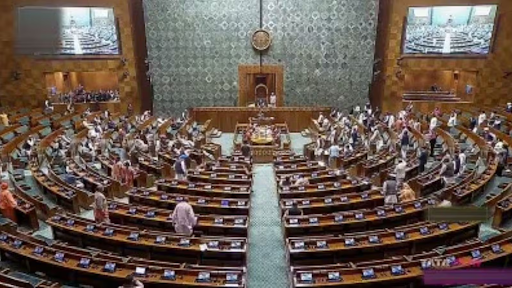
The Parliament passed the Transgender Persons (Protection of Rights) Amendment Bill 2026.
|
Read all about: Transgender Amendment Bill 2026 |
The transition from the Transgender Persons (Protection of Rights) Act, 2019 to the Amendment Bill, 2026 represents a fundamental shift from a "self-identification" model to a "biological-verification" model.
Redefinition of "Transgender Person"
The Bill narrows the legal definition. It now includes:
Removal of "Self-Perceived" Identity
The Change: The Bill omits Section 4(2) of the 2019 Act, which guarantees a person’s right to be recognized as transgender based on "self-perceived gender identity."
Impact: Identity is no longer a matter of personal choice or psychological perception (gender dysphoria) but must align with the new, stricter biological/cultural definition.
Mandatory Medical Verification
New Process: To get a Transgender Certificate, an applicant must now be vetted by a Medical Board (headed by a Chief Medical Officer/CMO).
District Magistrate's Role: The DM will issue the certificate only after examining the recommendation of this medical authority. This replaces the 2019 provision where the DM issued certificates based largely on a self-declared affidavit.
Stricter Penalties for Offences
The Bill introduces graded and severe punishments for crimes against transgender persons, specifically targeting forced conversions:
Mandatory Reporting of Surgery
Surveillance: Medical institutions performing Sex Reassignment Surgeries (SRS) must now formally report the details of such procedures to the District Magistrate.
Clarifying Definitions: Government argued that the 2019 Act’s definition was "vague," creating difficulties in identifying "genuine beneficiaries" who face social exclusion due to biological factors.
Preventing Misuse: Amendment aims to filter out individuals who might claim transgender status solely based on self-perception without "biological or socio-cultural" backing, which the government fears could lead to the misuse of reservations or welfare schemes.
Comparison: 2019 Act vs 2026 Bill
The 2019 Act was aligned with the "Libertarian Principle" of the NALSA judgment (Right to self-identify). The 2026 Bill adopts a "Protectionist/Regulatory Principle," where the State seeks to define and verify identity to prevent criminal exploitation and ensure targeted welfare.
|
Feature |
Transgender Persons Act, 2019 |
Amendment Bill, 2026 |
|
Basis of Identity |
Based on "Self-perceived" gender identity. An individual's psychological sense of self was the primary criteria. |
Based on "Biological or Socio-cultural" criteria. Self-perception is explicitly omitted from the definition. |
|
Legal Definition |
Broad: Included trans-men, trans-women, persons with intersex variations, gender-queer, and socio-cultural identities. |
Narrow: Limited to persons with intersex/congenital biological variations and traditional groups like Kinner, Hijra, Aravani, etc. |
|
Certification Process |
Administrative: The District Magistrate (DM) issued a certificate based on a self-declared affidavit. |
Medicalised: The DM issues a certificate only upon the recommendation of a Medical Board headed by a CMO. |
|
Offences & Penalties |
General penalties ranging from 6 months to 2 years for most offences against transgender persons. |
Graded and severe: Up to Life Imprisonment for forced transgender identity or crimes against transgender children. |
|
Reporting of Surgery |
No mandatory reporting required for Sex Reassignment Surgery (SRS). |
Mandatory Reporting: Medical institutions must report details of all SRS procedures to the District Magistrate. |
|
Sexual Orientation |
Included "persons with different sexual orientations" within the broader protective umbrella. |
Explicitly excludes persons based solely on "different sexual orientations" from the transgender definition. |
Curbing Criminal Syndicates: Introduction of Life Imprisonment for forced transgender identity aimed at dismantling organized "begging mafias" that kidnap and forcibly castrate children to induct them into the trade.
Preventing Benefit Leakage: Narrowing the definition and requiring Medical Verification ensures that affirmative action (reservations/pensions) reaches "genuine" beneficiaries—specifically traditional communities like Hijras and Kinners who have faced historical and biological exclusion.
Standardization of Identity: Under the 2019 Act, different District Magistrates (DMs) had varying interpretations of "self-identification." A Medical Board provides a uniform, expert-led technical standard for issuing ID cards across all states.
Protection of the Vulnerable: Stricter penalties for forced begging (5–10 years) provide a legal shield to transgender persons who are often coerced into exploitative labor due to a lack of other opportunities .
Violation of the NALSA Doctrine: The Supreme Court in NALSA vs Union of India (2014) ruled that the Right to Self-Identify one's gender is a part of the Right to Life and Dignity under Article 21.
Medicalisation of Gender: By linking identity to "biological variations," the Bill treats being transgender as a medical condition (pathologization) rather than a psychological sense of self.
Exclusion of Trans-Men and Trans-Women: The focus on "intersex" or "traditional socio-cultural groups" potentially leaves out millions of trans-men and trans-women who do not have biological variations but identify with a gender different from their sex at birth.
Privacy and Surveillance Concerns: Mandatory reporting of Sex Reassignment Surgeries (SRS) to the DM is seen as state overreach.
Gatekeeping and Harassment: Concern that "Medical Boards" will act as "gatekeepers," where trans persons might face physical examinations, humiliation, or bribery demands just to obtain a basic identity certificate.
Harmonisation with the NALSA Judgement: Government must ensure that "medical verification" does not become a tool for "biological gatekeeping."
Sensitisation and Reform of Medical Boards: Medical Boards must include transgender representatives, psychologists, and social workers alongside medical doctors.
Inclusive Safety Nets for Trans-men and Trans-women: Provide a mechanism for trans-men and trans-women (who do not belong to traditional Hijra/Kinner structures) to seek legal recognition without being forced into biological or cultural stereotypes.
Implementation of Horizontal Reservation: The real progress lies in economic inclusion and reducing the dependency on begging.
Clear Guidelines for "Forced Identity" Cases: To ensure that the bill provisions are used against organized criminal gangs and not misused to harass the community's traditional guru-chela system during legitimate cultural inductions.
Strengthening the Grievance Redressal Mechanism: Dedicated 24x7 Helplines and specialized police units to handle cases of forced labor, begging, and identity crimes specifically affecting trans persons.
The 2026 Amendment shifts from autonomy to a protectionist model, prioritizing safety through harsh penalties for exploitation. However, by removing self-identification, it risks compromising individual dignity and constitutional morality. True empowerment requires the state to balance its role as a guardian with respect for the liberty of transgender citizens.
Source: INDIANEXPRESS
|
PRACTICE QUESTION Q. "The right to self-identification of gender was hailed as a cornerstone of dignity in the NALSA judgment. Does the Transgender Persons (Protection of Rights) Amendment Bill, 2026, dilution of this right undermine the constitutional morality of gender justice?" Critically Analyse. 250 Words |
It is a legislative amendment passed by the Indian Parliament that overhauls the 2019 Act by shifting the legal recognition of transgender identity from a "self-identification" model to a "medical verification" model.
The government introduced the bill to prevent the misuse of welfare schemes by individuals claiming self-perceived identities, streamline resource allocation to historically oppressed groups (like the Hijra community), and end ambiguities in the previous broad definition of transgender persons.
Under the 2019 Act, a District Magistrate could issue a certificate based on a self-declared affidavit. The 2026 Bill mandates medical screening by a Board headed by a Chief Medical Officer (CMO). The District Magistrate will now only issue certificates based on this Board's recommendation.



© 2026 iasgyan. All right reserved