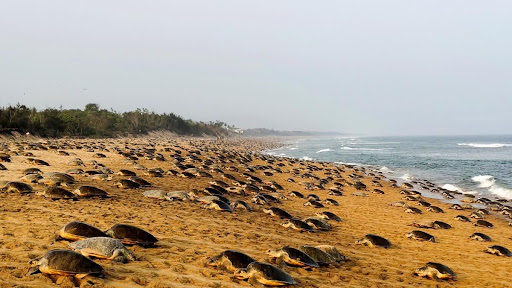
The debate over proposed “turtle trails” highlights tensions between eco-tourism and conservation at sensitive nesting beaches of the endangered Olive Ridley sea turtle. Scientists warn that light, noise, human presence, and tourism infrastructure can disrupt mass nesting events, particularly along Odisha’s globally significant arribada sites. While awareness and livelihoods are important, experts argue that strict protection of core nesting habitats, science-based regulation, and off-site educational initiatives are essential to ensure that conservation priorities are not compromised by tourism development.
Copyright infringement not intended
Picture Courtesy: The Hindu
Context:
The Union Budget proposal to develop “turtle trails” along nesting coasts of Odisha, Karnataka, and Kerala has sparked serious concern among marine conservationists.
|
Must Read: Olive Ridley turtle | OPERATION OLIVIA | |
What are Turtle Trails?
“Turtle trails” is a guided visitor experiences near sea turtle nesting beaches. The idea is to create designated pathways or viewing systems so tourists can learn about turtle conservation.
Olive Ridley turtles:
Olive Ridley turtles are medium-sized marine reptiles recognised by their olive-green, heart-shaped shell. They are primarily carnivorous, feeding on crustaceans, molluscs, and small fish.
A distinctive feature of this species is arribada, a rare phenomenon in which large numbers of female turtles’ nest simultaneously on the same beach.
Distribution:
Protection Status:
Key ecological concerns raised by conservationists on turtle trails:
Conservation Initiatives in India:
Operation Olivia: Indian Coast Guard conducts Operation Olivia every year along the Odisha coast to protect Olive Ridley turtles during their breeding and nesting season, with patrols focused on preventing illegal trawling in offshore congregation areas where turtles gather before arribada.
Turtle Excluder Devices in Fisheries: To reduce accidental turtle deaths in fishing operations, the Odisha government has mandated the use of Turtle Excluder Devices in trawl nets, which are specially designed escape openings that allow trapped turtles to swim out safely while retaining the commercial fish catch.
Tagging and Scientific Research initiatives: Conservation agencies and researchers use non-corrosive metal tags to mark Olive Ridley turtles, enabling long-term monitoring of migration routes, habitat use, and nesting patterns, which supports evidence-based conservation planning and international cooperation in sea turtle protection.
Strategic measures for the conservation of Olive Ridley turtles during mass nesting:
Conclusion:
“Turtle trails” can contribute to conservation only if they are guided by strong ecological safeguards, science-based planning, and strict regulation, so that awareness generation and livelihood opportunities do not come at the cost of disturbing fragile coastal ecosystems and the critical nesting habitats that endangered sea turtles rely on for their long-term survival.
Source: The Hindu
|
Practice Question Q. The proposal to develop “turtle trails” along India’s coasts has triggered debate between eco-tourism promotion and wildlife conservation. Discuss the ecological concerns associated with tourism near mass nesting sites of Olive Ridley turtles. (250 words) |
Turtle trails refer to proposed eco-tourism initiatives intended to promote awareness and guided visitor experiences near sea turtle nesting beaches, particularly along coasts where Olive Ridley turtles come ashore for mass nesting
The Olive Ridley sea turtle is an endangered marine species known for its rare mass nesting phenomenon called arribada, and India hosts some of the largest nesting populations in the world, making its conservation globally significant.
Major arribada sites are located along the Odisha coast, especially at Gahirmatha Beach and Rushikulya river mouth, which are considered critical reproductive habitats.



© 2026 iasgyan. All right reserved