The RBI proposal shifts from reactive to proactive fraud prevention. By proposing AI-driven detection, mandatory lags for high-value transfers, and inter-agency collaboration, regulators aim to balance security and convenience while protecting users from sophisticated digital scams.
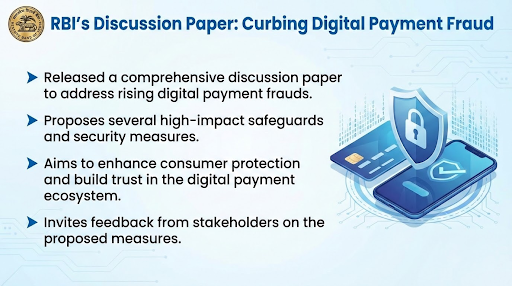
The Reserve Bank of India (RBI) has released a discussion paper proposing new rules to protect consumers from the increasing threat of digital payment frauds.
|
Read all about: DIGITAL FRAUD IN INDIA l CURBING CYBER FRAUDS IN DIGITAL INDIA l RBI PROPOSES ₹25000 COMPENSATION FOR DIGITAL FRAUD l DIGITAL ARREST SCAMS EXPLAINED |
Surge in "Authorised Push-Payment" (APP) Frauds: Digital transactions (including UPI, IMPS, and card payments) have grown 38-fold in the last decade
Vulnerability of Digital Public Infrastructure (DPI): India leads the world in real-time digital payments, accounting for nearly 49% of global transactions. (Source: PIB)
Maintaining Macroeconomic Trust: Digital payment trust is vital for financial inclusion. Cybercrime threatens this trust and stalls economic growth.
The RBI has proposed four primary measures to counter different types of fraud by introducing "strategic friction" into the payment process.
Proposal |
Mechanism |
Targeted Fraud Type |
|
One-Hour "Lag" for High-Value Transfers |
A mandatory 60-minute delay for all first-time account-to-account transfers above ₹10,000. This gives the sender a "golden hour" to cancel the transaction if they realize it's fraudulent. |
Targets psychological manipulation scams like "Digital Arrest", where victims are pressured into making immediate payments out of fear. |
|
"Trusted Person" Authentication |
For citizens aged 70 and above or persons with disabilities, transactions over ₹50,000 must be approved by a pre-designated "trusted person" for secondary authentication. |
Protects vulnerable demographics from impersonation scams. The elderly are disproportionately targeted, accounting for nearly 22% of financial cybercrimes. |
|
Annual Credit Ceiling on Accounts |
An annual credit limit of ₹25 lakh on accounts without additional business verification. Any excess funds received are held as "shadow credit" until verified by the bank. |
Aims to choke the network of "mule accounts" (like rented Jan Dhan accounts) used by criminal syndicates to launder stolen money. |
|
Universal "Kill-Switch" |
A single emergency command for customers to instantly block all their digital payment channels (UPI, cards, net banking). Reactivation would require strict physical verification. |
Empowers citizens to immediately lock down their financial identity upon suspicion of compromise, aligning with the Right to Privacy (K.S. Puttaswamy judgement). |
Economic Friction: The one-hour lag could disrupt the real-time cash flow of small businesses and sole proprietors who rely on the immediacy of UPI for their daily operations.
Increased Compliance Costs: Banks will face operational expenditure to upgrade their core banking systems to manage features like "shadow credits" and "trusted person" authentications.
Risk of Financial Exclusion: Elderly citizens who live alone or lack a digitally savvy "trusted person" may find their legitimate transactions blocked, potentially reducing their financial autonomy.
To secure the digital payment ecosystem, regulators must find a delicate balance between security and convenience.
Shift to Proactive Prevention: Transition from reactive measures to real-time fraud detection using AI and behavioral biometrics.
Foster Institutional Collaboration: Adopt a "Whole-of-Government" approach, syncing the RBI, DoT, and law enforcement to instantly block fraudulent resources.
Prioritize Ecosystem Resilience: Balance security with user convenience to build a resilient digital economy focused on stopping fraud before it occurs.
Learn from Global Best Practices
To protect the digital payment ecosystem, regulators must adopt a proactive model using AI analytics and biometrics for fraud detection, supported by collaborative governance between the RBI and law enforcement to preemptively block threats.
Source: mathrubhumi
|
PRACTICE QUESTION Q. "While Digital Public Infrastructure (DPI) has revolutionized financial inclusion, it also escalated vulnerabilities to sophisticated cybercrimes." Analyze 150 Word |
It is a comprehensive discussion paper released by the RBI that proposes stringent multidimensional safeguards to curb the rising menace of digital payment frauds, aiming to fortify India’s payment ecosystem without stifling its rapid growth.
APP frauds occur when scammers use social engineering tactics—like impersonating law enforcement in "Digital Arrests"—to manipulate and coerce victims into authorizing real-time fund transfers to fraudulent accounts themselves.
Mule accounts are bank accounts, often rented from vulnerable individuals, used by cyber syndicates to receive and launder stolen money. To restrict them, the RBI plans to impose a ₹25 lakh annual credit ceiling on accounts lacking additional business verification, holding excess funds as "shadow credit" pending investigation.





© 2026 iasgyan. All right reserved