Marine oil spills cause catastrophic ecological degradation, severely destroying marine biodiversity, coastal habitats, and traditional livelihoods. Mitigating these disasters requires rapid mechanical recovery, advanced bioremediation, and strict institutional frameworks like the National Oil Disaster Contingency Plan to ensure effective shoreline protection.
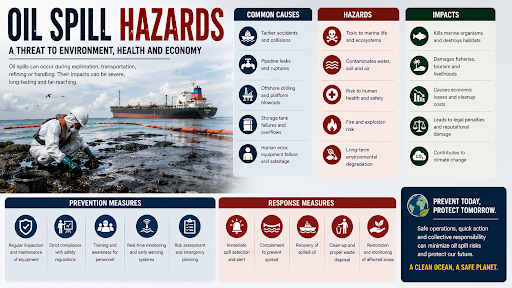
Kerala is deploying a tiered, localized response strategy to protect mangroves and fishing zones from the environmental and economic hazards of coastal oil spills.
An oil spill is the accidental release or discharge of crude oil or refined petroleum products into the environment, contaminating marine ecosystems, groundwater, and coastal habitats.
What Causes Oil Spills?
Marine Mammal Injuries: High levels of oil toxicity lead to respiratory distress, and severe population declines in marine animals.
Sea Turtle Mortality: Floating oil degrades habitats like Sargassum seaweed, causing mass casualties and halting the recovery of endangered sea turtles.
Seabird Casualties: Oil destroys the natural waterproofing and insulation of bird feathers, causing hypothermia, while self-preening leads to fatal internal injuries and anemia.
Coastal Erosion: Spills destroy stabilizing wetland plant root systems, increasing shoreline erosion rates along affected coasts.
Coral Reef Damage: Chronic exposure to oil blocks sunlight penetration and alters water temperatures, disrupting coral reproduction, growth, and development.
Economic and Health Crises: Traditional fishermen suffer severe income loss due to ecosystem degradation, while coastal residents experience nausea, dizziness, and health risks from polluted drinking water.
Oil spill cleanup involves containing, removing, and dispersing oil through methods like floating booms, skimmers, absorbents, and chemical agents, often supplemented by bioremediation and controlled burning.
Key Oil Spill Cleanup Measures
Global Institutional Mechanisms to Manage Oil Spills
International Regulatory Frameworks: Treaties such as the International Maritime Organization (IMO) MARPOL Annex I provide globally recognized, legally binding protocols.
Response and Cooperation Conventions: The International Convention and Oil Pollution Preparedness, Response and Co-operation (OPRC) offers a global framework for managing major incidents and threats of marine pollution.
Indian Institutional Mechanisms to Manage Oil Spills
National Contingency Frameworks: At the national level, the National Oil Disaster Contingency Plan (NOS-DCP) of 2015, 2018, and 2024 provides the macro-framework guiding localized disaster responses.
Central Coordinating Bodies: The Indian Coast Guard serves as the primary central coordinating agency responsible for combating oil pollution across the coastal and marine environments.
State-Specific Oil Spill Contingency Plans (OSCP): Coastal states are developing their own localized frameworks—such as the one drafted by the Kerala State Pollution Control Board (KSPCB)—to manage hazardous marine spills.
Judicial Oversight: The National Green Tribunal (NGT) takes suo motu action on shipwreck impacts, ordering state authorities to fast-track remedial planning.
Mechanical Recovery Limitations: Traditional tools like containment booms and skimmers are costly and lose efficiency in rough seas or with thin oil slicks.
Debated Efficacy of Chemical Dispersants: Dispersants break down oil but pose contested toxicity risks to marine life and plankton.
Incomplete Wildlife Rescue: Rapid oil spread makes rescuing all impacted wildlife over vast ocean territories unrealistic.
Reactive Instead of Preventive Action: Authorities often lack proactive monitoring, deploying mitigation reactively only after disasters occur.
Long-Term Habitat Resilience: Fragile ocean floor habitats and coral colonies can take centuries to recover from settled oil.
Secondary Environmental Damage: Cleanup methods like high-pressure hot-water hoses may cause more harm to coastal habitats than the oil itself.
Environmental Vulnerability Mapping: Creating an Environmental Sensitive Index to map out ecologically fragile coastal areas, local fishing zones, and marine habitats to prioritize shoreline protection during an emergency.
Establish a Clear Chain of Command: True preparedness requires defining concrete duties, responsibilities, and functional crisis management guidelines for all participating departments.
Maintain Inventories of Cleanup Resources: Ports and harbours should maintain updated databases listing all available machinery, skimmers, and control equipment ready for rapid emergency deployment.
Incorporate Predictive Modeling: Response frameworks must proactively integrate hydrodynamic modeling, oil spill trajectory tools, and robust net environmental benefit analysis.
Implement Pre-Cleanup Assessments: Response plans must mandate the thorough scientific assessment of shoreline oil characteristics and on-site conditions before selecting specific cleanup equipment to minimize secondary ecological damage.
Effectively mitigating the disastrous impacts of oil spills requires an urgent transition from reactive cleanup measures to proactive preparedness, rigorous regulatory enforcement, and rapid institutional coordination.
Source: THEHINDU
|
PRACTICE QUESTION Q. Evaluate the ecological consequences of large-scale marine oil spills on coastal biodiversity. 150 words |
An oil spill is the accidental release of crude oil or refined petroleum products into the environment. They are caused by pipeline ruptures, marine vessel accidents, offshore drilling blowouts, and natural disasters.
Oil spills cause devastating physical and toxicological harm. Oil destroys the natural waterproofing of seabirds, leading to fatal hypothermia, while the ingestion of toxic hydrocarbons causes internal injuries.
Responders primarily use mechanical recovery tools like containment booms and skimmers to physically remove oil from the water. Chemical dispersants are used to break slicks into smaller droplets, and in situ burning is used to burn surface oil.


© 2026 iasgyan. All right reserved