Bioremediation uses microorganisms, plants, or engineered biological agents to break down or neutralise pollutants in soil, water, and air. India urgently needs this technology due to widespread contamination of rivers, landfills, industrial clusters, and agricultural soils, coupled with the high cost and limitations of conventional cleanup methods. Government programmes such as DBT–BIRAC funding, NRCP, and Namami Gange have begun supporting pilot-scale bioremediation, while CSIR–NEERI leads scientific development. However, challenges remain—limited site-specific data, weak regulation, low public awareness, and unclear standards for GM microbes. With proper oversight and investment, bioremediation offers a sustainable pathway to restore India’s ecosystems and align with national clean-up missions.
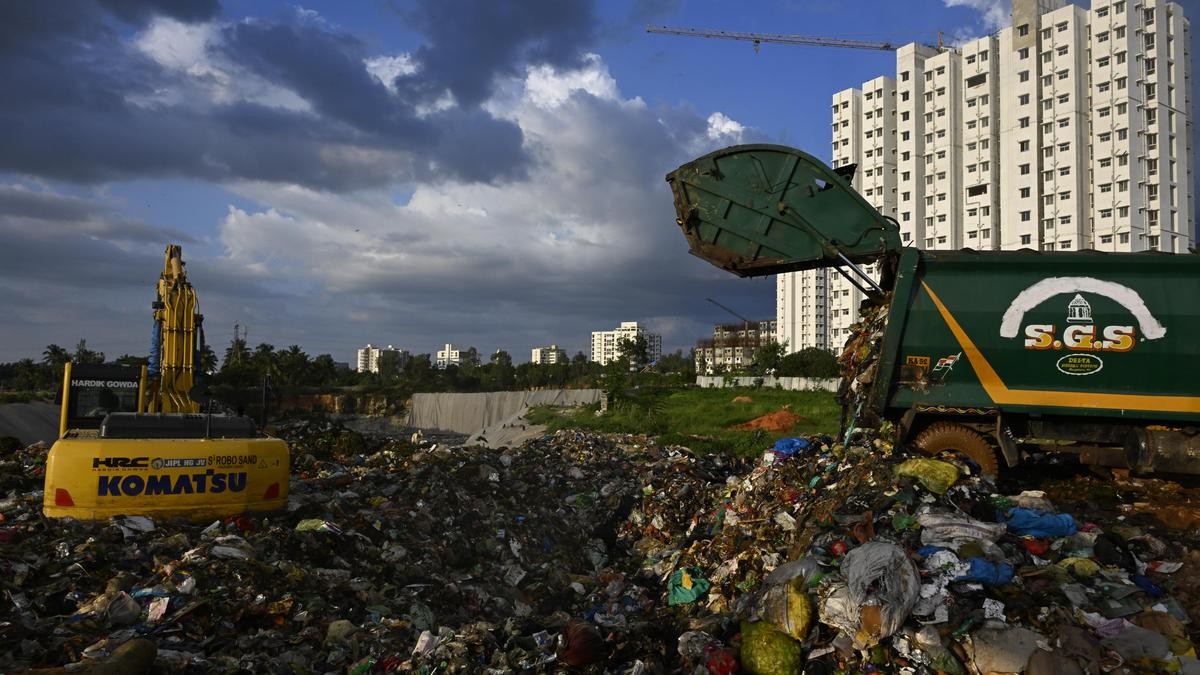
Copyright infringement not intended
Picture Courtesy: The Hindu
India faces an escalating crisis of environmental degradation, where air, water and soil contamination are eroding the quality of life. Traditional clean-up approaches are costly and often generate secondary pollution, making biological solutions increasingly essential. Bioremediation—using living organisms to detoxify polluted environments—has emerged as a sustainable and scalable alternative.
|
Must Read: BIOMINING | SYNTHETIC BIOLOGY | BIOMETHANATION TECHNOLOGY | |
Bioremediation literally means “restoring life using biology.” It relies on microorganisms such as bacteria, fungi, algae, and plants to break down or immobilise pollutants like oil, pesticides, plastics, and heavy metals.
These organisms metabolise contaminants as food, converting them into harmless by-products such as water, carbon dioxide, or simple organic acids. Some microbes can also transform toxic metals into non-leaching forms, reducing their mobility in soil and groundwater.
Types of Bioremediations:
In Situ Bioremediation: Pollutants are treated directly at the contaminated site without excavation. Examples: oil-eating bacteria sprayed on marine spills or microbes injected into polluted aquifers.
Ex Situ Bioremediation: Contaminated soil or water is removed and treated in controlled facilities (bioreactors, biopiles) and returned once detoxified. This method allows better control of microbial growth conditions.
Creating conditions for microbial action: Bioremediation works by either adding specialised microorganisms to a polluted environment or by modifying local conditions so that naturally occurring microbes can thrive. The goal is to encourage microbial activity that targets specific contaminants.
Harnessing the natural abilities of microbes: This approach relies on the inherent capacity of bacteria, fungi, algae and certain plants to dismantle harmful substances. These organisms have evolved biochemical pathways that allow them to use pollutants as food or nutrient sources.
Microbial metabolism of contaminants: During bioremediation, microbes metabolise toxic compounds, using them for energy or growth. As they consume these contaminants, they initiate a series of biochemical reactions that break down complex chemicals into simpler, non-toxic compounds.
Conversion into harmless end products: The pollutants are ultimately transformed into environmentally benign substances such as water, carbon dioxide, simple organic acids or mineral forms. These end products can be safely reabsorbed into the surrounding soil, air or water.
India’s rapid industrialisation, urban expansion, and population growth have pushed ecosystems to a tipping point. Pollution now affects 70% of surface water, over 30% of groundwater blocks, and nearly one-third of India’s land shows signs of degradation (CPCB & ICAR). Conventional remediation technologies thermal treatment, incineration, chemical oxidation are costly, energy-intensive, and often produce secondary pollution. Bioremediation, by contrast, offers a biological, decentralised, and sustainable solution for restoring ecosystems at scale.
Water pollution crisis
Soil contamination
Industrial hotspots
Bioremediation as an economically viable option:
Bioremediation costs are 30–60% lower, depending on pollutant complexity.
It is especially suitable for large, diffuse contamination, where industrial-scale technologies become financially unfeasible.
|
Opportunities |
Explanation |
|
Large-scale cleanup of rivers, landfills, and industrial clusters |
Bioremediation can be deployed across polluted river stretches, legacy landfills, mining zones, and industrial hotspots, enabling cost-effective and sustainable restoration. |
|
Job creation in biotechnology, environmental consulting, and water management |
Expansion of bio-based remediation will generate skilled employment in microbial formulation, environmental monitoring, waste management, and field operations. |
|
Alignment with national missions (Swachh Bharat, Namami Gange, Green Economy goals) |
Bioremediation supports flagship programmes focused on river rejuvenation, scientific waste management, and low-carbon development. |
|
Risks |
Explanation |
|
Ecological imbalance from release of engineered organisms |
Genetically modified or lab-enhanced microbes may disrupt native ecosystems if not rigorously monitored and regulated. |
|
Poor containment, inadequate testing, and weak regulatory oversight |
Insufficient biosafety checks or field monitoring can lead to unintended pollution or health risks, undermining public trust and environmental safety. |
|
Public distrust of microbial or GM technologies |
Low awareness and misinformation about microbes and GMOs can hinder acceptance, slowing deployment and scaling of bioremediation projects. |
Lack of site-specific microbial and pollution profiles: Most Indian polluted sites have not been mapped for their microbial ecology, contaminant composition, or soil–water chemistry. CPCB (2022) identifies over 4,400 polluted river stretches, but fewer than 5–7% have undergone microbial profiling required for precision bioremediation.
Complex Mixtures of Pollutants: Indian waste streams often contain mixed contaminants heavy metals, pesticides, hydrocarbons, pharmaceuticals, making remediation harder.
Climatic Extremes Affect Microbial Survival: India’s environmental conditions—extreme heat, monsoon flooding, fluctuating pH—can reduce microbe survival. Optimal microbial performance typically occurs between 25–35°C, but landfill temperatures often exceed 50°C.
Absence of unified national standards: India lacks a centralised bioremediation protocol, similar to US EPA or EU standards. States follow their own guidelines, leading to inconsistent performance.
Unclear regulations for genetically modified (GM) microbes: India’s GMO laws focus on agriculture and pharmaceuticals, not environmental deployment. No dedicated guidelines exist for open-field release of engineered microbes. Approval processes are slow and risk-averse, discouraging innovation.
Japan
Integrating Bioremediation into Urban Waste Systems. Japan systematically uses plant–microbe combinations (phytoremediation + bioremediation).
European Union
The EU invests heavily through programs like Horizon Europe and LIFE+.
China
China treats bioremediation as part of national soil policy.
Support for Innovation and Startups through DBT–BIRAC
The Department of Biotechnology (DBT) and the Biotechnology Industry Research Assistance Council (BIRAC) have played a major role in building India’s bioremediation ecosystem.
National River Conservation Plan (NRCP)
Namami Gange Programme
Namami Gange has been a major testing ground for bioremediation.
Research and Field Implementations by CSIR–NEERI
The Council of Scientific and Industrial Research – National Environmental Engineering Research Institute (CSIR–NEERI) is at the forefront of bioremediation R&D in India.
Bioremediation offers India a promising pathway to restore polluted ecosystems in a cost-effective and sustainable manner. With strong regulation, scientific investment, and public participation, it can transform India’s approach to environmental management and support a cleaner, healthier future.
Source: The Hindu
|
Practice Question Q. “Bioremediation offers a sustainable alternative to conventional pollution-control technologies, but its adoption in India remains limited.” Discuss (250 words) |
Bioremediation is the use of microorganisms, plants, or biological agents to break down or neutralise pollutants in soil, water, or air, converting them into harmless by-products.
Traditional methods often rely on chemical or mechanical processes that are expensive, energy-intensive, and can create secondary pollution. Bioremediation is biological, cost-effective, and environmentally friendly.
It is applicable in polluted rivers (Yamuna, Ganga), contaminated industrial clusters (Vapi, Korba), landfills (Ghazipur, Deonar), mining areas, agricultural soils, and wastewater drains.



© 2026 iasgyan. All right reserved