The Ningol Van Initiative is an eco-feminist model where women-led SHGs drive forest conservation. By replacing illicit poppy with sustainable plantations via PM Van Dhan Yojana, it tackles ecological degradation while fostering economic resilience and peace-building in Manipur.
Copyright infringement not intended
Picture Courtesy: THEHAWK
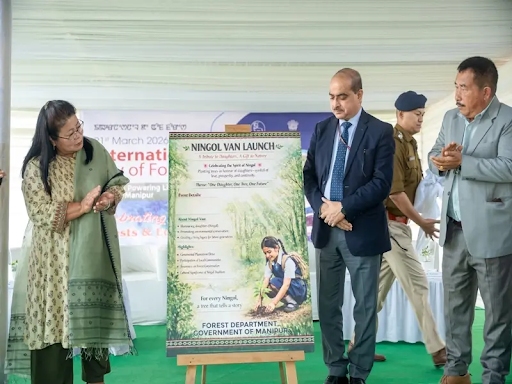
The State Government of Manipur launched the "Ningol Van Initiative" to place women at the forefront of forest conservation, intertwining environmental sustainability with economic empowerment.
In the Meitei culture of Manipur, Ningol refers to a married daughter or woman. The term carries deep cultural respect, symbolizing love, care, and the bond between a woman and her paternal home (celebrated in festivals like Ningol Chakouba).
The initiative positions women as the primary "Guardians of the Green," leveraging their traditional role as protectors of the home to lead environmental conservation and community sustainability.
Core Objectives & Features
The initiative was launched by the Manipur Forest Department with a dual focus: Ecological Security and Livelihood Generation.
Combating "Poppy" with "Plantation": A primary driver is to reclaim lands destroyed by illegal poppy cultivation (a major issue in Manipur's hill districts). The state aims to replace these with sustainable plantations like Bamboo and Aromatic/Essential Oil crops.
Women-Led Conservation: It formalizes the role of women in protecting forests from wildfires, illegal mining, and earth excavation.
Statewide Expansion: While launched centrally, the model is designed to be replicated across all 16 districts of Manipur, involving both hill and valley communities.
Operational Mechanism
The initiative leverages the existing success of the Van Dhan Vikas Kendras (VDVKs).
Significance of the Initiative
Environmental Significance
Socio-Economic Impact
Source: THEHAWK
|
PRACTICE QUESTION Q. Community-based conservation led by women can be the antidote to environmental degradation. 150 words |
It is a forest conservation scheme launched by the Manipur Forest Department. It places local women at the forefront of protecting forests while simultaneously providing them with sustainable, alternative livelihood opportunities.
In Meitei culture, "Ningol" refers to a married daughter or woman. It carries deep cultural respect and symbolizes love, care, and the strong bond between a woman and her paternal home. The initiative treats forests with the same care a "Ningol" gives to her family.
Eco-feminism is a branch of feminism and a social movement that explores the intersections between the oppression of women and the degradation of nature. It posits that both arise from the same patriarchal and hierarchical power structures that prioritize "masculine" traits like dominance and exploitation over "feminine" values like care and sustainability.





© 2026 iasgyan. All right reserved