Between 2020 and 2025, nearly 80% of National Green Tribunal rulings reportedly favored developers, diverging from the Supreme Court’s Ankita Sinha mandate calling it a specialized environmental protector. Technical dismissals, resource gaps, and strategic projects weakened the precautionary principle, prompting calls for structural and procedural reforms.
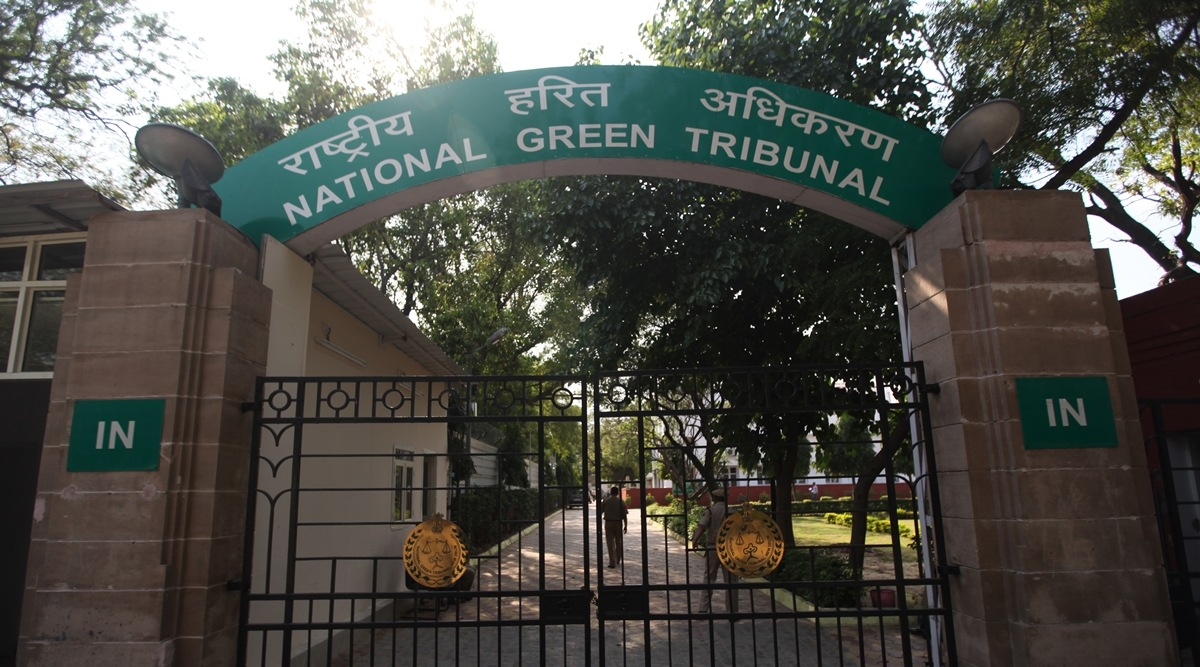
Copyright infringement not intended
Picture Courtesy: INDIANEXPRESS
Context
The National Green Tribunal (NGT) is facing scrutiny for favouring project developers over ecological concerns.
What is the National Green Tribunal (NGT)?
It is a statutory body established under the National Green Tribunal Act 2010, for the effective and expeditious disposal of cases related to environmental protection and conservation.
India is the first developing nation, and third globally, to establish such a dedicated environmental tribunal.
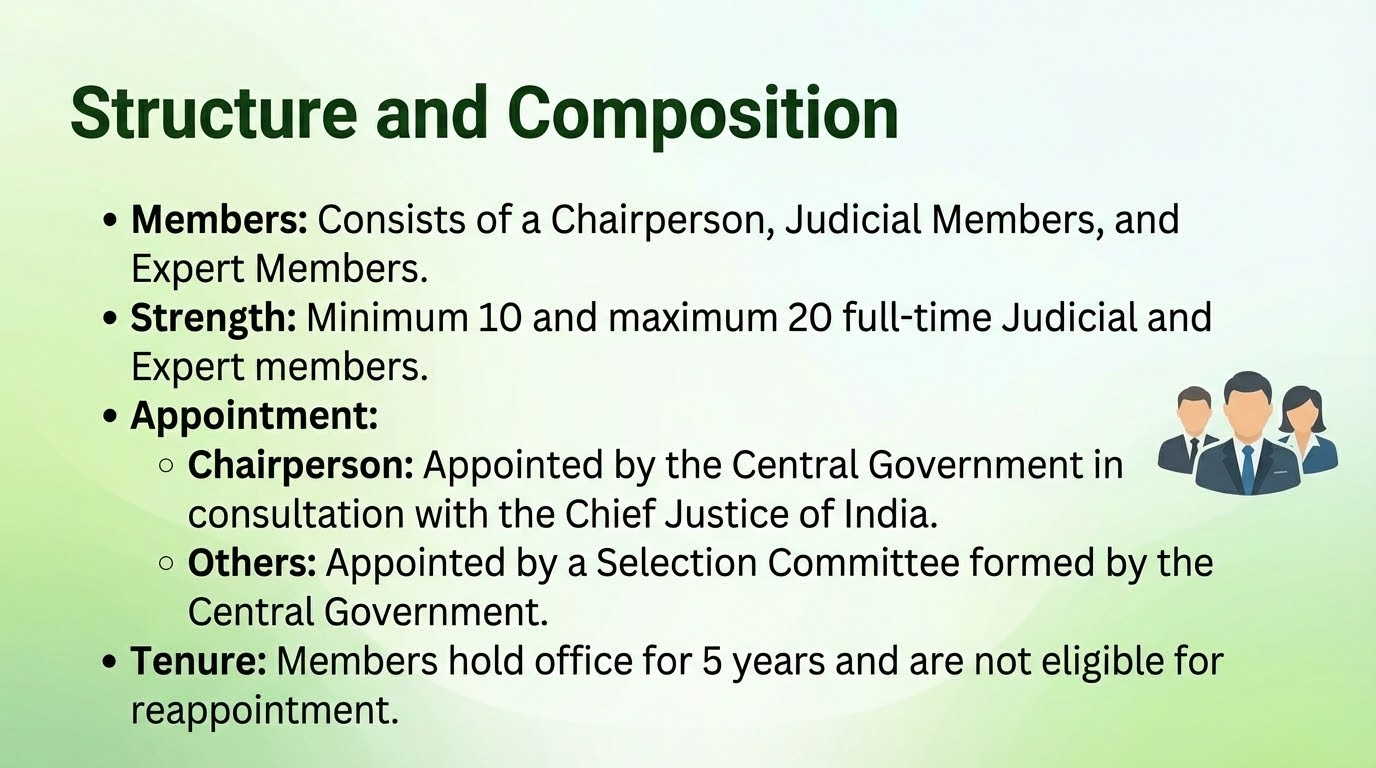
Guiding Principles
The tribunal is guided by the Principles of Natural Justice and specialized environmental doctrines:
Structure and Composition
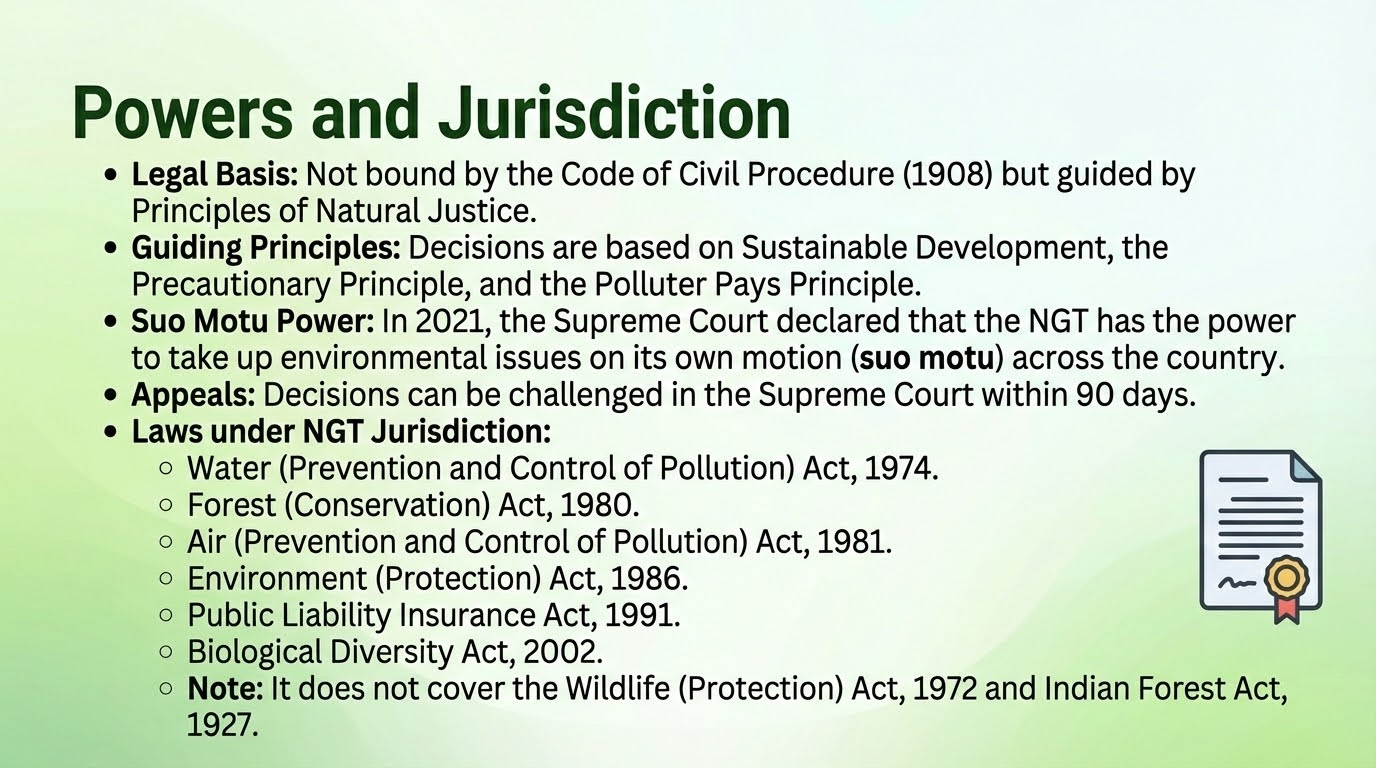
Powers and Jurisdiction
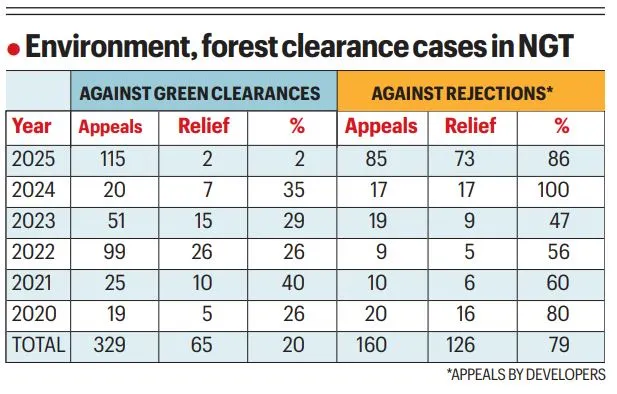
Recent Performance (2020-2025)
|
Category of Appeal |
Period |
Success Rate |
Details |
|
Citizen Appeals (Against Project Clearances) |
2020-2025 |
About 20% |
Only 65 out of 329 appeals were successful. |
|
Industry Appeals (Against Denial of Clearances) |
2020-2025 |
About 80% |
Relief granted in 126 out of 160 cases. |
|
Citizen Appeals (Accelerated Trend) |
2024-2025 |
Only 7% |
A drop in the success rate for citizen-led challenges. |
|
Industry Appeals (Accelerated Trend) |
2024-2025 |
88% |
A success rate for project proponents appealing rejections. |
What are the reasons for the Pro-Developer Shift?
Asymmetry in Resources
Corporate entities possess dedicated legal teams and technical experts to build strong cases. In contrast, local communities and activists lack the financial and technical capacity to challenge complex Environmental Impact Assessment (EIA) reports effectively.
Technical Dismissals ("Time-Barred")
Appeals under Section 14(3) of the NGT Act, 2010, must be filed within 30 days, extendable by 60 days. Many citizen appeals are dismissed due to missed deadlines, as clearance details are often not published accessibly for rural communities.
Prioritization of "Strategic Importance": The NGT permits large-scale projects in sensitive ecological zones, justifying the approvals with claims of national security and strategic needs.
What are the Implications of the Current Trend?
Dilution of the Precautionary Principle
The Vellore Citizens Welfare Forum case (1996) established the Precautionary Principle, requiring preventive action despite scientific uncertainty. However, project approvals despite environmental warnings suggest this principle is weakening.
Legal Deterrence for Vulnerable Communities
While Section 22 of the NGT Act permits a Supreme Court appeal, high litigation costs often make NGT rulings final for marginalized communities, shielding project clearances from further judicial review.
Impact on India's Global Environmental Standing
Despite a focus on 'Ease of Doing Business,' India's environmental performance is weak, ranking 176th out of 180 in the Environmental Performance Index (EPI) 2024, with poor scores in biodiversity and habitat protection.
Way Forward
Conduct "Merit Reviews"
The NGT should move beyond procedural checks and conduct a substantive "merit review" of the environmental clearance process itself, as directed by the Supreme Court in the Hanuman Laxman Aroskar vs Union of India (2019) case.
Address Resource Asymmetry
Establish a "Public Defender" office for the environment to provide legal and scientific support to resource-deprived communities, leveling the playing field against corporate legal teams.
Ensure Transparency
The Ministry of Environment, Forest and Climate Change (MoEFCC) must be mandated to publish environmental clearances in local languages through accessible channels like panchayats.
Strengthen Suo Motu Powers
The NGT should proactively initiate cases based on credible scientific reports and media coverage, in line with the Supreme Court's mandate in the Ankita Sinha case (2021), rather than waiting for formal appeals.
Conclusion
To fulfill its founding vision and help India achieve sustainable development and Net Zero by 2070, the National Green Tribunal must reclaim its role as a robust and impartial environmental watchdog, especially given the current statistical trend favoring project developers.
Source: INDIANEXPRESS
|
PRACTICE QUESTION Q. Discuss the structural and technical challenges that hinder effective environmental justice in India. 150 words |
The Supreme Court's 2021 judgment in Municipal Corporation of Greater Mumbai vs Ankita Sinha defined the NGT as a "specialized protector" of the environment with suo motu powers, meaning it can initiate cases on its own without a formal petition, rather than just acting as a passive adjudicator.
It is a principle of environmental law which dictates that if an action or policy has a suspected risk of causing harm to the public or the environment, the absence of scientific consensus that the action is not harmful should not be used as a reason to postpone mitigation measures.
Suggestions include establishing a "Public Defender" office to assist communities, mandating the publication of clearances in local languages to fix the limitation period issue, institutionalizing "Merit Reviews" of clearances, and reviving the NGT's suo motu powers.



© 2026 iasgyan. All right reserved