The International Solar Alliance has launched the Global Mission on AI for Energy to integrate AI into grid management across 120+ nations. It targets renewable intermittency, decentralized optimization, and climate finance, showcasing India’s Energy Stack and DPI, while confronting digital divides, data sovereignty issues, and AI’s energy footprint.
Copyright infringement not intended
Picture Courtesy: DOWNTOEARTH
Context
The International Solar Alliance (ISA) launched the "Global Mission on AI for Energy" during the India AI Impact Summit 2026 in New Delhi.
|
Read all about: International Solar Alliance Explained l Why India is a Leader in Renewable Energy |
What is the Global Mission on AI for Energy?
The International Solar Alliance (ISA) has launched the "Global Mission on AI for Energy" to help its 120+ member nations integrate Artificial Intelligence (AI) into their energy systems.
The mission is guided by the ISA report "Smarter and Citizen-Centric Power for Shared Prosperity," which highlights the synergistic relationship between clean energy growth and digital expansion.
Key Pillars of the Mission
The mission is built on three foundational pillars designed to create a supportive ecosystem for AI in the energy sector.
Why is AI Critical for the Energy Transition?
Managing Renewable Intermittency
Solar and wind power generation is variable. AI algorithms can process vast amounts of weather data to accurately predict energy generation, helping grid operators maintain stability and reliability.
Optimizing Decentralized Grids
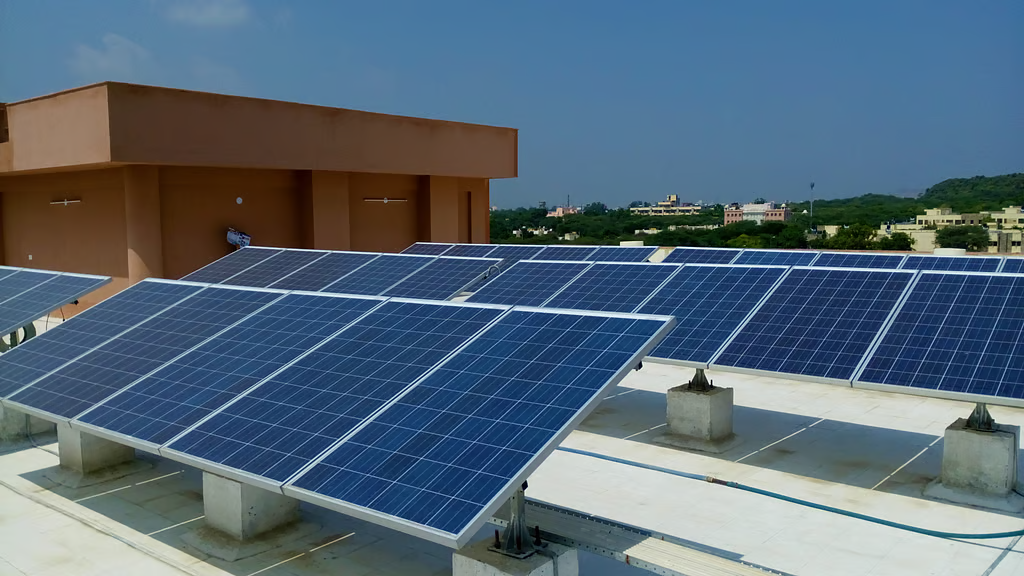
With the rise of "prosumers" (consumers who also produce energy via rooftop solar), grids must manage complex, two-way power flows, for which AI is essential for optimizing traffic and preventing grid failures.
Reducing AT&C Losses
AI-powered smart meters and monitoring systems help utilities detect electricity theft and predict equipment failures. This reduces Aggregate Technical & Commercial (AT&C) losses.
The "India Energy Stack" as a Global Model
India's success with Digital Public Infrastructure (DPI), like UPI, provides a model for the "India Energy Stack," an open-source, interoperable platform for the electricity sector.
Citizen-entric: Integrates consumers, utilities, and financial institutions on a digital platform for streamlined services (e.g., subsidy disbursement).
Scalable Model: Provides a template for developing nations to adopt smart, decentralized grid systems, bypassing traditional infrastructure.
Innovative Technologies
|
Technology/Solution |
Developer |
Details |
|
Digital Consumer Interface (One Solar App) |
BSES Rajdhani Power Limited (BRPL) |
Digitizes the entire rooftop solar journey for consumers, from application to net-metering, enhancing transparency and trust. |
|
Digital Twin Solutions |
Indian Start-ups |
Creates a virtual replica of the physical grid, allowing utilities to simulate scenarios (like mass EV charging) and plan upgrades without risking grid stability. |
|
GIS-Based Modernization |
APEPDCL (Andhra Pradesh) |
Uses Geospatial Information Systems (GIS) to map all grid assets, enabling precise fault location and reducing power outage durations. |
What are the Challenges in Implementing Global AI-for-Energy Mission?
The Digital Divide
Many ISA member nations, especially in Africa, have low internet penetration. AI-based solutions are ineffective without foundational digital connectivity. Globally, 2.6 billion people remain offline, mostly in the Global South. (Source: UN ITU)
Outdated Power Systems
Legacy infrastructure often lacks the digital capabilities (like smart meters and sensors) needed for real-time AI integration
Data Sovereignty and Privacy
Sharing critical grid data with AI platforms, often foreign-hosted, poses national security and data privacy risks, necessitating robust legal frameworks like India’s Digital Personal Data Protection Act, 2023.
High Energy Consumption of AI
Data centers powering AI are projected to consume over 1,000 terawatt-hours (TWh) annually by 2026—roughly equivalent to Japan's total electricity usage. (Source: IEA)
High Upfront Costs
Implementing AI requires substantial capital expenditure (CAPEX) for sensors, specialized hardware, and upgrading physical grids.
Decarbonization Conflict
Growth in AI energy demand may outpace the speed of solar and renewable deployment in some regions, potentially undermining net-zero goals.
Cybersecurity Risks
Integrating AI into critical energy infrastructure broadens the "attack surface" for cyber threats, including data poisoning and adversarial attacks.
Way Forward
Scaling Digital Public Infrastructure (DPI)
Replicating the India Energy Stack with Interoperable Rails, a Unified Energy Interface (UEI) like UPI, and apps like the "One Solar App" for seamless digital integration of energy assets and prosumers.
Operationalizing "Green AI"
Countering AI's high energy demand by mandating data centers be powered by 24/7 carbon-free energy, using AI for Optimized Workloads (shifting tasks to peak solar/wind times), and favoring smaller, Domain-Specific Models.
Strengthening Grid Resilience
Transitioning AI from pilots to system-wide transformation through Digital Twins for simulation, and accelerating Smart Grid Modernization with a target of 200 million smart meters in India.
Financial and Institutional Mobilization
Addressing the funding gap via Blended Finance, developing Standardized Frameworks for ethical AI/cybersecurity, and investing in hybrid human capital.
Strategic Partnerships
Leveraging initiatives like the U.S.-India TRUST initiative and the STAR-C initiative for global knowledge and best practice exchange on "Green AI."
Conclusion
For the Global Mission on AI for Energy to succeed, the ISA must focus on systemic adoption through capacity building, promoting "Green AI" with renewable-powered infrastructure, and developing a "Unified Energy Interface" for a seamless global clean energy ecosystem.
Source: DOWNTOEARTH
|
PRACTICE QUESTION Q. Implementing AI in the energy sector offers immense benefits but comes with significant structural and environmental costs. Critically analyze. 150 words |
It is an initiative launched by the International Solar Alliance (ISA) to accelerate the transition to clean energy in member countries. It focuses on using Artificial Intelligence to manage power grids, predict renewable energy generation, and standardize energy policies across the Global South.
AI helps manage the "intermittency" of renewables (fluctuations due to weather). Algorithms process weather data to predict solar and wind output accurately, allowing grid operators to balance supply and demand efficiently and prevent grid collapses.
Modeled after India's successful UPI (Unified Payments Interface), the India Energy Stack is a set of open APIs and digital public infrastructure designed to streamline power delivery, integrating consumers, vendors, and banks on a single interoperable platform.



© 2026 iasgyan. All right reserved