For 35 years, India and Pakistan have exchanged lists of nuclear sites under the 1988 Agreement on Prohibition of Attack against Nuclear Installations. While it reduces risks and endures crises, deep mistrust, narrow scope, and new threats like cyber warfare limit its impact, demanding expansion and fresh strategic dialogue.

Copyright infringement not intended
Picture Courtesy: NDIANEWSNETWORK
On January 1, 2026, India and Pakistan conducted their annual exchange of lists detailing their respective nuclear installations and facilities.
|
Read all about: India's Nuclear Doctrine Needs Flexibility l India's Push on Nuclear Deterrence l India-Pakistan Ceasefire Declaration Explained l India Suspends Indus Water Treaty l Operation Sindoo |
On January 1st each year, India and Pakistan participate in a confidence-building measure (CBM) by exchanging a list of their respective nuclear installations and facilities.
This has been done without interruption since 1992, highlighting its significance as a durable communication channel even during periods of extreme bilateral tension.
It is a bilateral treaty designed to build confidence and reduce the risk of nuclear escalation between the two nuclear-armed neighbors.
Signed On: December 31, 1988, by Prime Minister Rajiv Gandhi and Prime Minister Benazir Bhutto.
First Exchange of Lists: January 1, 1992.
Core Mandate: Both countries pledge to refrain from undertaking, encouraging, or participating in any action aimed at causing destruction or damage to any nuclear installation in the other country.
Key Provisions
Resilient Confidence-Building Measure (CBM)
It is one of the most successful CBMs between the two nations, having survived major crises like the Kargil War (1999), the Parliament Attack standoff (2001-02), the Mumbai Attacks (2008), Balakot airstrikes (2019), and the Operation Sindoor (2025).
Reduces Risk of Miscalculation
By clearly identifying non-attackable sites, the agreement minimizes the chance that a nuclear facility could be mistaken for a conventional military target during hostilities, thereby preventing a catastrophic escalation.
Maintains a Vital Communication Channel
It ensures a formal, predictable line of communication remains open even when all other high-level diplomatic and political dialogues are suspended.
Upholds Global Norms
The practice reinforces the international norm of protecting civilian nuclear infrastructure, a key principle for preventing nuclear terrorism and radiological disasters.
Deep-Seated Trust Deficit
The agreement's biggest weakness is the lack of a verification mechanism. There is no role for an independent body like the International Atomic Energy Agency (IAEA) to verify the completeness or accuracy of the shared lists.
Narrow Scope in a Modern Context
The agreement addresses declared, static sites, but not newer threats like Pakistan's development of mobile battlefield Tactical Nuclear Weapons (TNWs), which are outside its scope.
Symbolism Over Substantive Impact
Critics claim the annual nuclear exchange is a failed ritual, as both India and Pakistan continue to modernize and expand their arsenals. As of 2024, estimates suggest India has 172 warheads, and Pakistan has 170 warheads. (Source: SIPRI).
Inadequacy in Hybrid Warfare
The 2025 Pahalgam attack-Operation Sindoor rapidly escalated a sub-conventional conflict (terrorist attack) to a conventional level, nearly triggering a nuclear crisis. This demonstrated that current Confidence Building Measures (CBMs) are inadequate for managing swift escalations.
Other India-Pakistan CBMs
Pre-Notification of Ballistic Missile Tests (2005)
Largely effective. Both sides are required to provide at least three days' advance notice of any flight test of a ballistic missile. This has been consistently adhered to.
DGMO Hotline
The direct, secure communication between Directors General of Military Operations (DGMO) has been highly effective in de-escalation, notably leading to the successful February 2021 agreement to uphold the ceasefire along the Line of Control (LoC).
Agreement on Consular Access (2008)
Partially effective. Requires biannual exchange of civilian prisoner and fisherman lists, but implementation is inconsistent, often involving delayed or denied consular access.
Lahore Declaration (1999)
The visionary document, intended to resolve all disputes including Kashmir, became defunct after the Kargil War derailed it months after signing.
Expand and Modernize CBMs
Expand the non-attack agreement to cover critical infrastructure like dams and petrochemical plants. New talks are crucial for addressing risks from TNWs, missile defense, and space assets.
Address Emerging Domains
India and Pakistan need dialogue on risk reduction in new domains like cyberspace and AI. A cyberattack on a nuclear command and control system is a grave threat lacking bilateral safeguards.
Enhance Verification
To build trust, both sides could explore mutually acceptable technical or third-party verification to add credibility to exchanged information.
Resume Comprehensive Dialogue
CBMs manage, not resolve, conflict. They can't replace sustained dialogue addressing the root cause: cross-border terrorism.
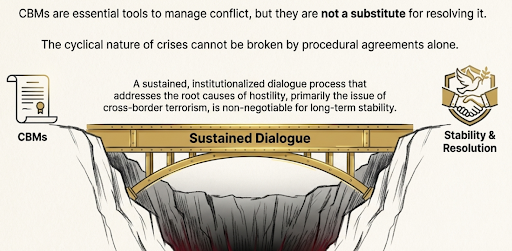
The annual exchange of nuclear lists symbolizes a shared commitment to avoiding nuclear catastrophe, a vital but insufficient pillar for a much-needed comprehensive fabric of South Asian peace and security.
Source: NDIANEWSNETWORK
|
PRACTICE QUESTION Q. "The annual exchange of nuclear installation lists between India and Pakistan is a rare island of stability in a sea of diplomatic hostility." Critically analyze. (250 words) |
The core purpose is to prevent either India or Pakistan from attacking the other's nuclear facilities. Both nations pledge to refrain from any action that could cause destruction or damage to any nuclear installation, thereby reducing the risk of a catastrophic nuclear escalation, especially during a conventional conflict.
The agreement was signed in 1988 and came into force in 1991. The first exchange of lists took place on January 1, 1992. As of January 1, 2026, the exchange has been conducted for 35 consecutive years without interruption.
The key limitations are: a deep-seated trust deficit as there is no third-party verification of the lists' accuracy; a narrow scope that only covers declared static sites and not mobile tactical nuclear weapons; and its failure to stop the overall nuclear arms race in the region.


© 2026 iasgyan. All right reserved