The TomTom Traffic Index 2025 exposes India’s deepening urban mobility crisis, with Bengaluru and Kolkata among the world’s slowest cities. Car-centric growth, weak public transport, and poor planning drive economic and health losses, demanding a shift to people-centric mobility via public transport, congestion pricing, and Transit-Oriented Development.
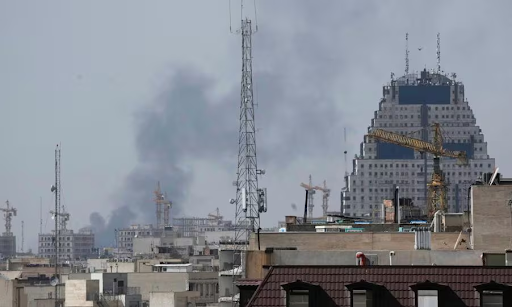
Copyright infringement not intended
Picture Courtesy: DOWNTOEARTH
Context
According to the TomTom Traffic Index 2025, Indian cities are facing a severe mobility crisis, with Bengaluru and Kolkata featuring among the world's five slowest cities for travel.
What is TomTom Traffic Index?
It is an annual report published by the location technology specialist TomTom that provides a detailed analysis of traffic congestion and mobility trends in hundreds of cities worldwide.
Scope: The 15th edition (released in January 2026) covers 500 cities across 62 countries.
Core Metrics: It benchmarks cities based on:
Data Sources: The index is compiled using anonymised GPS data from a global community of over 600 million connected devices.
Significance: It serves as a tool for city planners, policymakers, and drivers to identify bottlenecks, evaluate infrastructure changes (like new cycle lanes or speed limit reductions), and make data-driven decisions to improve urban mobility.
Key Findings of the TomTom Traffic Index 2025
Slowest Cities: Barranquilla, Colombia and London, UK were ranked as the world's slowest cities based on travel time per kilometer.
India is ranked the fifth most congested country globally and the second most congested in Asia.
Shifting Commuting Patterns
Core Reasons for Worsening Urban Congestion
Explosive Growth in Private Vehicles
Vehicle ownership has rapidly increased, overwhelming road infrastructure. Registered vehicles surpassed 41.54 crore by January 2026. (Source: Vahan Dashboard).
Inadequate Public Transportation
Unreliable, overcrowded public transport and poor first and last-mile connectivity force commuters to use private vehicles.
Fragmented Urban Planning
Lack of integrated land use and transport planning causes urban sprawl, disconnecting residences from work hubs and forcing longer commutes.
Delayed Infrastructure Projects
Bureaucratic hurdles and land acquisition delays hindering projects like flyovers and metro expansions, exacerbating traffic bottlenecks.
Impact of Traffic Congestion
Severe Economic Costs
Congestion leads to losses in productivity and wasted fuel. A study estimated that traffic in Delhi, Mumbai, Bengaluru, and Kolkata costs the economy $22 billion annually. (Source: Boston Consulting Group)
Environmental Degradation
Transport sector is a major source of urban air pollution. Slow, stop-and-go traffic increases emissions of PM2.5, Nitrogen Oxides (NOx), and other harmful pollutants.
Negative Impact on Quality of Life
Daily exposure to traffic jams, noise, and pollution causes serious health issues like respiratory illnesses and stress, with the loss of personal time, such as the 168 hours lost by a Bengaluru commuter, degrading the quality of life.
Way Forward
Prioritize Public Transport
Invest in expanding and modernizing integrated public transport networks (metro, buses) with seamless connectivity, as outlined in the National Urban Transport Policy (NUTP).
Implement Demand Management
Adopt "push" strategies like congestion pricing and higher parking fees to discourage private vehicle use, alongside "pull" strategies of improving public transport.
Embrace Transit-Oriented Development (TOD)
Promote dense, mixed-use urban development around public transport hubs to reduce the need for long-distance travel by creating walkable and cyclable communities.
Leverage Technology
Use intelligent traffic management systems, data analytics for planning, and integrated digital payment solutions to optimize existing infrastructure and improve commuter experience.
Learn from Global Best Practices
|
City |
Strategy Implemented |
Lesson for India |
|
Singapore |
Electronic Road Pricing (ERP): A system that charges vehicles based on real-time traffic conditions during peak hours. |
Demonstrates the success of demand-responsive pricing in discouraging non-essential travel and promoting public transport use. |
|
London, UK |
Congestion Charge Zone: A fixed daily charge for vehicles entering the city center. |
Shows that revenue from congestion pricing can be reinvested to improve public transport infrastructure, creating a positive feedback loop. |
|
Curitiba, Brazil |
Bus Rapid Transit (BRT) System: A high-capacity, low-cost transit system with dedicated bus lanes and prepaid stations. |
Provides a cost-effective and efficient model for mass transit that can be adapted in Indian cities, as seen in Ahmedabad's 'Janmarg' BRTS. |
Conclusion
A fundamental policy shift towards a people-centric model that prioritizes public transport, walking, and cycling is essential to prevent urban gridlock and secure India's economic growth, environmental health, and the well-being of citizens.
Source: DOWNTOEARTH
|
PRACTICE QUESTION Q. "Urban congestion in India is not merely a traffic problem but a reflection of flawed urban planning." Discuss. 150 words |
The index reveals a severe mobility crisis, ranking Bengaluru as the 2nd and Kolkata as the 4th slowest cities globally. Pune also features in the top 5 most congested cities. The report highlights significant time lost in traffic (e.g., 168 hours annually in Bengaluru) and a trend of traffic congestion spreading beyond traditional peak hours.
The primary causes include an explosive growth in the number of private vehicles, inadequate and poorly integrated public transportation systems, fragmented urban planning that disconnects residential and commercial areas, and significant delays in critical infrastructure projects.
TOD is an urban planning strategy that promotes the development of dense, mixed-use (residential, commercial, and recreational) areas around public transport hubs. It helps reduce traffic congestion by minimizing the need for long-distance commutes, as jobs, homes, and services are located within walkable or cyclable distances from a transit station.


© 2026 iasgyan. All right reserved