The February 2026 energy dialogue between India and Bhutan focused on operationalising Punatsangchhu and Sankosh hydropower projects. It marked a shift toward integrated grid partnership, addressing energy deficits, debt risks, and geopolitics, with a 2040 roadmap stressing solar diversification.
Copyright infringement not intended
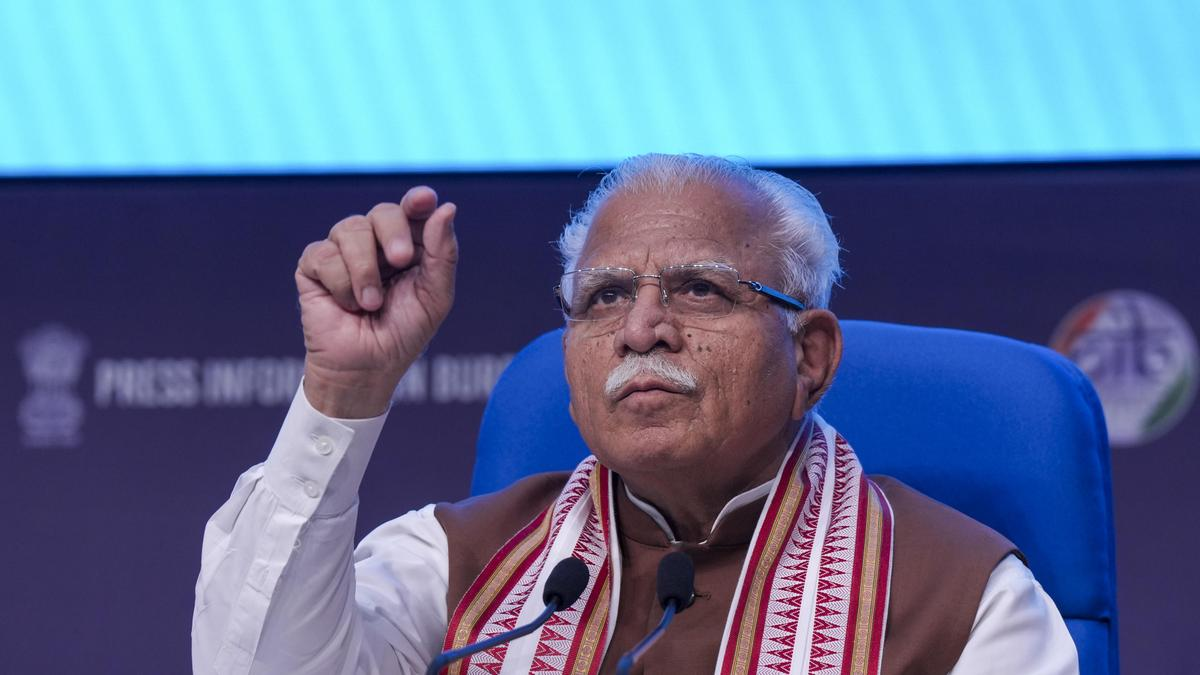
Picture Courtesy: THE HINDU
Context
India and Bhutan have agreed to a long-term energy roadmap focusing on the commissioning of major hydroelectric projects and integrated grid planning through 2040.
|
Read all about: India-Bhutan Relationship Explained |
India-Bhutan Hydropower Cooperation
The partnership, established in 1961 with the Jaldhaka agreement, has expanded its funding strategies beyond direct government grants to include joint ventures and public-private partnerships (PPP)
Why Hydropower is Central to Bilateral Ties?
Economic Symbiosis
Hydropower is the economic backbone of Bhutan, contributing nearly 14% of its GDP and 26% of government revenue, and provides India with clean, reliable peaking power to stabilize its national grid.
Mutually Beneficial Seasonality
The cooperation is naturally complementary because India’s summer power peak aligns with Bhutan’s high hydro generation, while Bhutan’s winter peak aligns with India's thermal power surplus.
Strategic Interdependence
Large-scale, jointly developed infrastructure projects establish long-term economic ties, increase mutual reliance, and offer a strategic defense against external geopolitical pressures in the volatile Himalayan area
Major Hydropower Projects
The February 2026 dialogue between India and Bhutan prioritized resolving bottlenecks and advancing three mega-projects.
|
Project Name |
Capacity (MW) |
Latest Update (Feb 2026 Dialogue) |
Strategic Importance |
|
Punatsangchhu-II |
1020 MW |
In final stages. Focus has shifted to commercial optimization for efficient pricing and grid integration. |
Will boost Bhutan's power export capacity and government revenue. |
|
Punatsangchhu-I |
1200 MW |
Long-delayed due to geological instability. Both sides have now committed to "early commissioning," suggesting technical solutions are finalized. |
Its completion will be a major engineering and diplomatic success, reinforcing India's regional leadership. |
|
Sankosh Project |
~2500 MW |
Renewed political will to advance this massive reservoir-based project, which has been under discussion for decades. |
Represents a shift towards storage dams, which offer flood control and water security benefits for India's Northeast, in addition to power generation. |
Emerging Trends: Beyond the Buyer-Seller Model
Bhutan's Rising Domestic Demand
Traditionally a net exporter, Bhutan's domestic power consumption has surged, driven by initiatives like the Gelephu Mindfulness City (GMC) and energy-intensive cryptocurrency mining.
Integration with Indian Energy Market
India now permits Bhutan to trade electricity on the Indian Energy Exchange (IEX), including in the Real-Time Market (RTM), allowing Bhutan to efficiently manage its power surpluses and deficits
Long-Term Transmission Planning (2040)
The joint planning for transmission infrastructure up to 2040 aligns with India’s “One Sun, One World, One Grid” vision, aiming to create a robust grid capable of handling hydropower and future integration of solar and other renewables
Challenges
Geological and Climate Risks
The Himalayas are ecologically fragile, as shown by the delay in Punatsangchhu-I due to landslides and the direct risk to dam safety posed by climate change threats like Glacial Lake Outburst Floods (GLOFs).
Financial Viability and Debt
Although hydropower debt is meant to be paid off by its revenue, large cost overruns can stress Bhutan's economy because much of its external debt is owed to India.
The China Factor
Delays in Indian projects or disagreements over terms could create a political and economic vacuum that China might fill as it negotiates borders with Bhutan.
Way Forward
The India-Bhutan energy relationship requires modernization to ensure its long-term strength.
The future strategy should focus on diversifying the energy mix to include solar, adopting more balanced Joint Venture models for projects, and enhancing sub-regional power trade.
By resolving project delays and updating the cooperation framework, India can secure a stable clean energy supply, bolster Bhutan's economy, and strengthen regional stability.
Source: THE HINDU
|
PRACTICE QUESTION Q. "Hydropower acts as both an economic backbone and a strategic buffer in India-Bhutan relations." Discuss. 150 words |
It is one of the largest hydroelectric projects (1200 MW) in South Asia. For Bhutan, it represents massive revenue potential. For India, it reinforces its role as a regional security provider. However, it has faced delays due to geological instability on the right bank.
Traditionally a power exporter, Bhutan now faces a "winter deficit." While power generation drops in winter (low water flow), domestic demand has surged due to new economic zones like the Gelephu Mindfulness City and crypto-mining operations, necessitating imports from India's thermal grid.
One Sun, One World, One Grid (OSOWOG) is a global initiative proposed by India in 2018, aimed at creating an interconnected, transnational solar energy grid. This initiative unites under the principle that "the sun never sets," facilitating renewable energy sharing across regions to reduce storage needs and enhance solar project viability.

© 2026 iasgyan. All right reserved