The High Seas Treaty, or BBNJ Agreement, creates a global framework to conserve marine biodiversity beyond national jurisdiction. It fills UNCLOS gaps through MPAs, fair sharing of marine genetic resources, EIAs, and capacity building, but its impact depends on ratification, funding, and strong international cooperation.

Copyright infringement not intended
Picture Courtesy: INDIATODAY
Context
The High Seas Treaty, the first global accord protecting international ocean life, officially entered into force, setting legally-binding rules for sustainable high seas resource management.
|
Read all about: BBNJ Treaty || High Seas Governance || Marine Biodiversity |
What is 'High Seas' ?
The High Seas are defined as all parts of the sea outside a nation's internal waters, territorial sea, and Exclusive Economic Zone (EEZ), starting 200 nautical miles from a country's coast.
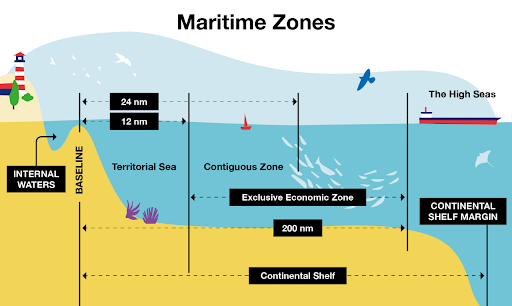
The high seas, which cover more than 64% of the ocean's surface and constitute nearly 95% of its volume, are vital for global processes such as climate regulation, oxygen production, and supporting global fisheries. (Source: Greenpeace)
Before the BBNJ treaty, the 1982 UN Convention on the Law of the Sea (UNCLOS) governed international waters through fragmented agreements focused on activities like fishing and shipping, leaving the conservation of biodiversity largely unregulated.
What is High Seas Treaty?
The High Seas Treaty, formally known as the BBNJ Agreement (Biodiversity Beyond National Jurisdiction), is a legally binding international accord to protect marine life in the "high seas".
It was adopted by the United Nations in June 2023 and entered into force after achieving the required threshold of 60 country ratifications.
Core Pillars of the BBNJ Treaty
The treaty is structured around four interconnected pillars designed to create a holistic governance system for the high seas.
Marine Protected Areas (MPAs)
It provides the first-ever legal mechanism to establish a network of MPAs in international waters, crucial for achieving the "30x30" target of the Kunming-Montreal Global Biodiversity Framework, which aims to protect 30% of Earth's land and sea by 2030.
Marine Genetic Resources (MGRs)
It ensures the fair and equitable sharing of benefits (monetary and non-monetary) from the discovery of genetic material in marine organisms used for pharmaceuticals, biotechnology, and cosmetics.
Environmental Impact Assessments (EIAs)
It mandates standardized assessments for human activities (such as deep-sea mining or carbon sequestration) that may harm fragile marine ecosystems in international waters.
Capacity Building & Technology Transfer (CB&TMT)
It supports developing countries by providing them with the technology, skills, and funding necessary to participate in ocean research and governance.
Status and Governance
Legal Framework: It serves as the third implementing agreement under the United Nations Convention on the Law of the Sea (UNCLOS).
Current Participation: As of mid-January 2026, 83 nations have ratified the treaty. While 145 countries have signed, major maritime powers including the United States, India, China, and Russia have not yet ratified it.
Next Steps: The first Conference of the Parties (COP) is expected to convene within a year of the treaty's entry into force to finalize institutional details and funding mechanisms.
Significance of the Treaty
Environmental
Curbing Biodiversity Loss: A global network of MPAs will create safe havens for marine species, allowing ecosystems to recover and build resilience against climate change.
Climate Change Mitigation: The ocean generates 50% of the oxygen, and absorbs 30% of all carbon dioxide emissions. By protecting marine ecosystems, the treaty helps maintain this vital climate-regulating service. (Source: UN)
Integrated Management: The treaty shifts ocean governance from a fragmented, sector-by-sector approach to a holistic, ecosystem-based management that protects migratory routes and entire ecological corridors.
Socio Economic
Boosting the Blue Economy: By ensuring the sustainable use of marine resources, the treaty supports industries like fisheries, biotechnology, and eco-tourism, contributing to a nature-positive global economy.
Equity for the Global South: The benefit-sharing framework for MGRs ensures that economic gains from deep-sea genetic discoveries are not monopolized by developed nations, promoting global equity.
Enhancing Food Security: The "spillover effect" from MPAs can replenish fish stocks in adjacent waters, supporting the livelihoods of millions in coastal communities and contributing to global food security.
Implementation Challenges
Universal Ratification: The treaty's success depends on ratification by major maritime nations to ensure widespread compliance.
Funding and Enforcement: Monitoring the vast high seas is a financial and logistical challenge. The treaty relies on the political will of member states for enforcement, as it lacks its own punitive mechanisms.
Institutional Coordination: The new framework must be harmonized with existing bodies like the International Seabed Authority (ISA) and Regional Fisheries Management Organisations (RFMOs) to avoid conflicting regulations.
Knowledge Gaps: Deep-sea protected areas need significant funding for marine scientific research because much of the environment remains unexplored.
Way Forward
The High Seas Treaty is a landmark achievement for ocean conservation, but its success depends on strong implementation, sustained political commitment, adequate funding, and international cooperation.
Source: INDIATODAY
|
PRACTICE QUESTION Q. What does 'Biodiversity Beyond National Jurisdiction' (BBNJ) refer to? A) The biodiversity found within a country's Exclusive Economic Zone (EEZ). B) Marine biodiversity in the high seas and the international seabed area. C) The regulation of coastal fishing and aquaculture. D) The protection of terrestrial biodiversity in disputed border areas. Answer: B Explanation: BBNJ specifically refers to marine life in areas that are not under the sovereignty of any single nation. These areas are the "global commons" and include the high seas (the water column beyond 200 nautical miles from the coast) and the international seabed, also known as "the Area." |
The High Seas Treaty, formally known as the agreement on Biodiversity Beyond National Jurisdiction (BBNJ), is a legally binding international treaty under UNCLOS. It aims to ensure the conservation and sustainable use of marine biodiversity in the high seas, which are the areas of the ocean beyond the 200-nautical-mile Exclusive Economic Zones of coastal states.
The treaty is structured around four central pillars:
India signed the High Seas Treaty in September 2024, showing its commitment to global ocean governance. However, it has not yet ratified the agreement. The government is in the process of aligning its domestic laws, like the Biological Diversity Act, with the treaty's obligations before proceeding with ratification.


© 2026 iasgyan. All right reserved