The India–Argentina agricultural work plan (2025–27) strengthens their strategic partnership through joint research in biotechnology, sustainable farming, and value chains. It boosts India’s food security, especially edible oils, leverages Argentina’s climate-smart practices, deepens South–South cooperation, and complements collaboration on lithium, supporting India’s Aatmanirbharta goals.
Copyright infringement not intended
Picture Courtesy: THEHINDU
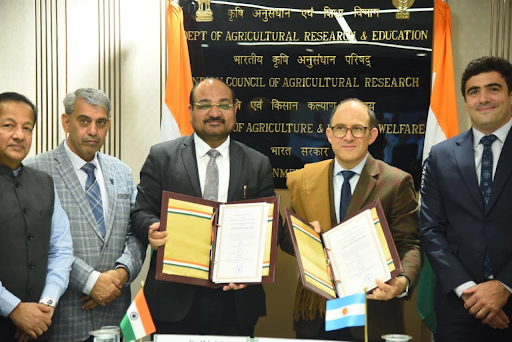
India and Argentina have operationalized a strategic Work Plan for 2025-2027 to deepen their partnership in agricultural research and technology.
India and Argentina have operationalized a strategic Work Plan for 2025-2027 to deepen their partnership in agricultural research and technology.
This agreement between the Indian Council of Agricultural Research (ICAR) and Argentina's National Institute of Agricultural Technology (INTA) aims for a collaborative alliance for innovation, sustainability, and mutual food security.
Sustainable Agronomy: Joint efforts on innovative practices like zero-tillage, micro-irrigation, fertigation, and efficient natural resource management.
Biotechnology & Livestock: Collaboration on climate-resilient crop development, animal biotechnology, precision livestock farming, and veterinary diagnostics.
Germplasm Exchange: Facilitating the exchange of genetic material for vital crops like soybean, sunflower, maize, citrus, and guava to enhance crop diversification and breeding programs.
Digital Agriculture & Mechanization: Promoting the use of digital tools for precision farming, drones, and advanced machinery for cotton harvesting and other operations.
Value Chain Development: Strengthening value chains for oilseeds and pulses, improving post-harvest management, and developing horticulture infrastructure.
Plant and Animal Health: Joint strategies for managing transboundary challenges, including locust surveillance and the elimination of Foot-and-Mouth Disease (FMD).
Enhancing Edible Oil Security: As the world's largest vegetable oil importer, India partners with key supplier Argentina (soybean and sunflower oil) to enhance domestic oilseed production and stabilize supplies.
Access to Climate-Smart Technologies: Argentina, a global leader in conservation agriculture, offers India scalable, climate-resilient solutions to combat land degradation, water scarcity, and climate change impacts.
Boosting Farm Productivity: Argentine precision farming and mechanization technology can boost productivity and cut cultivation costs, helping improve farmers' income.
Strengthening South-South Cooperation: This South-South partnership unites developing nations to address shared issues like food security and climate change, encouraging a more inclusive global order.
|
Key Pillars of India-Argentina Partnership
|
Regulatory Divergence: Different regulatory frameworks for Genetically Modified (GM) crops and pesticides need harmonization for seamless biotechnology cooperation.
Market Access: Non-tariff barriers, including sanitary and phytosanitary (SPS) standards, can impede agricultural trade and germplasm exchange.
Last-Mile Implementation: Ensuring that high-level agreements translate into tangible benefits for farmers requires robust monitoring and involvement of Farmer Producer Organizations (FPOs).
Joint R&D Platforms: Establish dedicated centers of excellence to co-develop technologies suited for the diverse agro-climatic zones of both nations.
Promote Farmer Exchanges: Facilitate regular exchanges of farmers, scientists, and extension workers for practical, grassroots-level knowledge sharing.
Encourage Private Sector Investment: Create a favorable environment for private companies to invest in agri-tech, food processing, and value chain infrastructure.
The strategic India-Argentina agricultural partnership promotes innovation and sustainability, offering a powerful, replicable South-South cooperation model to address global food security and climate change using complementary strengths.
Source: THEHINDU
|
PRACTICE QUESTION Q. Which of the following countries does not share border with Argentina? A) Paraguay B) Venezuela C) Brazil D) Uruguay Answer: B Explanation: Argentina borders Chile (west), Bolivia & Paraguay (north), Brazil & Uruguay (northeast), the South Atlantic Ocean (east), and the Drake Passage (south). 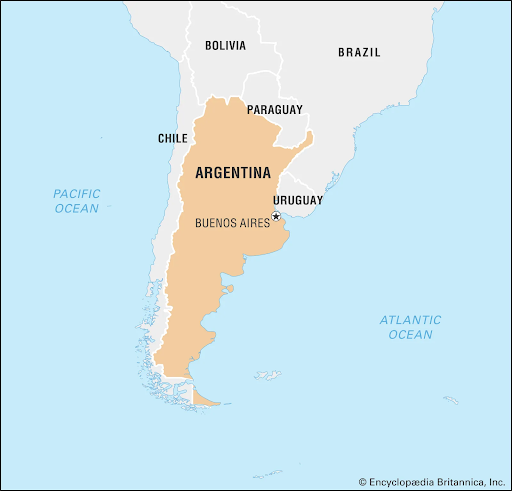 |
It is a strategic agreement for 2025-2027 between the Indian Council of Agricultural Research (ICAR) and Argentina's National Institute of Agricultural Technology (INTA). It aims to boost cooperation in sustainable agriculture, biotechnology, germplasm exchange, and value chain development.
No-till farming is a method where crops are planted without ploughing the soil, using the residue from the previous crop. For India, which faces significant soil degradation, this Argentine practice can help improve soil health, increase water retention, reduce fuel costs, and promote long-term agricultural sustainability.
Silobags are large, flexible plastic tubes that provide a simple and cost-effective solution for on-farm grain storage. For India's small and marginal farmers, they can be a game-changer by drastically reducing post-harvest losses and giving them more control over when to sell their produce.


© 2026 iasgyan. All right reserved