To combat transnational cyber-extortion, the Ministry of Home Affairs is mandating hardware-level fixes like device ID blocking and SIM binding on OTT platforms. This proactive shift, alongside strict KYC norms, aims to dismantle mule account networks and ensure corporate accountability.

Copyright infringement not intended
Picture Courtesy: INDIANEXPRESS
Why In News?
The Government issued a directive to WhatsApp to technically disable "Device IDs" used in fraud, to permanently dismantle the infrastructure used for "Digital Arrest" scams.
|
Read all about: DIGITAL ARREST SCAMS EXPLAINED l SC INTERVENTION ON 'DIGITAL ARRESTS' |
'Digital Arrest' is a sophisticated form of cyber extortion where fraudsters impersonate law enforcement officials to psychologically trap and financially exploit victims.
Modus Operandi of the Scam
Impersonation & Intimidation: Scammers pose as officials from high-profile agencies like the Central Bureau of Investigation (CBI), Enforcement Directorate (ED), or local police.
Psychological Coercion: Victims are falsely accused of being linked to serious crimes such as money laundering or drug trafficking.
Financial Extortion: To "prove their innocence," victims are coerced into transferring their entire savings to specific bank accounts.
Impact of digital arrest scams
The impact of digital arrest scams extends beyond individual financial loss, posing a significant threat to the nation's economy and security.
Massive Financial Losses
According to the Indian Cyber Crime Coordination Centre (I4C), India recorded 1.23 lakh cases of digital arrest in 2024, resulting in a financial loss of Rs 1,935 crore. The total estimated loss to this scam is nearly Rs 3,000 crore.
Erosion of Public Trust
The use of forged Supreme Court orders and impersonation of high-level officials "strikes at the very foundation of public trust in the judicial system," as noted by the Supreme Court, which took suo motu cognizance of the issue in October 2025.
Internal Security Threat
The illicit funds are laundered through hawala and cryptocurrency networks to finance other criminal activities, creating a parallel illegal economy and posing a direct threat to internal security.
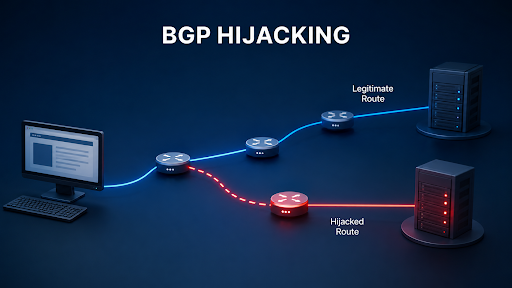
Traditional methods like blocking phone numbers have proven ineffective, as criminals can easily switch SIM cards or use virtual numbers. The government is now focusing on neutralizing the hardware and platforms used in these scams.
Key Directive for WhatsApp by the MHA
Enhanced Safety Features: Introduce better caller identification and explicit warning signals when a user receives a call from a suspicious account or attempts to share their screen.
Blocking Malicious APKs: Strengthen technology to detect and block malicious Android Application Packages (APKs) that criminals use to compromise a victim's device.
Data Retention: As per the IT Rules, 2021, WhatsApp must retain the data of deleted accounts for at least 180 days to aid law enforcement investigations.
AI-Based Detection: Expand the use of Artificial Intelligence (AI) and Machine Learning (ML) to proactively detect deepfakes, synthetic content, and the misuse of official government logos in profile pictures.
|
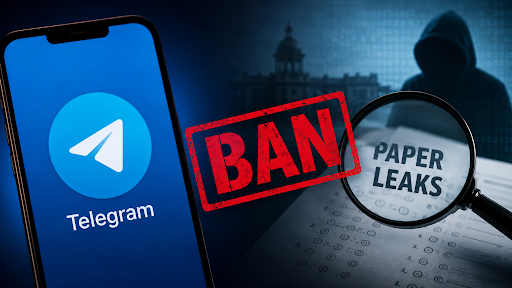
Why Target Hardware (Device IDs) and OTT Platforms? Device-Level Blocking: The MHA has directed platforms like WhatsApp to block the device's unique ID (e.g., IMEI number). This blacklists the smartphone from the platform, making it useless for the scam, even if the SIM card is changed. SIM-Binding Mandate: The Department of Telecommunications (DoT) mandated that Over-The-Top (OTT) apps like WhatsApp and Telegram must implement "SIM binding."
Tackling Cross-Border Operations: Measures are designed to cripple the infrastructure of transnational cybercrime syndicates that operate from hubs in Southeast Asia. |
Coordinated Investigation
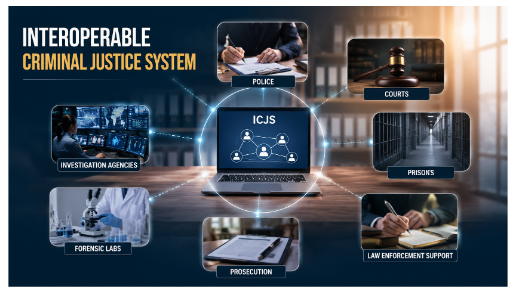
Implement the Supreme Court's mandate for a unified, nationwide CBI probe, supported by state police forces.
Financial Crackdown
The Reserve Bank of India (RBI) must tighten Know Your Customer (KYC) norms to identify and freeze the "mule accounts" that form the scam's financial backbone.
Balancing Security and Privacy
Ensure that surveillance and data retention measures comply with the principles of necessity and proportionality as laid down in the K.S. Puttaswamy (Right to Privacy) judgment.
Enhancing Digital Literacy
Technology alone is not enough. The most powerful defense is a digitally literate and aware citizenry. Nationwide campaigns to educate the public on identifying and avoiding such psychological manipulation scams.
Learn Lessons from Global Best Practices
India can adopt proven strategies from other countries to strengthen its anti-scam framework.
|
Country |
Key Initiative |
Details |
|
Singapore |
Whole-of-Society Approach |
Established an Anti-Scam Centre (ASC) where police, banks, and e-commerce platforms work together for real-time freezing of fraudulent accounts. Its Online Criminal Harms Act mandates platforms to proactively block malicious activity. |
|
United Kingdom |
Corporate Accountability |
The Online Safety Act holds tech executives criminally liable if their platforms consistently fail to prevent fraud, ensuring strong corporate responsibility. |
Tackling the menace of "digital arrest" requires a united front involving technology regulation, stringent law enforcement, corporate accountability, and widespread public awareness to safeguard citizens' financial and psychological well-being.
Source: INDIANEXPRESS
|
PRACTICE QUESTION Q. "The rise of OTT platforms has blurred the lines between private entertainment and public safety." Discuss the national security challenges posed by unregulated digital content. 150 words |
A "digital arrest" is not a legal term but a type of sophisticated cyber-extortion scam. Fraudsters impersonate law enforcement officials (like CBI or police) over video calls, coerce victims into believing they are implicated in severe crimes, and extort money from them under the guise of "virtual confinement" and investigation.
SIM binding restricts app usage (like WhatsApp, Signal, or Telegram) strictly to the active physical SIM card inserted in the smartphone. This eliminates the ability of overseas cyber syndicates to run anonymous, multi-device operations without possessing a local, physical SIM card.
Mule accounts are third-party, rented bank accounts. Cybercriminals use them to immediately transfer and disperse extorted money across multiple states or into cryptocurrencies. This highly organized money laundering tactic makes it extremely difficult for law enforcement to track and recover the stolen funds.

© 2026 iasgyan. All right reserved