Talks on a Global Plastics Treaty remain stalled as high-ambition countries seek caps on virgin plastic, while major producers favour waste-focused solutions. Disputes over chemicals and finance persist. Japan’s bridge-building role aims to break the deadlock amid worsening environmental and health impacts of plastic pollution.
Copyright infringement not intended
Picture Courtesy: DOWNTOEARTH
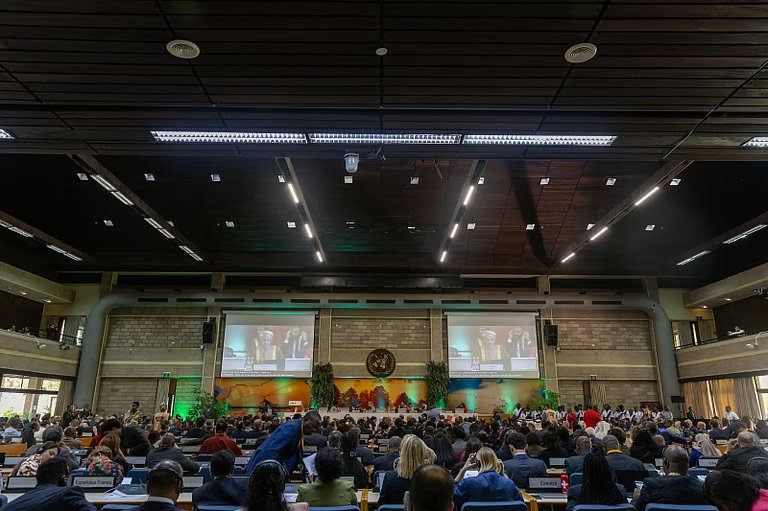
Japan plans informal meetings to overcome the stalemate in global negotiations for a legally binding treaty on plastic pollution
|
Read all about: Global plastic treaty talks l What is Plastic Pollution? Explained |
In 2022, the United Nations Environment Assembly (UNEA) passed a historic resolution (UNEA 5.2) to create an international, legally binding treaty to end plastic pollution.
This treaty aims to address the entire lifecycle of plastic—from the extraction of raw materials and production to its use, disposal, and waste management.
The goal is to establish a comprehensive framework that protects human health and the environment from the escalating plastic crisis.
Negotiations by an Intergovernmental Negotiating Committee (INC) continue after the fifth session (INC-5) in Busan, South Korea, in late 2024 failed to reach a final agreement, setting the stage for further talks in 2025.
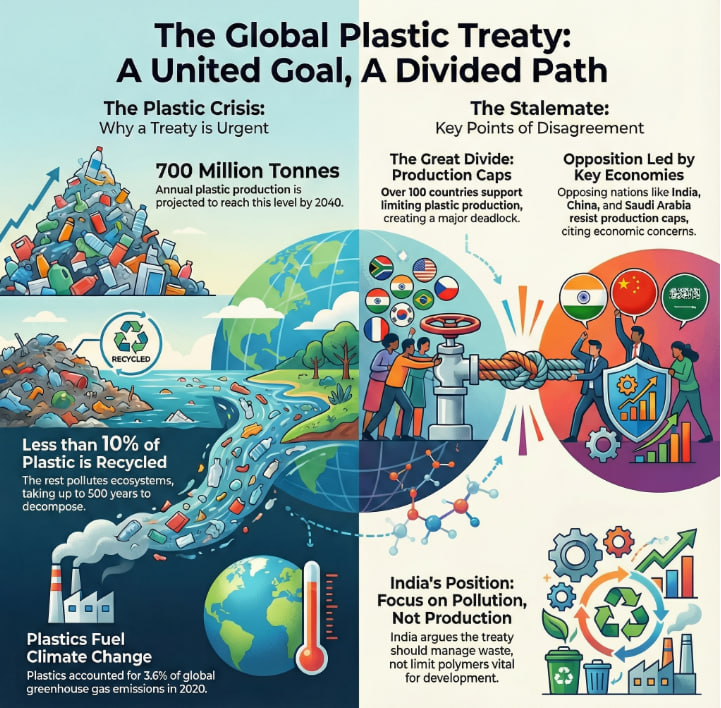
Plastic pollution's severe, global impact necessitates a worldwide treaty; national efforts alone are insufficient for this transboundary problem.
Explosive Production Growth: Annual plastic production doubled from 234 million tonnes in 2000 to 460 million tonnes in 2019, with projections to nearly triple by 2060 without intervention. (Source: OECD)
Environmental Devastation: An estimated 14 million tons of plastic enter the oceans annually, harming marine life, destroying habitats, and contaminating ecosystems (Source: IUCN).
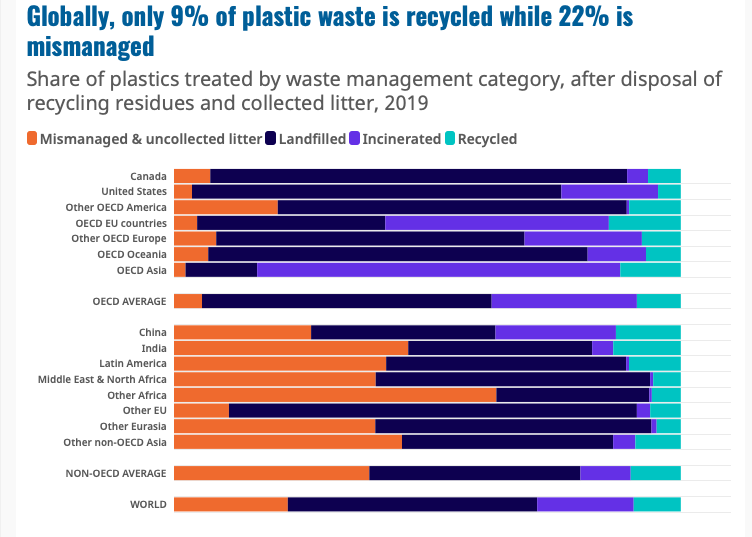
Low Recycling Rates: Globally, only about 9% of plastic waste is successfully recycled. Around 19% is incinerated, 50% ends up in landfills, and the remaining 22% is mismanaged, often burned in open pits or leaking into the environment. (Source: OECD)
Climate Change Link: Plastics lifecycle is a significant contributor to climate change, accounting for approximately 3.8% to 4.5% of global greenhouse gas (GHG) emissions.
Human Health Risks: Microplastics contaminate our air, water, and food. Carrying toxic chemicals, they pose health risks, including cellular damage.
 Highlights and Key challenging Points in Negotiations
Negotiations divided on the treaty's scope and ambition, leading to two major opposing blocs.
|
Issue of Contention |
High Ambition Coalition (HAC) Stance |
Like-Minded Countries' Stance |
|
Plastic Production Caps |
Strongly support legally binding targets to reduce and cap the production of primary (virgin) plastic polymers. |
Firmly oppose production caps, arguing it is outside the treaty's mandate and would harm economic development. |
|
Scope of the Treaty |
Advocate for a full lifecycle approach, including upstream (production), midstream (product design), and downstream (waste) measures. |
Push for the treaty to focus primarily on downstream measures like waste management and promoting a circular economy. |
|
Chemicals of Concern |
Call for global bans or restrictions on the most harmful and toxic chemicals and polymers used in plastics. |
Argue that decisions on chemicals should be based on scientific evidence and left to national discretion. |
|
Financing & Implementation |
Support a dedicated multilateral fund to help developing countries with implementation, technology transfer, and capacity building. |
Agree on the need for financial support but insist it should not be linked to production limits. They emphasize national action plans over binding global rules. |
Opposition to Production Caps: India opposes any binding targets to limit the production of primary plastic polymers, viewing it as a hindrance to economic growth and sovereign development rights.
Focus on Pollution, Not Plastic: India's key argument is that the treaty's mandate is to end "plastic pollution," not plastic itself. Therefore, interventions should target waste mismanagement, not production.
Principle of Equity: India advocates for the inclusion of principles like "Common But Differentiated Responsibilities" (CBDR), emphasizing that developed nations should bear greater responsibility.
Call for Financial Support: India strongly advocates for a dedicated multilateral fund, technology transfer, and capacity-building support for developing countries to manage plastic waste effectively.
Domestic Measures to Combat Plastic Pollution
 Conclusion
The Global Plastics Treaty faces challenges in balancing environmental needs with economic interests, and its success depends on bridging the gap between ambitious and like-minded blocs through legally binding rules and equitable support.
Source: DOWNTOEARTH
|
PRACTICE QUESTION Q. The negotiations for a global plastics treaty highlight a classic conflict between environmental imperatives and economic interests in international governance. 150 words |
It is an international legally binding agreement being negotiated by 175 nations to end plastic pollution. Mandated by UNEA Resolution 5/14, its goal is to address the entire lifecycle of plastic, from its production and design to its disposal and recycling.
The negotiations have stalled due to major disagreements between two key blocs. The core conflict is whether the treaty should focus "upstream" by capping virgin plastic production or "downstream" by managing plastic waste. Other contentious issues include regulating hazardous chemicals, financing mechanisms, and trade provisions.
An 'upstream' approach targets the problem at its source by limiting the production of new (virgin) plastics. A 'downstream' approach focuses on managing plastic waste after it has been produced and used, through methods like recycling, collection, and proper disposal.

© 2026 iasgyan. All right reserved