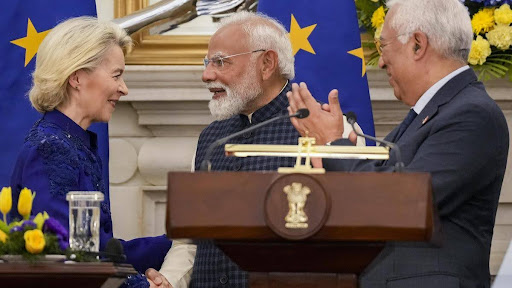
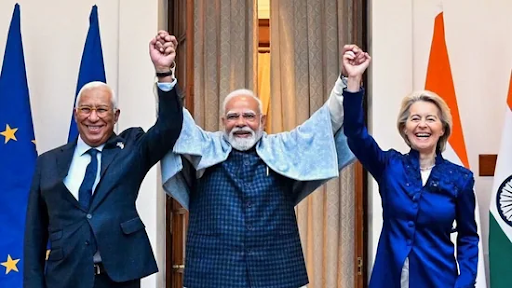
India is boosting economic ties with Africa to diversify markets and counter China. Despite nearly $100 billion in trade, India's low market share is due to investment hurdles and weak MSME support. To double trade by 2030, India must utilize the African Continental Free Trade Area, expand manufacturing, enhance finance and logistics, and transition to a strategic partnership.
Copyright infringement not intended
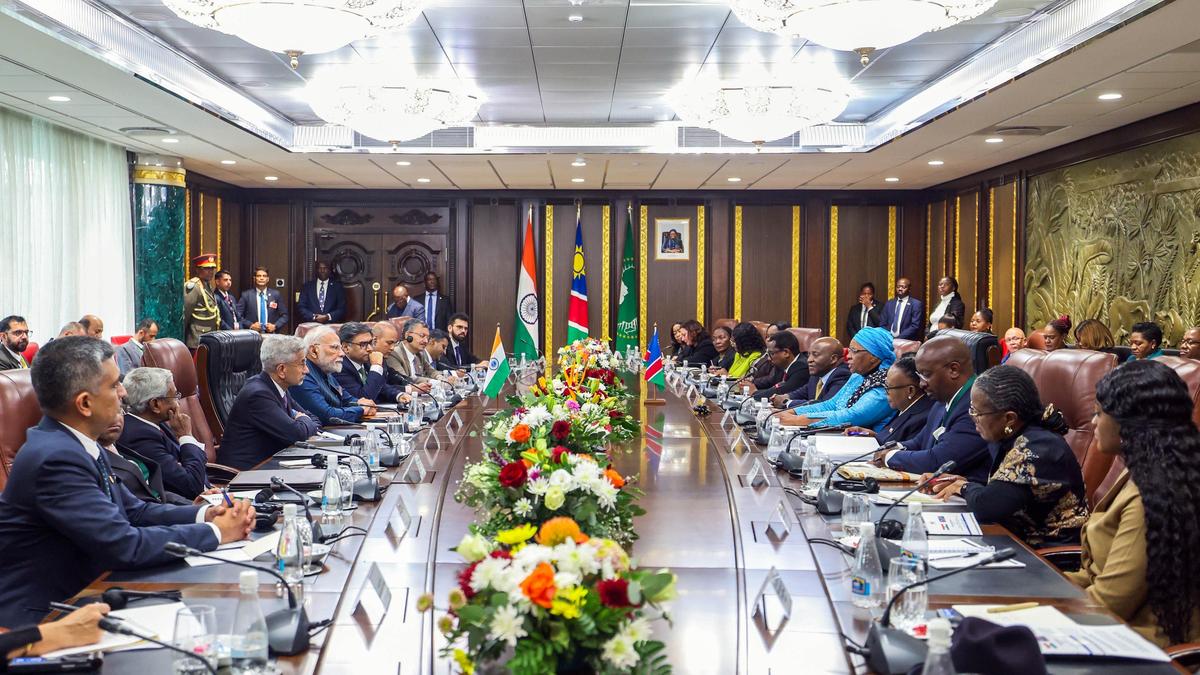
Picture Courtesy: THE HINDU
Recent high-level diplomacy highlights the strategic and economic significance of the India-Africa partnership, acknowledging Africa's rising global role.
|
Read all about: INDIA AFRICA RELATIONS l INDIA-AFRICA DEFENCE DIALOGUE |
Current State of India-Africa Economic Relations
India and Africa share a robust economic partnership, rooted in South-South solidarity, with India being one of Africa's largest partners.
|
Metric |
India-Africa Engagement |
|
Bilateral Trade |
Crossed $100 billion in FY 2024-25. For FY 2023-24, it stood at $83.3 billion. India is Africa's 3rd largest trading partner. In 2024, bilateral trade between Africa and China reached a record $295.6 billion. |
|
Investment Flows |
Cumulative investments exceeded $75 billion (1996-2024), making India one of the top five investors in Africa. |
|
Development Partnership |
|
Deepening engagement with Africa is a strategic necessity for India's economic and geopolitical ambitions in a multipolar world.
Deepening Trade and Institutional Links
India should pursue comprehensive economic partnerships with African regional blocs, engaging with the AfCFTA to streamline market access for Indian exporters and ensure a predictable trade environment.
From Commodities to Value-Added Manufacturing
Focus should shift from raw material trade to joint ventures and local African manufacturing. This builds local value, creates jobs, and uses African trade agreements to secure preferential global market access for Indian firms.
Scaling Up Financial Access for MSMEs
Boosting the growth of Indian MSMEs in Africa requires increasing Lines of Credit (LoCs), promoting trade settlement in local currencies, and setting up shared risk mitigation frameworks to lower investment risks.
Bridging the Logistics and Connectivity Gap
High logistics costs are a major barrier, necessitating investment in port infrastructure and maritime corridors.
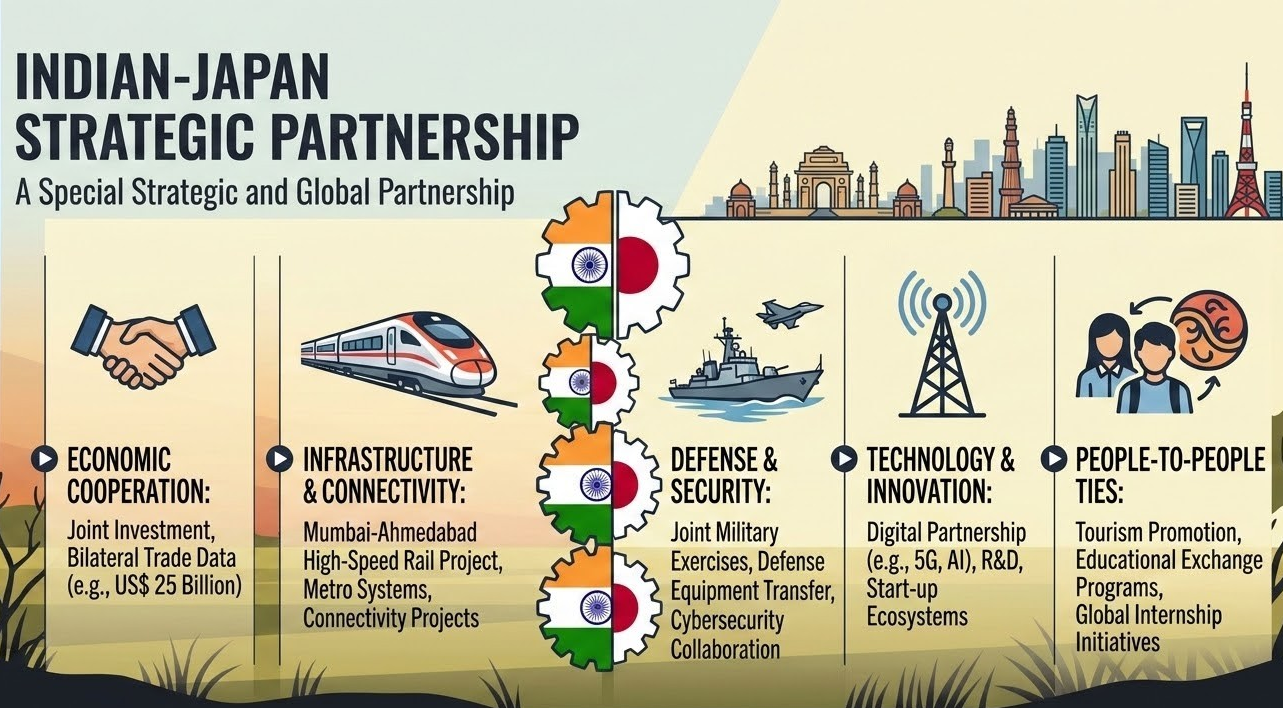
The Asia-Africa Growth Corridor (AAGC), launched by India and Japan in 2017, offers a people-centric framework for sustainable, quality infrastructure development, despite its slow progress due to changing governmental priorities.
Leveraging Services and Digital Trade
India can leverage its strengths in IT, digital payments, education, and healthcare to boost services exports and foster digital transformation in Africa.
Implementation Delays: Indian-funded projects and LoCs often face procedural delays, reducing their timely impact.
Financing Gaps: Indian firms, especially MSMEs, struggle with access to affordable trade finance and perceive high commercial and political risks.
Stiff Competition: India faces intense competition from other global players who often offer larger and faster financing packages.
Chinese Competition: China remains Africa's largest trading partner, outspending India on infrastructure through the Belt and Road Initiative.
Trade Concentration: Commerce is heavily reliant on raw commodities (oil and minerals) rather than high-value manufacturing or technology exchange.
Financial Constraints: Many African nations face high debt levels, limiting their ability to utilize new Indian Lines of Credit (LoCs).
Security & Stability: Political volatility (coups in the Sahel) and maritime threats in the Red Sea and Indian Ocean disrupt supply chains and increase insurance costs.
Logistics: High transportation costs and a lack of direct shipping routes between Indian and African ports remain a barrier to integration.
Economic Shift: Transition from simple trade to local manufacturing (pharmaceuticals, agriculture) and integrate with the African Continental Free Trade Area (AfCFTA) to create regional value chains.
Digital Export: Scale the "India Stack" (UPI, digital ID, and e-health) across African nations to drive financial inclusion and digital transformation.
Maritime & Green Security: Strengthen naval cooperation in the Indian Ocean to secure trade routes and co-invest in solar energy via the International Solar Alliance (ISA).
Defense Cooperation: Increasing the export of Indian-made equipment (e.g., LCA Tejas, patrol vessels) and expanding joint maritime training in the Western Indian Ocean.
India must prioritize a strategic, long-term partnership with Africa, centered on mutual growth, co-creation, and a resilient, people-centric relationship, to achieve its goal of becoming a major global power and a voice for the Global South.
Source: THE HINDU
|
PRACTICE QUESTION The term 'AfCFTA', often seen in the context of India-Africa relations, refers to: (a) A security alliance between African nations. (b) A unified digital payment system for the African continent. (c) A free trade area agreement aimed at creating a single market across Africa. (d) A cultural exchange program sponsored by the African Union. Answer: C Explanation: AfCFTA stands for the African Continental Free Trade Area agreement, which aims to create a single continental market for goods and services, with free movement of business people and investment, paving the way for accelerating the establishment of the Continental Customs Union and the African customs union. |
Africa is strategically important for India as it offers a vast and growing alternative market, enabling diversification away from unpredictable Western economies. Deepening ties also serves as a geopolitical tool to balance China's influence on the continent and tap into Africa's growth potential.
As of the fiscal year 2024-25, the bilateral trade between India and Africa surpassed the $100 billion mark, making India Africa's third-largest trading partner.
The AfCFTA is a major regional bloc in Africa aimed at creating a single continental market for goods and services. For India, engaging with the AfCFTA through Preferential Trade Agreements is a key strategy to lower trade barriers and boost economic partnership.





© 2026 iasgyan. All right reserved