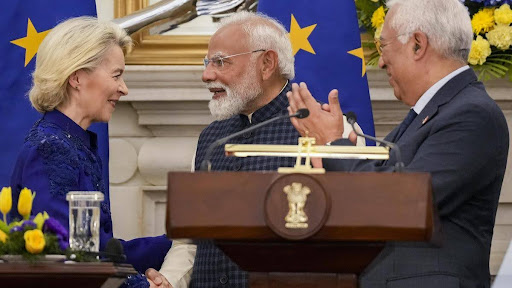
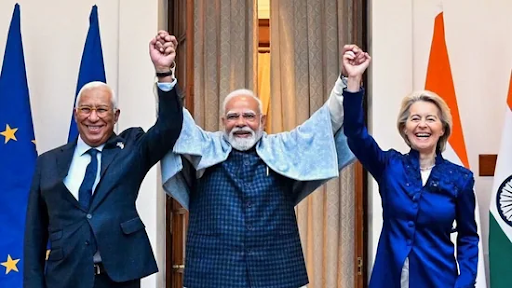
India and Italy have upgraded ties to a Strategic Partnership, anchored in shared values and economic complementarities. Recent forums and a 2025–29 Action Plan target cooperation in defence, technology and supply chains. Success depends on easing bureaucratic barriers, correcting trade imbalances and timely progress on the India-EU FTA and joint defence projects.
Copyright infringement not intended
Picture Courtesy: DDINDIA
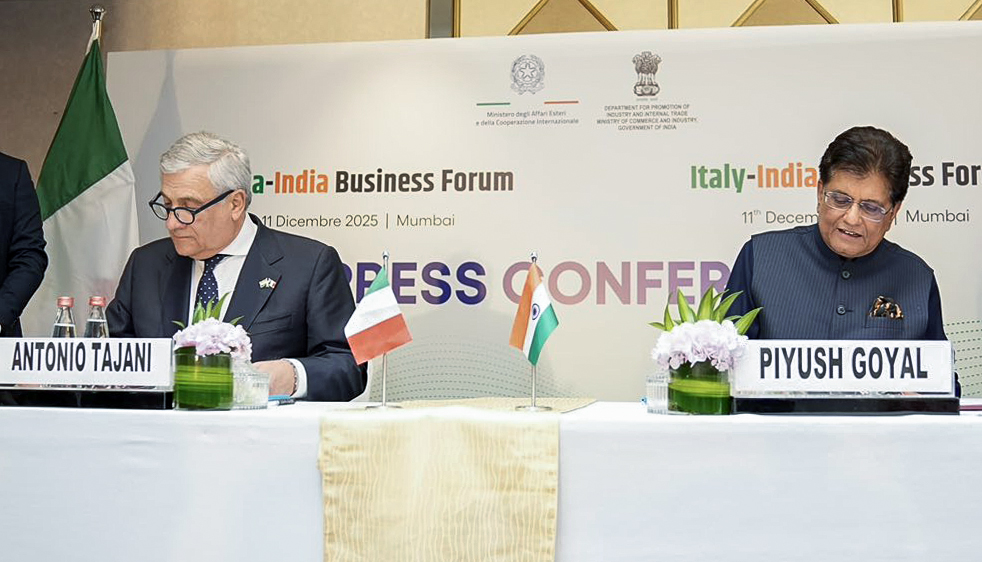
The India-Italy Business Forum held in Mumbai marked a significant step in deepening the economic dimension of the bilateral Strategic Partnership.
|
Read all about: India-Italy Relation |Italy-India Strategic Action Plan |
Green Technology: Steel Authority of India awarded contracts worth approximately €500 million to Italy's Danieli Group for supplying green technology for steel plants.
Lifestyle & Fashion: Prada S.p.A. and Indian firms signed an MoU for a limited-edition sandal line blending Italian design with traditional Kolhapuri chappal inspiration.
Focus Sectors: The forum stressed boosting industrial collaboration in automotive, renewables, waste-to-energy, and agri-food sectors.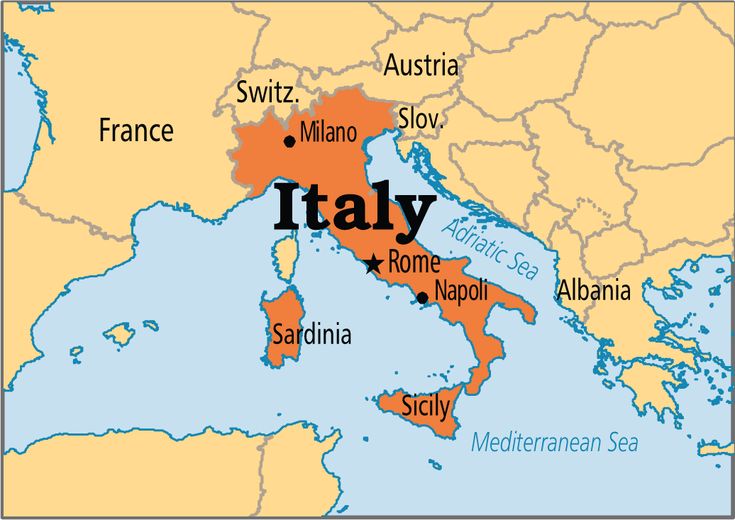
Ancient Trade Routes: Relations date back over 2,000 years, with ancient Roman ports being key trading posts for Indian spices, textiles, and pearls.
Early Encounters: The Venetian merchant Marco Polo traveled to India in the 13th century and documented his experiences, providing one of the earliest detailed European accounts of Indian life.
Formal diplomatic relations were established in 1947.
The relationship was elevated to a 'Strategic Partnership' during the official visit of the Italian Prime Minister to India in 2023.
In 2024, the leaders announced the Joint Strategic Plan of Action 2025-2029 to provide a concrete roadmap for future collaboration.
|
Joint Strategic Action Plan (2025-2029)
|
Key Pillars of the Strategic Partnership
Economic & Commercial Cooperation
Bilateral Trade: The bilateral trade valued at $13.76 billion in FY25. (Source: IBEF).
Trade Balance: In FY25, India's exports to Italy were $7.73 billion, while imports from Italy were $6.03 billion. (Source: IBEF).
Rank in EU: Italy is India's 4th largest trading partner in the European Union, following Germany, the Netherlands, and Belgium.
Foreign Direct Investment (FDI): Italy is the 19th largest foreign investor in India with a cumulative FDI inflow of $3.61 billion from April 2000-March 2025. (Source: IBEF).
Key Sectors of Collaboration: Automotive, machinery, renewable energy (especially waste-to-energy), agri-foods, textiles, and high-technology sectors like AI, fintech, and deep-tech.
Geopolitical Convergence in the Indo-Pacific
Italy's growing focus on the Indo-Pacific and alignment with India's vision for a free, open, and inclusive order is a key driver of the strategic partnership.
Withdrawal from BRI: Italy officially withdrew from China's Belt and Road Initiative (BRI) in 2023, creating space for deeper alignment with like-minded partners like India.
Support for India-led Initiatives: Italy has joined several key initiatives advocated by India, including:
What are the Challenges in the Bilateral Relationship?
Untapped Investment Potential: Italian FDI in India remains modest compared to investments from other G7 and EU countries like Germany and France.
Trade Barriers: Both countries face structural trade barriers, including non-tariff barriers, tariffs on certain products, and logistical constraints that hinder potential trade growth.
Bureaucratic Hurdles: Businesses concern over complex regulations and bureaucratic procedures as hurdles to smoother investment and trade.
Trade Imbalance: While beneficial for India, the persistent trade surplus in India's favour is a point of discussion for Italian policymakers seeking more balanced trade.
Differing Regional Interests: India and Italy sometimes have conflicting or competing interests and priorities in specific regions, particularly the Middle East and Africa.
Unrealized Alliances: A trilateral partnership launched in 2021 between India, Italy, and Japan has not yet been fully operationalized.
Way Forward
Finalize the India-EU FTA: A mutually beneficial India-EU Free Trade Agreement (FTA) would boost bilateral commerce by reducing tariffs and non-tariff barriers.
Economic Cooperation: Increasing bilateral trade and investment by leveraging forums like the Joint Commission for Economic Cooperation and promoting industrial partnerships.
Defense and Security: Expanding collaboration through co-production and co-development of defense platforms and equipment under the 'Make in India' and 'Aatmanirbhar Bharat' initiatives.
Operationalize IMEC: Italy is a vital IMEC partner due to its central Mediterranean location. Collaborative investments in port and logistics infrastructure are essential to activate this strategic corridor.
Boost Innovation Ecosystems: India-Italy collaboration in AI, cybersecurity, space technology, and green hydrogen among startups, research, and tech firms is vital for a future-ready partnership.
Conclusion
Strong political commitment and strategic alignment are rapidly advancing the India-Italy Strategic Partnership. Collaboration in high-growth sectors and addressing challenges will build a robust alliance, boosting prosperity and regional stability in the Indo-Pacific and Euro-Mediterranean.
Source: PIB
|
PRACTICE QUESTION Q. Examine the core pillars of the India-Italy Strategic Partnership, with a special focus on defence cooperation and connectivity through the India-Middle East-Europe Economic Corridor (IMEC). 150 words |
The relationship was upgraded due to a growing convergence on regional and global issues, including shared democratic values, a mutual commitment to a rules-based international order, and Italy's increasing alignment with India's vision for the Indo-Pacific, marked by its withdrawal from China's BRI.
The Joint Strategic Action Plan (2025-2029) is built on ten pillars, with a primary focus on Defence and Security, Science and Technology, Energy Transition, and Economic Cooperation and Connectivity.
Key challenges include bureaucratic and regulatory hurdles in both countries, a persistent trade imbalance favouring India, implementation gaps in previously announced trilateral partnerships, and unrealized investment potential, with Italian FDI in India remaining modest compared to other EU nations.





© 2026 iasgyan. All right reserved