Ecocide involves severe, widespread, and long-term environmental destruction. Advocates are pushing to amend the Rome Statute to make it the fifth international crime. This eco-centric shift aims to deter rampant corporate and military ecological destruction.
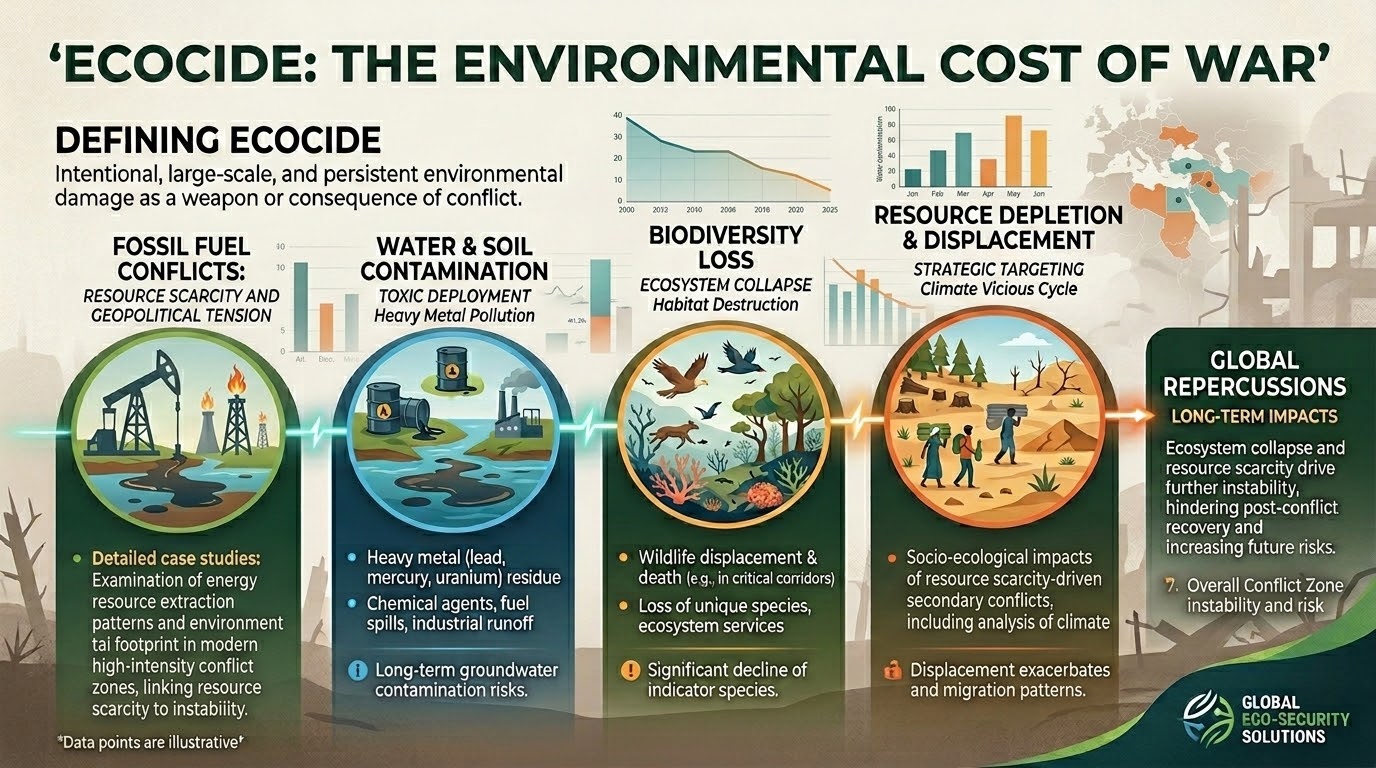
Lebanon and Iran recently accused Israel of ecocide, citing major environmental damage from military actions.
It is widely defined as "unlawful acts committed with knowledge that there is a substantial likelihood of severe and either widespread or long-term damage to the environment being caused by those acts".
The term "ecocide" was first coined in 1970 by American plant biologist Arthur W. Galston to describe the massive environmental devastation caused by the U.S. military's use of Agent Orange during the Vietnam War.
Key Elements of Ecocid
Unlawful or Wanton: Acts that are prohibited (unlawful) or done with reckless disregard for damages that would be clearly excessive in relation to social or economic benefits (wanton).
Severe Damage: Harm that causes profound, adverse changes or disruption to the environment, ecosystems, or species.
Widespread or Long-term Damage: Damage extending beyond a limited geographic area or persisting over a period (e.g., pollution affecting multiple countries or permanent damage to a forest).
Knowledge: The acts are committed with the awareness that there is a "substantial likelihood" of such damage.
Common Examples of Ecocide
Deforestation: Massive, systematic destruction of forests, such as in the Amazon, for agriculture or logging.
Ocean Destruction: Industrial overfishing, deep-sea mining, plastic pollution, and major oil spills (e.g., Deepwater Horizon).
Pollution and Contamination: Massive water, air, or soil pollution from oil sands, mining, or toxic chemical disposal.
Destruction of Ecosystems: The intentional destruction of dams or ecosystems during war (e.g., the 2023 Kakhovka dam destruction).
CAUSES
Ecocide can occur through both peacetime industrial activity and the chaos of armed conflict.
Industrial & Corporate Exploitation: Large-scale land-use change, unconventional fossil fuel extraction, open-cast mining, and mass deforestation.
War and Militarism: The use of explosive weapons in populated areas, attacks on oil and chemical facilities, and the deployment of toxic defoliants (like Agent Orange).
Lack of Regulation: A global system where the extensive destruction of ecosystems remains legally permissible and highly profitable for corporations.
IMPACTS
Ecological Collapse: Loss of critical biodiversity, severe groundwater depletion, soil pollution, and irreversible damage to major planetary ecosystems.
Human Health Crises: Spikes in chronic diseases and acute health emergencies due to exposure to toxic remnants of war, chemical plant shelling, or oil fires (e.g., in Iraq and Syria).
Socio-Economic Devastation: The destruction of agricultural lands, leading to mass human displacement, food insecurity, and the loss of livelihoods for generations.
Currently, there is no comprehensive international legal agreement to prosecute environmental crimes in peacetime.
Ecocide is widely considered the "Missing 5th Crime Against Peace" (alongside Genocide, Crimes Against Humanity, War Crimes, and Crimes of Aggression),.
The Rome Statute: Environmental damage is currently only a crime under the International Criminal Court (ICC) if it occurs during an active war and is disproportionate to military advantage,,.
Global Push for the ICC: In 2024, Vanuatu, Fiji, and Samoa formally submitted a proposal to the ICC to recognize ecocide as an international crime.
Arguments For Recognizing Ecocide
Deterrence at the Top: Criminalizing ecocide would pierce the corporate veil, establishing personal criminal liability for CEOs and decision-makers, incentivizing sustainable practices.
Closes the Peacetime Loophole: It creates a legal pathway to prosecute major ecological damage occurring outside of active warfare.
Protects Human Survival: It recognizes the link between nature and humanity, treating the destruction of foundational ecosystems as a threat to civilization.
Global Consistency: A uniform international legal norm would stop corporations from shifting destructive operations to nations with weaker environmental laws.
Arguments Against
High Evidentiary Thresholds: Under existing legal frameworks, proving the strict "intent" or "knowledge" required to cause widespread environmental harm is exceptionally difficult.
Political Pushback: Powerful nations heavily resist new international laws that could subject their military operations or lucrative industrial actions to outside criminal scrutiny.
Jurisdictional Hurdles: The ICC can only prosecute states that are parties to the Rome Statute (unless the UN Security Council refers to them), leaving a major gap for non-member nations.
The Voting Hurdle: Amending the Rome Statute requires a difficult two-thirds supermajority vote from all ICC member states.
Amend the Rome Statute: Diplomatic pressure at the Assembly of States Parties to officially introduce ecocide as the fifth international crime,.
Domestic Codification: Encourage more nations to follow the lead of Belgium and Chile in passing standalone domestic ecocide laws, building undeniable global momentum.
Refine Legal Definitions: Clarify the legal parameters of terms like "long-term" and "severe" to ensure the law is highly practical and enforceable in real-world courts.
Non-Anthropocentric Jurisprudence: Support bodies like the International Court of Justice in developing progressive legal principles that recognize the environment’s intrinsic rights to exist.
Recognizing ecocide as an international crime is a necessary legal shift to hold actors accountable for environmental destruction and ensure that the mass destruction of ecosystems is treated as a severe criminal offense rather than a business expense.
Source: INDIAN EXPRESS
|
PRACTICE QUESTION Q. Consider the following statements regarding 'Ecocide':
Which of the statements given above is/are correct? (a) 1 and 2 only (b) 1 and 3 only (c) 2 and 3 only (d) 1, 2, and 3 Answer: b Explanation: Statement 1 is Correct: The term "Ecocide" was first coined by American biologist Arthur Galston in 1970 at the Conference on War and Responsibility. He used it to describe the massive environmental destruction caused by the U.S. military’s use of Agent Orange (a chemical defoliant) during the Vietnam War. Statement 2 is Incorrect: Ecocide is not yet an enforceable international crime under the Rome Statute of the International Criminal Court (ICC). Currently, the Rome Statute only recognizes four crimes: Genocide, Crimes Against Humanity, War Crimes, and the Crime of Aggression. Statement 3 is Correct: Vietnam became the first country in the world to include "Ecocide" in its domestic penal code in 1990, defining it as a crime against humanity committed by destroying the natural environment. |
It is defined as "unlawful or wanton acts committed with knowledge that there is a substantial likelihood of severe and either widespread or long-term damage to the environment being caused by those acts"
The term was coined in 1970 by American plant biologist Prof. Arthur W. Galston to describe the massive devastation caused by the defoliant Agent Orange during the Vietnam War.
It is currently the "Missing 5th Crime Against Peace". Under the Rome Statute, environmental damage is only a crime if it occurs during an active war and is disproportionate to military advantage.



© 2026 iasgyan. All right reserved