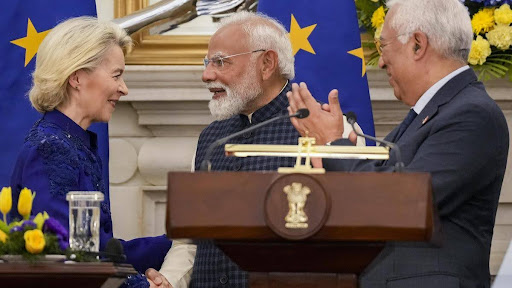
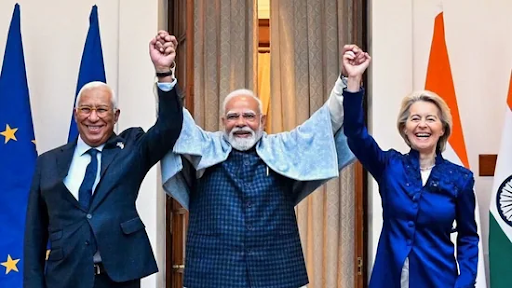
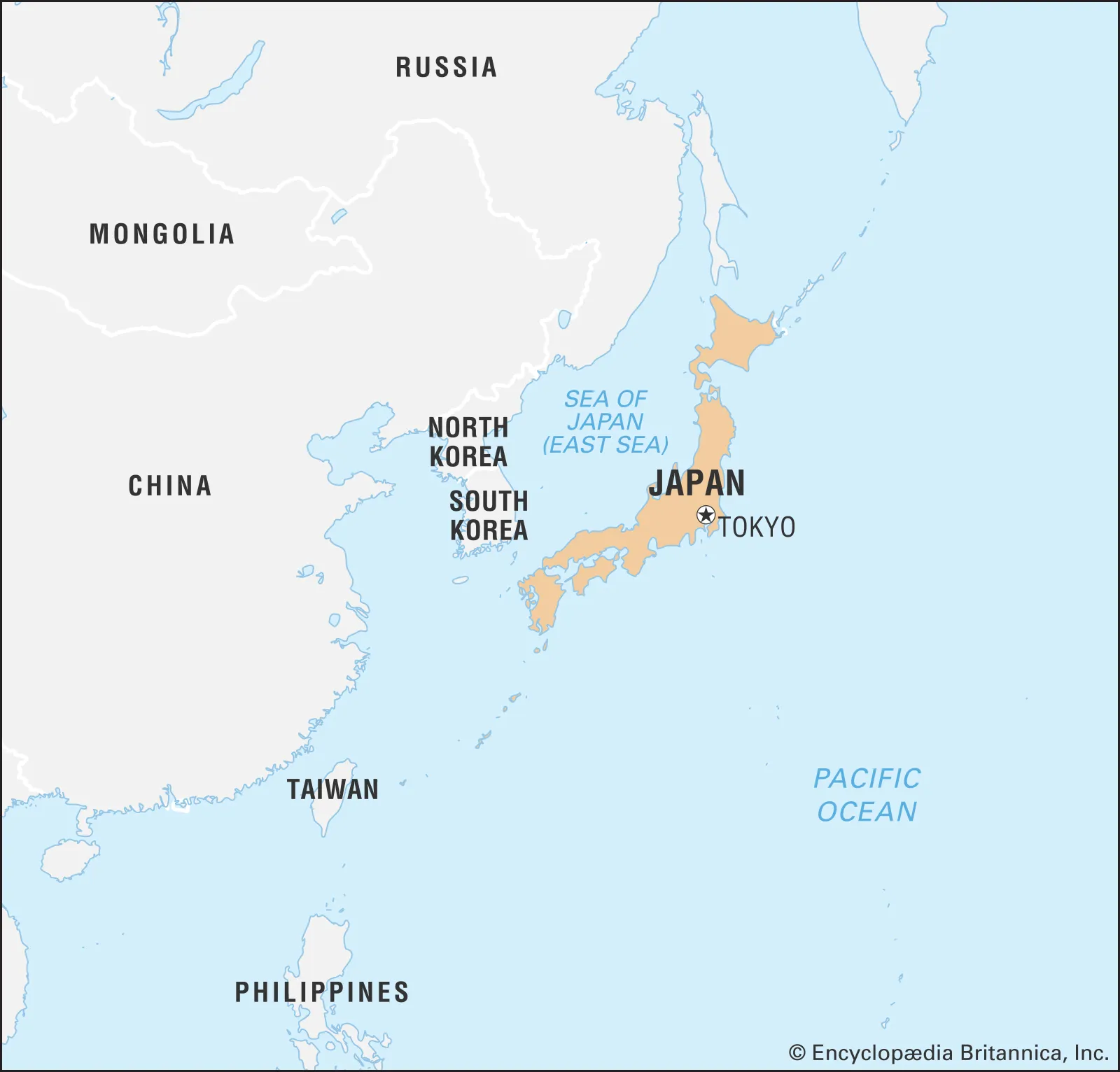
India and Japan share a deep-rooted bond, evolving from ancient Buddhist ties to a Special Strategic Partnership. By bridging Japanese capital with Indian talent, they are building resilient supply chains and infrastructure to ensure a Free and Open Indo-Pacific.
India and Japan have signed new agreements covering quantum technology and medical device cooperation to strengthen their strategic technological partnership.
INDIA-JAPAN Relations
Ancient & Cultural Ties: Early exchange of Buddhism, marked by the Indian monk Bodhisena traveling to Japan in 752 CE to consecrate the Great Buddha at Tōdai-ji.
Colonial Era & WWII: By the late 19th century, Indian merchants had established a presence in Japanese ports, and during World War II, the Indian National Army collaborated with Japanese forces to fight against British rule.
Post-WWII Foundation: India supported Japan's post-war rehabilitation and sovereignty, leading to the establishment of formal diplomatic relations in 1952.
Cold War Divergence: Relationship experienced a downfall during the Cold War due to differing geopolitical alignments—Japan with the US, and India with the Non-Aligned Movement.
21st Century Strategic Convergence: Driven by shared concerns over an assertive China and a mutual vision for the Indo-Pacific, relations strengthen from a "Global Partnership" in 2000, "Special Strategic and Global Partnership" in 2014, and "Japan and India Vision 2025.
 Why is JAPAN important to India?
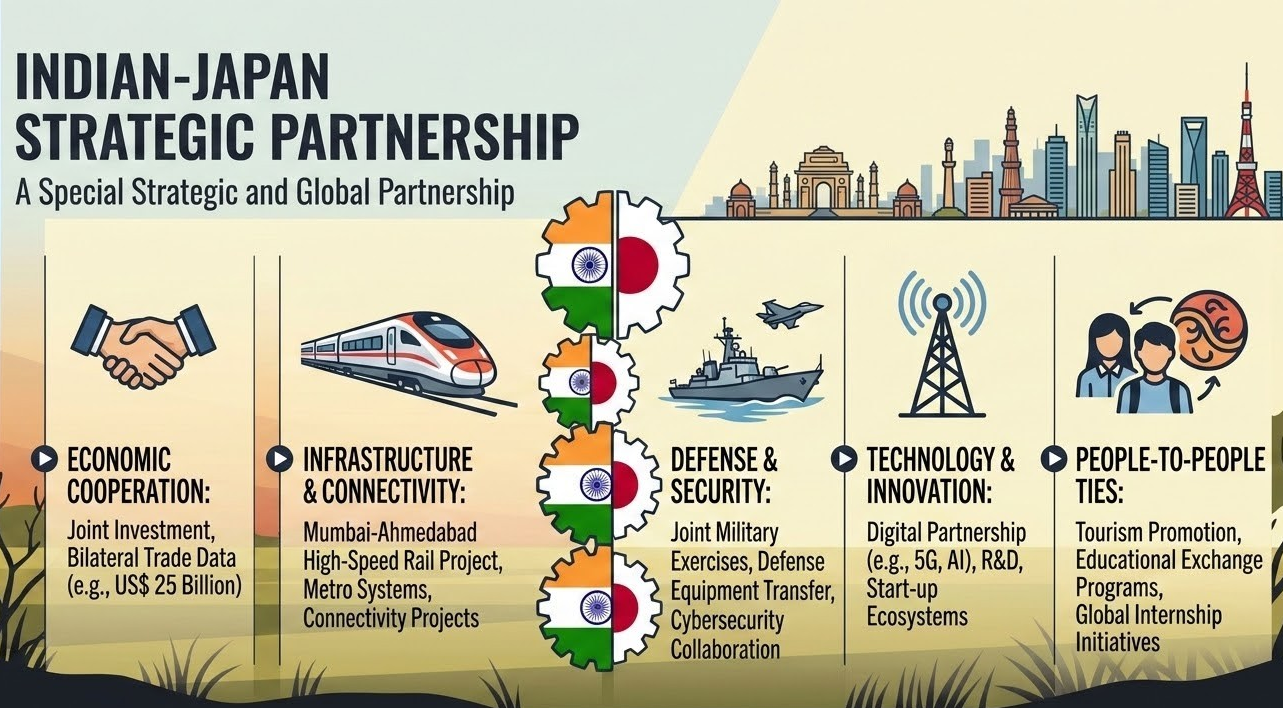
Investment & FDI: Japan is a top-five FDI source, investing over $43 billion in 20 years and targeting 10 trillion Yen in new private investments. (Source: PIB)
Infrastructure: Provides technical expertise and low-interest loans, including $10.3 billion for the Mumbai-Ahmedabad High-Speed Rail and Delhi Metro support.
Indo-Pacific Strategy: A key Quad partner helping India ensure a Free and Open Indo-Pacific and counter maritime threats.
Act East Policy: Funds vital connectivity projects in India's Northeast to link domestic markets with Southeast Asia.
Defense Tech: Collaborative co-development of critical tech, such as the UNICORN stealth antenna mast for naval warships.
Economic Security: Joint efforts in semiconductors, clean energy, and AI help India diversify and de-risk global supply chains.
Act East Partnership: India leverages Japanese investment for critical infrastructure in Assam and the Northeast under its Act East Policy.
Strategic Dialogues: India prioritizes regular, high-level strategic alignment with Japan, including the 2+2 Foreign and Defence Ministerial meetings.
Talent Exchange: An Action Plan targets sending 50,000 skilled Indian professionals to Japan over five years to address demographic needs.
Civil Nuclear Cooperation: Despite non-NPT (Non-Proliferation Treaty) status, India’s 2016 agreement with Japan affirms its responsible nuclear deterrence and no-first-use policy.
Digital & Deep Tech: The Digital Partnership 2.0 focuses on collaborative R&D in Large Language Models (LLMs), semiconductors, and startups.
Global Alignment: Both nations advocate for UNSC reforms and manage joint development projects in the Global South, including Africa.
High Trade Deficit: In FY25, bilateral trade was USD 25.17 billion, with India’s import USD 18.92 billion and exports USD 6.25 billion. Japan's bilateral trade with China is over $320 billion.
Trade Barriers: Rigid phyto-sanitary and packaging standards hinder Indian seafood and pharma exports to Japan.
Project Delays: The Bullet Train project cost rose from $12.65 billion to $21.5 billion amid protests and litigation.
Tech Transfer Hurdles: High costs and export controls slow cooperation in semiconductor and military technology.
Bureaucracy: Japanese firms face complex laws, transparency issues, and infrastructure gaps in India.
Supply Chain Risks: Reliance on adversaries for critical minerals and components limits strategic autonomy.
Economic Security: Accelerate the Economic Security Initiative to secure supply chains in semiconductors and clean energy.
Northeast Infrastructure: Use Japanese assistance to link Northeast India to Southeast Asian markets via the Act East Policy.
Defense Co-Development: Transition to co-producing advanced technology, including the UNICORN stealth antenna for naval ships.
Enhance Military Interoperability: Scale up joint drills like Dharma Guardian, Veer Guardian, JIMEX, and Malabar to strengthen Indo-Pacific tactical coordination.
Maximize Talent Mobility: Implement the Action Plan for Human Resource Exchange to move skilled Indians into Japan, supported by programs like Assam's CM-FLIGHT.
Accelerate Clean Energy: Utilize the Joint Crediting Mechanism (JCM) to drive private investment in green hydrogen, ammonia, and batteries for climate and energy security.
Foster Tech Innovation: Use the AI Cooperation Initiative to build data centers, support startups, and develop joint LLMs for a resilient digital ecosystem.
Expand Multilateral Ventures: Strengthen the Quad and joint Global South projects, like sustainable development in Africa, to secure maritime domains and industrial hubs.
The India-Japan partnership, rooted in shared democratic values and an aligned vision for a secure Indo-Pacific, must now transcend strategic dialogues to achieve economic integration, technological co-production, and robust supply chain resilience.
Source: BUSINESS-STANDARD
|
PRACTICE QUESTION Q. "Despite deep political ties, India-Japan trade remains below potential." Analyze. 150 words |
Government reports state that the partnership focuses on emerging technologies, specifically Artificial Intelligence, Large Language Models (LLMs), start-up ecosystems, and building a trustworthy digital public infrastructure.
According to independent studies, they conduct regular joint exercises like Dharma Guardian (Army), Veer Guardian (Air Force), and JIMEX (Navy), and co-develop technologies like the UNICORN stealth mast for naval warships.
Despite strategic ties, trade is hindered by an implementation gap, strict export controls on high-end technologies, and persistent supply chain vulnerabilities with heavy reliance on third countries for critical components.




© 2026 iasgyan. All right reserved