Dark patterns are deceptive digital designs manipulating consumer choices for commercial gain. Regulated in India by the CCPA under the Consumer Protection Act, 2019, 13 specific practices are strictly prohibited to ensure fair trade and online user autonomy.
The Central Consumer Protection Authority (CCPA) penalized PhysicsWallah ₹5 lakh and directed them to remove deceptive interface designs, or dark patterns, from their digital platforms.
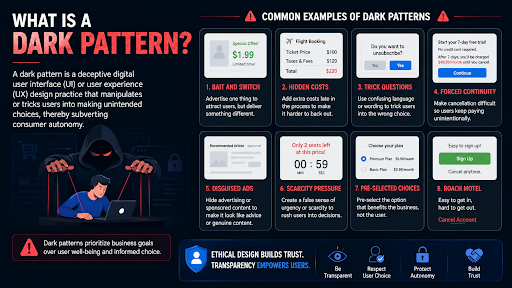
Dark patterns represent deceptive user interface (UI) or user experience (UX) design practices that trick users into making unintended digital choices.
These digital design tactics intentionally subvert consumer autonomy and manipulate decision-making for rapid commercial gain.
Authorities classify these manipulative practices as unfair trade practices or misleading advertisements under the Consumer Protection Act, 2019.
The Central Consumer Protection Authority (CCPA) specifically identifies and prohibits 13 manipulative digital practices.
Dark patterns exploit cognitive biases to force consumers into buying unwanted products, thereby wasting their scarce financial resources.
False scarcity creates an artificial fear of missing out, which pressures users into making uninformed, rapid financial decisions.
Manipulative interfaces leverage information asymmetries, causing users to hastily agree to highly permissive data-sharing settings.
Aggressive deceptive practices erode long-term digital trust and generate severe consumer backlash against the offending digital platforms.
The CCPA implements the Guidelines for Prevention and Regulation of Dark Patterns, 2023 under Section 18 of the Consumer Protection Act, 2019.
The Digital Personal Data Protection (DPDP) Act, 2023 mandates unambiguous user consent, thereby rendering forced data-sharing dark patterns completely illegal.
The CCPA enforces strict penalties, recently fining PhysicsWallah ₹5 lakh for basket sneaking and McAfee ₹1 lakh for practices affecting informed consumer choice.
Statutory violations attract severe punishments, including imprisonment for up to five years and fines reaching ₹50 lakhs for subsequent offenses.
The government mandates self-audits, prompting 26 leading e-commerce platforms to voluntarily submit declarations confirming their interfaces remain entirely free of dark patterns.
Digital platforms must foster a user-centric design mindset that heavily prioritizes transparency and genuine consumer autonomy over mere conversion rates.
Companies require routine internal UI/UX design audits to proactively identify and eliminate both accidental and intentional dark patterns.
Global regulatory authorities must collaborate to formulate universal legal guidelines that actively penalize cross-border deceptive online designs.
Digital startups must balance efficient interface designs with ethical compliance standards to build sustainable consumer trust and avoid CCPA penalties.
Eradicating dark patterns establishes a transparent, ethical digital economy that protects consumer autonomy while enabling sustainable, legally compliant business growth
Source: PIB
|
PRACTICE QUESTION Q. The term 'Confirm Shaming', often seen in the news in the context of digital commerce, is best described as: (a) A cyberattack method using scareware to trick users into downloading malicious software. (b) A pricing strategy where mandatory service costs are revealed only after the purchase is confirmed. (c) A digital interface tactic using fear, ridicule, or guilt to push a user into purchasing a product or continuing a subscription. (d) A regulatory mechanism used by the CCPA to publicly name and shame e-commerce violators. Answer: (c) Explanation: Confirm Shaming is a dark pattern that uses emotionally charged phrases, video, or audio to create a sense of fear or guilt to nudge consumers into making commercial choices they did not initially intend. |
A dark pattern is a deceptive digital user interface (UI) or user experience (UX) design practice that manipulates or tricks users into making unintended choices, thereby subverting consumer autonomy.
The Central Consumer Protection Authority (CCPA) regulates dark patterns under the powers conferred by Section 18 of the Consumer Protection Act, 2019.
Drip pricing is a manipulative practice where elements of a product's price are hidden upfront and revealed surreptitiously later in the checkout process, or where advertised "free" products actually require mandatory in-app purchases.

© 2026 iasgyan. All right reserved