The Bonn Climate Conference 2026 establishes a crucial 35% global electrification target by 2035. It highlights the urgent shift from pledges to implementation, prioritizing climate finance, adaptation, and honoring equity principles like CBDR-RC to support developing nations like India.
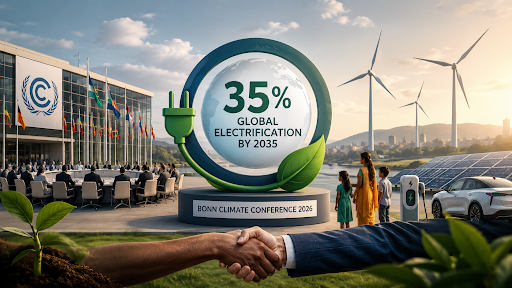
The 64th Bonn Climate Conference (SB64) recently concluded, setting a landmark global electrification target of 35% by 2035.
It acts as the annual mid-year climate negotiation held under the United Nations Framework Convention on Climate Change (UNFCCC).
Global Electrification Target of 35% by 2035
Introduces the ambitious "35x35" target, proposed by the COP31 Presidency (Türkiye and Australia).
Aims to raise electricity's share of global final energy demand from the current 20% to 35% by 2035.
Functions as the core pillar of the non-binding COP31 Action Agenda.
Renewable Energy Expansion
Accelerates the rapid deployment of solar and wind power to replace direct fossil fuel combustion across economies.
Capitalizes on the momentum of 2025, where solar energy met 75% of the new global electricity demand growth.
Mandates modernization of electricity grids and drastic expansion of energy storage capacity.
Energy Access and Sustainable Development
Combines the electrification goal with targets to halve global waste growth by 2035.
Commits to reducing energy consumption intensity in the building sector by 25% by 2035 under the Resilient Cities initiative.
Ensures developing nations receive targeted technical assistance and capacity building to prevent energy poverty.
|
Significance of the 35% Electrification Target Reducing Fossil Fuel Dependence
Supporting Net-Zero Goals
Accelerating Renewable Energy Adoption
|
Climate Finance Demands
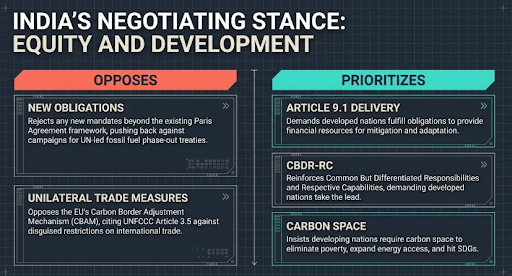
Demands strict adherence to Article 9.1 of the Paris Agreement, obligating developed countries to provide adequate financial resources.
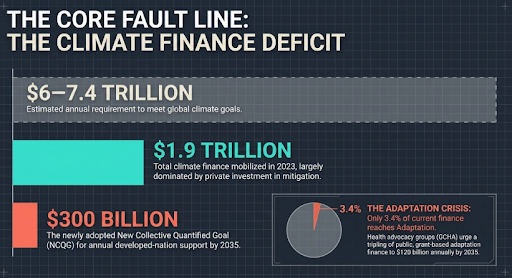
Criticizes the massive adaptation finance gap, noting that only 3.4% of climate finance currently reaches adaptation projects.
Pushes developed nations to transition from loans to grant-based adaptation finance.
Climate Justice and Equity
Reiterates the non-negotiable principles of Equity and Historical Responsibility.
Anchors negotiations on the Common But Differentiated Responsibilities and Respective Capabilities (CBDR-RC) framework.
Strongly opposes new climate obligations (like forced fossil fuel phase-outs) outside officially agreed UN mandates.
Energy Security Concerns
Asserts the need for adequate carbon space to eradicate poverty and achieve Sustainable Development Goals (SDGs).
Highlights domestic realities where rural populations (e.g., in Uttar Pradesh) still rely on biomass and dung cakes because clean LPG remains unaffordable.
Source: DOWNTOEARTH
|
PRACTICE QUESTION Q. Explain the concept of the 'Adaptation Finance Gap'. Why are developing countries demanding a shift from loan-based to grant-based public adaptation finance? (150 words) |
The Bonn Climate Conference (SB64) is the annual mid-year UN multilateral technical session held in Germany from June 8 to 18, 2026, to draft negotiable texts and lay the policy groundwork ahead of the upcoming COP31 summit in Antalya, Türkiye.
Announced at the conference as part of the COP31 Action Agenda, this flagship target aims to collectively raise electricity's share of final global energy demand from 20% to 35% by 2035 to actively replace direct fossil fuel reliance across buildings, transport, and industry.
Electrification drives mitigation by switching heavily polluting, fossil-reliant end-user technologies over to clean power grids driven by surging renewable energy systems, keeping the world firmly on a pathway consistent with limiting global warming to 1.5°C.
At the Bonn talks, India sharply criticized the declining levels of public grant-based capital from developed nations, demanding that wealthy countries guarantee streamlined access to predictable, non-debt climate funds to support equitable adaptation pathways in the Global South.




© 2026 iasgyan. All right reserved