Ecuador has made history by granting legal rights to Amazonian stingless bees, the first insects to receive such protection. This move under the "Rights of Nature" shifts conservation from a human-centric utility model to an eco-centric legal framework. These bees are vital for Amazonian biodiversity and indigenous livelihoods.
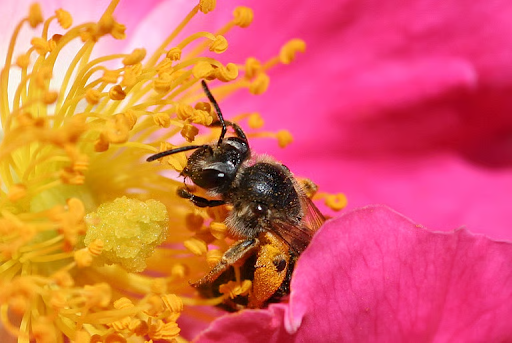
Copyright infringement not intended
Picture Courtesy: DOWNTOEARTH
The provincial municipality of Satipo in the Peruvian Amazon has passed an ordinance granting legal rights to native stingless bees.
The Provincial Municipality of Satipo in Peru has granted native stingless bees legal rights, making them the first insects globally to achieve this status.
The ordinance applies within the Avireri VRAEM Biosphere Reserve, a large protected area in central Peru established by UNESCO in 2021.
The municipal ordinance legally establishes a "Declaration of Rights" for the bees.
Stingless bees, belonging to the tribe Meliponini, are a diverse group of more than 600 social bee species found in tropical and subtropical regions across the globe.
Unlike common honey bees, they have highly reduced stingers that cannot be used for defense.
Key Characteristics
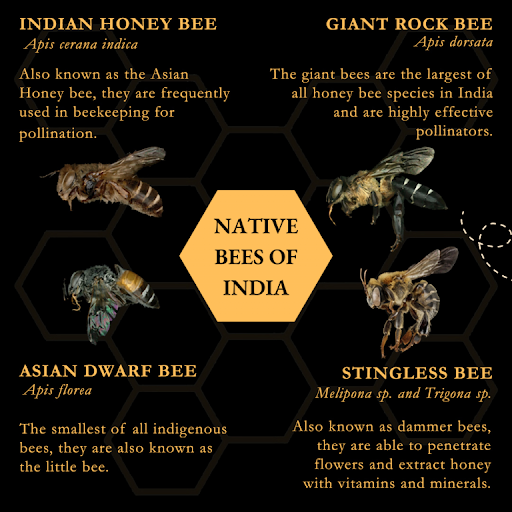
Identification: Stingless bees are small, black/dark-bodied with yellow markings. They have two wing pairs, short antennae, large oval eyes, and an oval face with a pointed chin.
Habitat: They nest in tree trunks, termite mounds, wall cavities, or wooden boxes. Nests, made of resin, mud, and wax, contain honey pots and brood cells arranged spirally or randomly.
Diet: Their diet includes nectar and pollen. Pollen is used to make protein balls for larval growth. Some species also feed on rotting fruits or carrion.
Lifecycle: The queen mates once. Fertilized eggs yield workers or queens (diet-dependent); unfertilized eggs become drones.
Defense Mechanism: These insects lack stingers, bite using their mandibles. Some species, like Trigona, can also inject venom when they bite.
Honey and Medicinal Value
Stingless bee honey, often called "pot-honey" or "sugarbag," is prized for its unique properties:
Ecological and Economic Significance
Threats Facing Native Stingless Bees
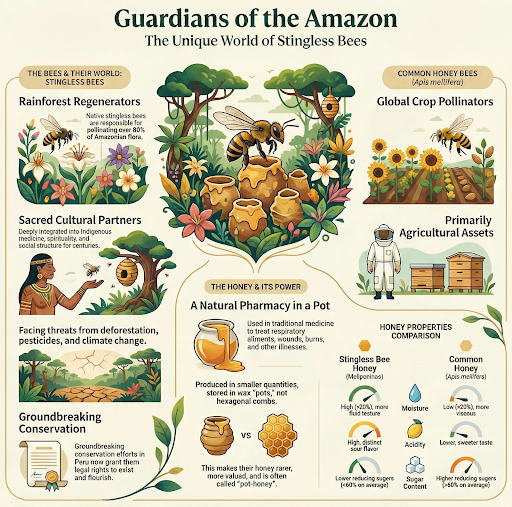
Source: DOWNTOEARTH
|
PRACTICE QUESTION Q. Consider the following statements regarding Amazonian Stingless bees: 1. They belong to the tribe Meliponini and are the primary pollinators of the Amazonian flora. 2. Unlike honeybees, they lack a functional stinger and defend their hives through biting or secreting irritants. 3. Ecuador is the first country to grant them specific legal rights under the 'Rights of Nature' constitutional provision. Which of the statements given above is/are correct? A) 1 and 2 only B) 2 and 3 only C) 1 and 3 only D) 1, 2, and 3 Answer: A Explanation: Statement 1 is correct: Amazonian stingless bees (tribe Meliponini) are vital primary pollinators for most Amazonian flora (over 80% in some areas), supporting biodiversity and crucial crops like coffee and chocolate. Statement 2 is correct: Stingless bees, unlike European honeybees, have a highly reduced, non-functional stinger. They defend their nests by biting, swarming, or secreting irritant chemicals (like formic acid) or sticky resins. Statement 3 is incorrect: The provincial municipality of Satipo, Peru, made a world-first move by adopting a declaration and ordinance granting native stingless bees legal rights under the 'Rights of Nature' concept. |
They are bees from the Meliponini tribe (Apidae family) that have evolved to lack a functional stinger, relying on other defense methods like biting or resin, and are vital tropical pollinators.
It is prized for its high antioxidant, anti-inflammatory, and antimicrobial properties. It is traditionally used to treat respiratory issues, wounds, and skin infections.
India has not formally adopted a 'Rights of Nature' framework at the national level. However, its judiciary has progressively expanded environmental protections. The Supreme Court has interpreted Article 21 (Right to Life) to include the right to a clean and healthy environment, and Article 51A(g) imposes a duty on citizens to have compassion for living creatures.




© 2026 iasgyan. All right reserved