WHAT ARE PARLIAMENTARY PRIVILEGES?: MEANING, SOURCES, CHALLENGES, WAY FORWARD

The Lok Sabha controversy highlights parliamentary privileges under Articles 105 and 194. It explains individual and collective privileges, breach procedures, disruption causes, and the codification debate. The Sita Soren (2024) ruling reshapes bribery law, highlighting the need to balance protest rights with legislative decorum.
Description

PARLIAMENTARY PRIVILEGES: MEANING, CHALLENGES, WAY FORWARD

HTTPS://WWW.THEHINDU.COM/NEWS/NATIONAL/SPEAKER-BIRLA-EXAMINING-BREACH-OF-PRIVILEGE-NOTICE-BY-BJP-MP-AGAINST-EIGHT-CONGRESS-MEMBERS/ARTICLE70415360.ECE


Copyright infringement not intended

Picture Courtesy:  THE HINDU


Context

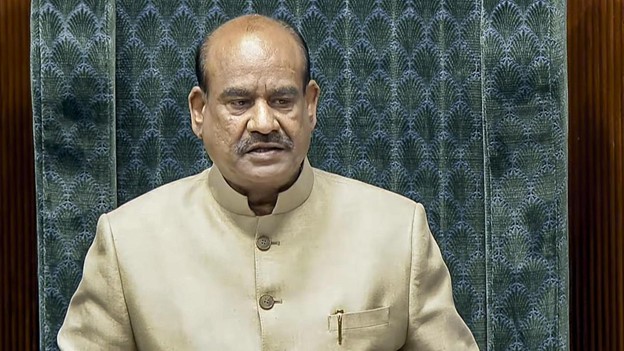
Lok Sabha Speaker Om Birla is examining a notice submitted by a Member of Parliament (MP), alleging a breach of privilege and contempt of the House by some MPs, during the debate on the Viksit Bharat–Guarantee for Rozgar and Ajeevika Mission (Gramin) Bill, 2025.


 Read all about:  VB-G RAM G Bill to Replace MGNREGA


What are Parliamentary Privileges?

Parliamentary privileges are a set of special rights, immunities, and exemptions enjoyed by the Houses of Parliament, their committees, and their members.


The primary purpose of these privileges is to ensure the independence and effectiveness of their actions, allowing them to discharge their legislative responsibilities without fear or favor.


These privileges are essential for maintaining the authority, dignity, and honor of Parliament.


Constitutional Basis

Article 105: Deals with the powers, privileges, and immunities of the Houses of Parliament, their members, and their committees.

  • It guarantees freedom of speech in Parliament and grants immunity from court proceedings for anything said or any vote cast by a member within Parliament or its committees.


Article 194: State Legislatures, members, and committees receive privileges and immunities similar to those in Article 105, at the state level.


Classification of Parliamentary Privileges

Collective Privileges

These are the rights and immunities enjoyed by each House of Parliament as a collective body. Key collective privileges include:

  • Right to Publish Proceedings: The House has the right to publish its reports, debates, and proceedings, and also the right to prohibit others from publishing the same.
    • However, the 44th Amendment Act, 1978, allows the press to publish true reports of parliamentary proceedings without prior permission, except for secret sittings.
  • Right to Exclude Strangers: The House can exclude non-members from its proceedings and hold secret sittings to discuss sensitive matters.
  • Power to Regulate Internal Affairs: Each House has the authority to make rules to regulate its own procedures and conduct of business.
  • Judicial Immunity: Courts are prohibited from inquiring into the proceedings of the House or its committees.
  • Power to Punish for Breach: The House has the power to punish members as well as outsiders for any breach of its privileges or contempt of the House.
    • Punishments can include reprimand, admonition, imprisonment, or even suspension or expulsion in the case of members.
  • Right to Receive Information: The House has the right to be immediately informed of the arrest, detention, conviction, imprisonment, or release of a member.


Individual Privileges

These are the rights and immunities enjoyed by Members of Parliament in their individual capacity. They include:

  • Freedom of Speech: Article 105(1) guarantees members freedom of speech in Parliament, subject to House rules. They are immune from court liability for anything said or any vote cast during proceedings.
  • Freedom from Arrest: A Parliament member cannot be arrested in a civil case during the session, and for 40 days before and after. This privilege does not apply to criminal or preventive detention cases.
  • Exemption from Jury Service: Members of Parliament are exempted from serving as jurors in courts.
  • Exemption from Appearing as a Witness: Members can refuse to give evidence or appear as a witness in a court case when Parliament is in session.


Breach of Privilege and Contempt of the House

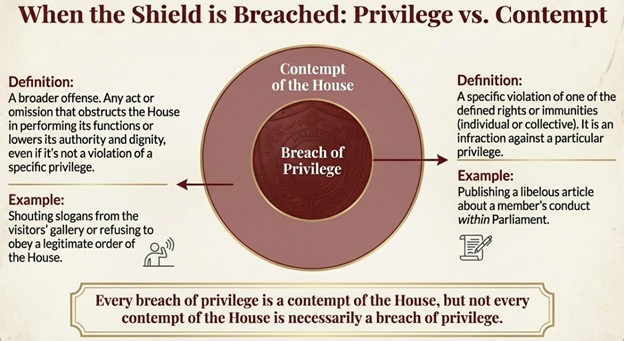
When any individual or authority disregards or attacks the rights and immunities of the House or its members, it is termed a 'breach of privilege' and is punishable by the House.


Actions that obstruct the House or its members from performing their duties or lower the dignity of the House are considered 'contempt of the House'.


Procedure for Addressing a Breach:

  1. A member can raise a question of privilege with the consent of the Speaker of the Lok Sabha or the Chairperson of the Rajya Sabha.
  2. The presiding officer decides on the admissibility of the notice.
  3. If admitted, the matter is either dealt with by the House itself or, more commonly, referred to the Committee of Privileges for examination and report.
    1. The Lok Sabha committee has 15 members, while the Rajya Sabha committee has 10 members.
  1. The House is the ultimate authority to decide whether a breach has occurred and to determine the punishment.


What are the concerns about Parliamentary Privileges?

Lack of Codification

The absence of a specific law codifying privileges leads to ambiguity and potential for misuse, as Article 105's phrase "until so defined" suggests a law was intended but never enacted.


Conflict with Fundamental Rights

The central debate is whether parliamentary privileges outweigh Fundamental Rights; the Supreme Court urges a balance, especially regarding freedom of speech.


Misuse for Political Ends

Concerns exist that privileges may curb dissent and media freedom. Critics contend that self-adjudication breaches natural justice.


Immunity in Criminal Cases

The judiciary has consistently held that privileges do not grant immunity from criminal proceedings for actions unrelated to parliamentary duties.

  • The Supreme Court, in the Sita Soren vs Union of India case (2024), ruled that MPs and MLAs are not immune from prosecution for accepting bribes to vote or speak in the legislature.
  • The Court affirmed that bribery is not protected by parliamentary privilege as it erodes the foundation of democracy.


The Debate on Codification

Arguments for Codification

  • Clarity and Certainty: Codification would define the scope and limits of privileges, removing ambiguity for legislators and the public.
  • Prevents Misuse: It would help prevent misuse of privileges to curb legitimate criticism, aligning them with constitutional principles, especially fundamental rights.
  • Upholds Natural Justice: A codified law would ensure a fair, transparent process for breaches, preventing legislators from judging their own cause.
  • Strengthens Accountability: It would make privileges subject to judicial review, ensuring they are not used to shield members from the general law of the land.


Arguments Against Codification

  • Loss of Flexibility: A rigid legal framework might not be able to adapt to new and unforeseen situations that could obstruct the functioning of Parliament.
  • Potential for Judicial Overreach: Codification could lead to increased judicial intervention in the internal proceedings of the legislature, violating the principle of separation of powers.
  • Threat to Legislative Independence: Codification may limit Parliament's autonomy and ability to regulate its own affairs.


Conclusion

Parliamentary privileges are essential for the independent functioning of the legislature, but the absence of a codified law introduces ambiguity and potential conflicts with fundamental rights.


To strengthen democracy, the exercise of these privileges should be balanced with the principles of accountability, transparency, and the fundamental rights of citizens.


Source: THE HINDU


PRACTICE QUESTION

Q. "While parliamentary privileges are essential for the independent functioning of the legislature, their frequent misuse and ambiguity call for a comprehensive review." Critically analyze. 250 words

Frequently Asked Questions (FAQs)

Parliamentary privileges are a set of special rights, immunities, and exemptions enjoyed by the Houses of Parliament, their committees, and their members. They are intended to secure the independence, authority, and dignity of Parliament, allowing members to perform their legislative duties without fear or obstruction.

A 'breach of privilege' is a violation of any of the specific rights and immunities of the House or its members. 'Contempt of the House' is a broader term for any act or omission that obstructs the House from performing its functions or lowers its authority and dignity, even if it is not a breach of any specific privilege.


A member, with the consent of the Speaker/Chairperson, can raise a notice of privilege. The Speaker/Chairperson can either decide on the matter or refer it to the Committee of Privileges. This committee investigates the case and submits a report with recommendations. The House then considers the report and takes a final decision on the matter and any potential punishment.

Free access to e-paper and WhatsApp updates

Let's Get In Touch!