The proposal to classify village commons as a distinct land-use category aims to protect vital shared resources covering 15% of India’s land. These commons support livelihoods and biodiversity but face degradation. Legal recognition, stronger local governance, and community participation are crucial for sustainable management and long-term rural resilience.
Copyright infringement not intended
Picture Courtesy: DOWNTOEARTH
Context
The Union Government proposed creating 'village commons' as a distinct land-use category to protect and revive these crucial shared resources vital for rural economy, biodiversity, and livelihood security.
What are Village Commons?
Village commons, also known as Common Property Resources (CPRs), are community-managed resources shared by villagers.
|
Why is Official Recognition Necessary? Granting village commons a distinct legal status is essential for their protection and sustainable management. The key reasons are:
|
Why are Village Commons Significant for Rural India?
Livelihood for the Poor: They provide a safety net for the landless and marginal farmers by offering free access to fodder, fuelwood, and minor forest produce.
Economic Contribution: These resources generate an estimated economic dividend of USD 9.05 crore per year, showcasing their economic value. (Source: Economic Survey 2025-26)
Achieving SDGs: Effective management of commons contributes directly to several Sustainable Development Goals (SDGs), including SDG 1 (No Poverty), SDG 8 (Decent Work), and SDG 15 (Life on Land).
Ecological Hubs: They are rich in biodiversity and are critical for groundwater recharge, soil conservation, and maintaining local ecological balance.
Challenges in Managing Village Commons
Lack of Legal Framework: Absence of a distinct legal and administrative category makes them vulnerable to diversion and encroachment.
Weakening Institutions: Traditional community-based institutions responsible for managing CPRs have weakened over time.
Encroachment and Privatisation: Large portions of common lands have been illegally occupied or privatised, reducing the area available for community use.
Environmental Degradation: Pollution from untreated sewage and over-extraction of resources have severely degraded the quality of these commons, especially water bodies.
Key Government Initiatives for Restoration
Mission Amrit Sarovar
Focuses on developing and rejuvenating at least 75 water bodies in each district, many of which are part of village commons.
SVAMITVA Yojana
Uses drone technology to map village lands. A key component is the mapping of commons, which creates a clear record and helps prevent encroachment.
PM Krishi Sinchayee Yojana (RRR)
The Repair, Renovation, and Restoration (RRR) of Water Bodies component helps revive traditional water sources within commons.
Jal Shakti Abhiyan: Catch The Rain
Promotes rainwater conservation and maintenance of traditional water harvesting structures, enhancing the health of commons.
Way Forward
Reviving village commons requires a collaborative strategy focused on legal empowerment, community participation, and technology.
Provide Legal Backing: Officially incorporate 'village commons' as a distinct land-use category to provide legal protection.
Strengthen Local Governance: Empower Gram Panchayats to manage commons effectively, supported by capacity-building programs.
Leverage Technology: Expand the use of technology like drones and GIS (as seen in the SVAMITVA scheme) for accurate mapping, documentation, and real-time monitoring of all common lands.
Promote Community Ownership: Shift the government's role from a provider to a facilitator, encouraging community-led conservation efforts.
Integrate Knowledge Systems: Combine the traditional ecological knowledge of local communities with modern scientific inputs for sustainable management practices.
Conclusion
Protecting village commons is crucial for sustainable rural development, requiring formal recognition, robust legal frameworks, empowered local communities, and technology.
Source: DOWNTOEARTH
|
PRACTICE QUESTION Q. "Village commons are not just land; they are the socio-economic safety nets of rural India." Critically analyze |
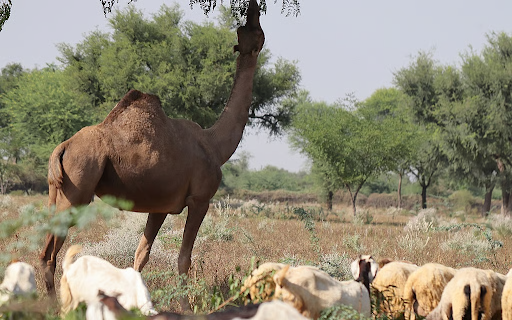
Village Commons, also known as Common Property Resources (CPRs), are community-managed shared resources in rural areas. They include grazing fields, community forests, ponds, tanks, and other areas collectively used by villagers for resources like fodder, fuel, and water.
The government is proposing this to enable accurate monitoring, formulate informed policies, combat encroachment and illegal privatization, and provide a strong legal framework for the protection and revival of these degraded lands.
According to the Economic Survey 2025-26, these ecosystems generate an estimated economic dividend of USD 9.05 crore per year. They are a critical source of livelihood for millions, especially landless and marginal farmers, by providing free resources like fodder, fuelwood, and minor forest produce.



© 2026 iasgyan. All right reserved