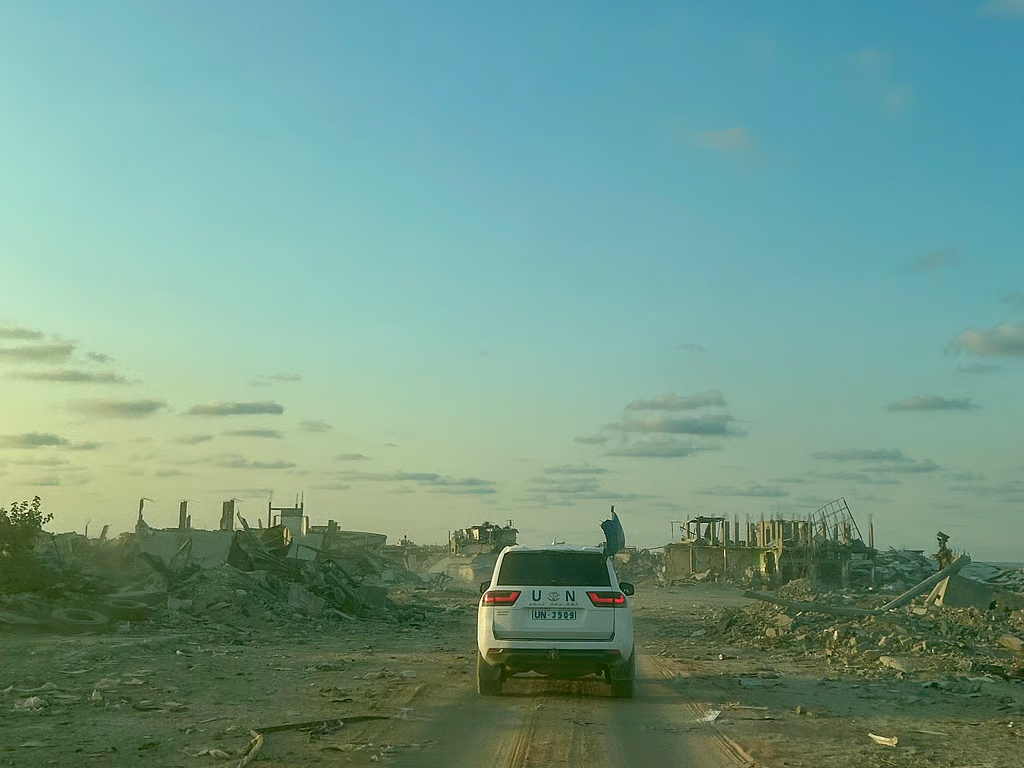
Modern warfare has a huge but overlooked carbon footprint, highlighted by the Israel–Gaza conflict with about 33 million tonnes CO₂e emissions. Military emissions remain underreported due to exemptions in the Kyoto Protocol and voluntary reporting under the Paris Agreement, demanding mandatory reporting and accountability under the UNFCCC.
Copyright infringement not intended
Picture Courtesy: DOWNTOEARTH
Context
Researchers from Queen Mary University of London estimate that the Israel–Gaza war has generated around 33 million tonnes of CO₂ equivalent emissions.
What is the Environmental Impact of War?
The environmental impact of the recent war in Iran has been described as a "silent catastrophe," primarily driven by the targeting of fossil fuel infrastructure and military facilities.
Atmospheric Pollution and "Toxic Black Rain"
Airstrikes on major oil depots in Tehran— ignited persistent fires that have released massive plumes of toxic smoke.
The "Black Rain" Phenomenon
The World Health Organization (WHO) confirmed that pollutants such as sulfur oxides, nitrogen compounds, and toxic hydrocarbons mixed with rain, falling as highly acidic "black rain" over Tehran.
Health Hazards
The precipitation is highly corrosive, posing risks of chemical burns to the skin and eyes, and severe lung damage upon inhalation.
Geographic Trapping
Tehran’s unique geography—surrounded by the Alborz mountain range—has trapped these pollutants, creating an "apocalyptic" shroud that has lowered air quality.
Contamination of Soil and Water
Toxin Leaks
Damage to missile facilities (such as Tabriz and Khojir) has raised concerns over unsymmetrical dimethylhydrazine and nitric acid, which are highly toxic liquid propellants that can permanently contaminate soil and groundwater.
Munition Residues
Heavy metals and energetic compounds like RDX and TNT from unexploded or partially destroyed munitions can migrate through soil and bioaccumulate in crops, posing long-term carcinogenic risks to the food chain.
Water Security
Strikes on the Qeshm Island desalination plant and similar facilities in Bahrain have crippled freshwater access in a region already suffering from a six-year drought.
Marine and Coastal Destruction
Oil Spills
The sinking of over 43 vessels, including the Iranian frigate Dena off the coast of Sri Lanka, has created massive oil slicks—the latter stretching 20 km and threatening ecologically sensitive coastal areas.
Ecosystem Collapse
Previous conflicts in the Persian Gulf led to the "nearly total annihilation" of hawksbill and green turtle populations; experts fear similar irreversible damage to marine biodiversity from current spills.
Climate Impact
The initial five days of the war emitted over 35,000 tons from jet and missile fuel. The Strait of Hormuz blockade forces longer, more carbon-intensive shipping routes, raising global emissions.
Broader Environmental Consequences Beyond Carbon
The environmental damage from war extends far beyond greenhouse gas emissions, causing long-lasting harm to ecosystems and human health.
Ecosystem Destruction
Warfare destroys forests, pollutes water sources, and contaminates agricultural land, impacting biodiversity and food security.
Toxic Remnants of War
Munitions leave behind hazardous materials like heavy metals and unexploded ordnance, which can contaminate soil and groundwater for decades, as documented by UNEP Post-Conflict Environmental Assessments.
Pollution from Damaged Infrastructure
Attacks on industrial facilities release dangerous pollutants. In Ukraine, strikes on oil depots led to spills of over 30,000 tons of oil, contaminating vital resources.
Conflict-Environment Cycle
Environmental degradation, such as desertification and land degradation, can trigger or prolong conflicts over scarce resources, creating a vicious cycle of violence and ecological damage.
Way Forward
Addressing the hidden climate costs of conflict requires a multi-pronged approach focused on transparency, accountability, and integration into global climate governance.
Mandatory and Transparent Reporting
Make military emissions reporting a mandatory requirement under the UNFCCC framework, using standardized methodologies developed by bodies like the Conflict and Environment Observatory (CEOBS).
Integration into Climate Targets
Nations must include military emissions in their Nationally Determined Contributions (NDCs) under the Paris Agreement to ensure a complete accounting of their carbon footprint.
Accountability and Reparations
Establish international legal norms for holding aggressor nations accountable for the environmental and climate damage caused by conflict.
Green Reconstruction
Post-conflict rebuilding needs sustainable, climate-resilient infrastructure. The "build back better" approach prevents high-carbon dependency and promotes long-term peace and stability.
Conclusion
Making the environmental cost of war visible through transparent reporting is crucial for accounting for the true price of conflict and integrating peace, security, and climate action for a sustainable future.
Source: DOWNTOEARTH
|
PRACTICE QUESTION Q. The carbon footprint of armed conflict remains a critical blind spot in international climate policy. Critically analyse. 150 words |
They are a 'blind spot' because international climate treaties like the Kyoto Protocol largely excluded them, and the subsequent Paris Agreement makes their reporting voluntary. This, combined with a lack of transparency and standardized methodology, prevents an accurate global accounting of these emissions.
Beyond carbon emissions, warfare leads to severe ecosystem destruction, contamination of land and water by toxic remnants like heavy metals and unexploded ordnance, pollution from attacks on industrial facilities, and contributes to resource scarcity, which can prolong conflict.
Green Reconstruction refers to post-conflict rebuilding efforts that prioritize sustainable infrastructure, renewable energy, and resilient ecosystems. The goal is to avoid locking in a high-carbon future and to use the recovery process to enhance long-term peace, environmental stability, and climate resilience.



© 2026 iasgyan. All right reserved