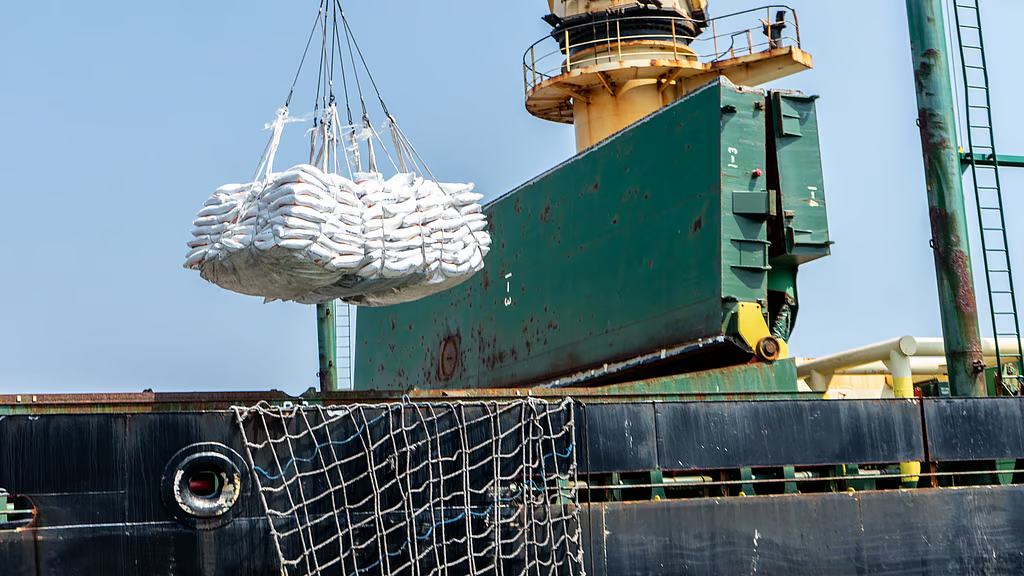
Escalating tensions in the Strait of Hormuz, a key global oil chokepoint, have disrupted energy and commodity supply chains, hitting Asia hardest. India faces risks to LPG supply and economic stability, prompting diversification and domestic output, while the IEA considers releasing strategic reserves.
Copyright infringement not intended
Picture Courtesy: DOWNTOEARTH
Context
The International Energy Agency (IEA) recently warned that energy shocks and global market disruptions could impact energy and food markets.
What is the International Energy Agency (IEA)?
Establishment: Founded in 1974 in the wake of the 1973 oil crisis (Arab oil embargo).
Nature: An autonomous intergovernmental organisation based in Paris, France.
Framework: Operates within the broader framework of the Organisation for Economic Co-operation and Development (OECD).
Original Mandate: To help industrialised nations coordinate a collective response to major oil supply disruptions.
Evolved Mandate (3 Es): The IEA now focuses on Energy Security, Economic Development, and Environmental Protection.
Membership Structure
As of early 2026, the IEA family consists of three categories:
Eligibility Criteria for Full Membership
To become a full member, a candidate must meet specific technical and legal requirements:
India and the IEA
Status: India has been an Associate Member since March 2017.
Full Membership Bid: India formally applied for full membership in October 2023. By early 2026, talks entered the final stages.
The "OECD Hurdle": Since India is not an OECD member, the IEA is considering amending its 1974 founding charter to allow India's entry, recognising it as the world’s 3rd largest energy consumer.
Current Reserves Gap: While the IEA requires 90-day reserves, India's current dedicated Strategic Petroleum Reserves (SPR) cover roughly 9.5 days (though total commercial and strategic stocks combined provide about 74 days)
Key Publications
Source: DOWNTOEARTH
|
PRACTICE QUESTION Q. With reference to the International Energy Agency (IEA), consider the following statements:
Which of the statements given above is/are correct? A) 1 and 2 only B) 2 and 3 only C) 1 and 3 only D) 1, 2 and 3 Answer: A Explanation: Statement 1 is Correct: The International Energy Agency (IEA) was established in 1974 (specifically November 1974) in the wake of the 1973-1974 oil crisis (triggered by the Arab oil embargo) to help countries coordinate a collective response to major disruptions in the supply of oil. Statement 2 is Correct: The IEA is an autonomous intergovernmental organization established within the framework of the Organization for Economic Co-operation and Development (OECD). Statement 3 is Incorrect: Membership in the IEA is open only to OECD member states. While most OECD members are also members of the United Nations, UN membership is not the defining criterion. |
The Strait of Hormuz is the world's most critical oil chokepoint. It connects the Persian Gulf to the open ocean and handles the passage of approximately a quarter of the global seaborne oil trade, along with massive volumes of liquefied natural gas (LNG) and other essential commodities, making it a vital artery for the global economy.
The government has initiated several measures: 1) Forming a committee to manage LPG allocations for commercial users. 2) Directing oil marketing companies to prioritize household consumers. 3) Instructing refineries to maximize domestic LPG output. 4) Actively diversifying supply sources by partnering with countries like Algeria, Australia, and Canada.
The IEA plays a crucial role in international coordination. It can authorize a coordinated release of oil from its members' strategic emergency reserves to inject supply into the market. This action serves as a temporary buffer to calm volatile prices, prevent panic, and provide time for diplomatic solutions to be found.

© 2026 iasgyan. All right reserved