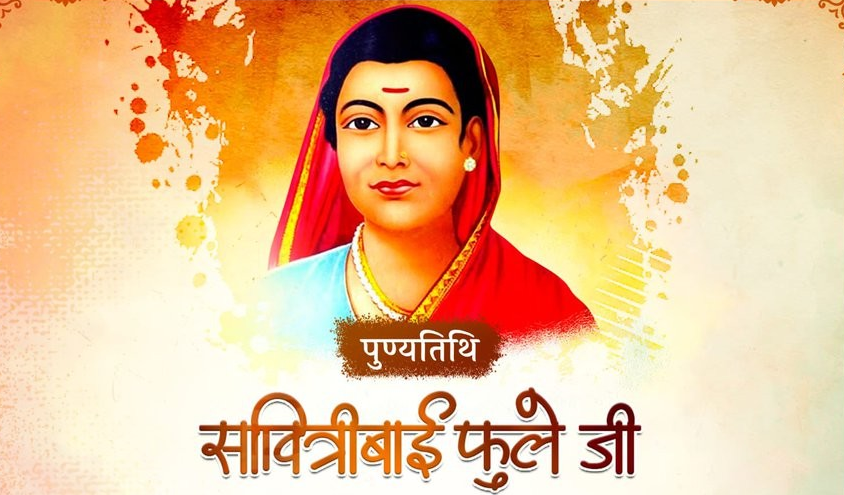
Savitribai Phule, a pioneering 19th-century reformer, advanced women’s education by starting India’s first girls’ school in 1848 with Jyotiba Phule. Through Satyashodhak Samaj, she fought caste and gender discrimination, becoming a foundational figure in India’s feminist and social justice movements.
Copyright infringement not intended
Picture Courtesy: PIB
Context
The government organised an event to honor Savitribai Phule for her foundational role in women’s education.
Who was Savitribai Phule?
Savitribai Phule (1831–1897) was a 19th-century social reformer, poet, and educator.
Widely regarded as India’s first female teacher, she is a central figure in the history of the social reform movement in Maharashtra and Indian feminism.
Pioneer of Women's and Caste-based Education
First Girls' School (1848): Along with her husband, Jyotirao Phule, she established India’s first school for girls at Bhide Wada, Pune.
Expansion of Education: By 1851, they were running three schools with approximately 150 girl students.
Teacher Training: She was one of the first Indian women to receive professional teacher training, attending programs in Ahmednagar and Pune.
Collaborators: She worked closely with Fatima Begum Sheikh, who is considered India’s first Muslim woman teacher.
Educational Trusts: They founded the Native Female School, Pune, and the Society for Promoting the Education of Mahars, Mangs, and Etceteras to formalize their mission.
Social Reform and Rights of Marginalized Communities
Satyashodhak Samaj (1873): Co-founded with Jyotirao, this "Truth-Seekers' Society" aimed to liberate Shudras and Ati-Shudras (Dalits) from exploitation and promote social equality.
Balhatya Pratibandhak Griha (1863): Established a care center for pregnant Brahmin widows and rape victims to prevent female infanticide and provide a safe delivery space.
Mahila Seva Mandal (1852): Founded to raise awareness about women’s rights. She organized a barbers' strike in Mumbai and Pune to protest the custom of shaving widows' heads.
Satyashodhak Marriage: She initiated marriages without dowry, Brahmin priests, or Brahminical rituals, emphasizing equality and self-respect.
Caste Equality: Phules opened the water well at their residence to members of the lower castes.
Literary Contributions
She is often called the "Mother of Modern Marathi Poetry" for her assertive and revolutionary literature. Her major works include:
Legacy and Last Days
Resilience: She carried a spare sari to school because orthodox groups would pelt her with stones, mud, and cow dung on her daily commute.
Humanitarian Sacrifice: During the 1897 bubonic plague, she and her adopted son, Yashwantrao, opened a clinic for victims.
Tributes: The University of Pune was renamed Savitribai Phule Pune University in 2014 as a tribute to her legacy.
Source: PIB
|
PRACTICE QUESTION Q. The 'Balhatya Pratibandhak Griha', a home for pregnant widows to prevent infanticide, was established by: A) Ishwar Chandra Vidyasagar B) Raja Ram Mohan Roy C) Savitribai and Jyotirao Phule D) Mahadev Govind Ranade Answer: C Explanation: The Balhatya Pratibandhak Griha (Infanticide Prohibition Home) was established in 1863 by the social reformers Savitribai Phule and her husband Jyotirao Phule. |
Savitribai Phule (1831-1897) was an Indian social reformer, educationalist, and poet from Maharashtra. She is widely regarded as India's first female teacher and a foundational figure in the country's feminist movement for her work in challenging caste discrimination and patriarchy.
Her most significant contribution was establishing the first school for girls run by Indians in Bhide Wada, Pune, in 1848, along with her husband Jyotiba Phule. This revolutionary act broke social barriers and laid the foundation for women's education in India.
The Satyashodhak Samaj (Truth-Seekers' Society), founded in 1873 by Jyotiba Phule with Savitribai as a key figure, was a social reform movement aimed at liberating the so-called lower castes (Shudras and Ati-Shudras) from social and religious exploitation by the Brahminical system.


© 2026 iasgyan. All right reserved