

Copyright infringement not intended
Picture Courtesy: THEHINDU
Context
The new government in Nepal has revitalized the bilateral partnership with India, aiming for a modern, stable, and youth-focused relationship between the two countries.
|
Read all about: India-Nepal Relations Explained l India Nepal Border Dispute |
The relationship between India and Nepal has evolved from historical friction to a model of "functional economic interdependence," focusing on the energy and digital sectors.
Foundation & Monarchical Balancing (1950s–1980s)
The Special Relationship
The bedrock of the ties was the 1950 Treaty of Peace and Friendship, which established an open border and granted "national treatment" to Nepalese citizens in India, allowing them to work and reside without visas.
Sovereignty Assertion
During this period, Nepal’s monarchy frequently used the "China Card" to balance India's influence, leading to diplomatic tensions and events like the 1989 trade blockade.
Democratic Transition & Developmental Focus (1990s–2014)
Support for Democracy
India supported Nepal's Pro-Democracy Movements in 1990 and 2006, and played a crucial role in the 2006 Comprehensive Peace Agreement, which integrated Maoists into mainstream politics.
Hydropower Cooperation
This era saw a focus on developmental partnerships, marked by key agreements like the Mahakali Treaty (1996) to harness Nepal's hydropower potential.
The "Low Point" & Map Dispute (2015–2020)
The 2015 Blockade
India's lukewarm response to Nepal's new constitution, led to an unofficial, months-long border blockade that generated severe humanitarian shortages and promoted deep anti-India sentiment in Nepal.
The 2020 Map Row
Nepal officially updated its political map to include the Kalapani-Limpiyadhura-Lipulekh region, an area administered by India. This remains a core territorial dispute.
Energy & Digital Pivot (2024–March 2026)
Hydropower "Game-Changer"
In January 2024, an agreement was signed for India to import 10,000 MW of electricity from Nepal over the next 10 years, making India Nepal's largest and most stable energy market.
Digital Connectivity
The integration of India's UPI with Nepal's National Payments Interface (NPI), simplifies remittances for millions of Nepalese workers in India.
Infrastructure Milestone
The 900 MW Arun-III Hydro Electric Project in Nepal, developed by India's SJVN Limited, is in its advanced construction phase.
Political Pragmatism
Bilateral cooperation on trade and connectivity has remained largely insulated from Nepal’s frequent political changes, including the 2025 Nepalese Gen Z protests.
Strategic and Security Importance
Himalayan Buffer State
Nepal serves as a geographical buffer between India and China. Its political stability is essential to prevent Chinese military or political encroachment towards India.
Open Border Management
India and Nepal share a 1751 km open border, effective management is needed to counter cross-border terrorism, human trafficking, and the smuggling of Fake Indian Currency Notes (FICN).
Unique Defence Ties
The Indian Army's Gorkha regiments have a strong institutional bond with Nepal's military, employing about 32,000 Nepalese nationals.
Economic and Energy Connectivity
Trade
Bilateral trade reached an estimated $8.5 billion to $8.7 billion in FY 2024-25, with India maintaining a trade surplus. (Source: MEA)
Nepal is India’s 14th largest export destination in 2024-25. Main exports from India to Nepal are petroleum, iron & steel, automobiles, machinery, cereals, etc.
Hydropower Potential
Nepal's theoretical hydropower capacity of 83,000 MW is crucial for India's clean energy targets. (Source: Nepal Electricity Authority)
Water Resource Management
Cooperation with Nepal on rivers like the Kosi and Gandak, which originate in its Himalayas, is essential for flood control and water management in Bihar and Uttar Pradesh.
Cultural and Soft Power Links
Civilisational "Roti-Beti" Bond
The shared Hindu and Buddhist heritage, centered around sites like Pashupatinath, Janakpur, and Lumbini, forms a deep-rooted cultural connection often described as "Roti-Beti" relations.
Religious Tourism
Integrated digital payment systems like UPI facilitate cross-border pilgrimages for millions, strengthening people-to-people ties.
Why India is Important to Nepal?
Economic Lifeline and Trade Transit
Primary Trade Partner: India accounts about two-thirds of Nepal’s merchandise trade. (Source: MEA)
Gateway to the World: As a landlocked country, Nepal depends almost entirely on Indian ports like Kolkata, Haldia, and Visakhapatnam for its trade with third countries.
Supplier of Essentials: Nepal relies on India for nearly 100% of its petroleum products and other critical goods like food, machinery, and pharmaceuticals. (Source: MEA)
Financial and Remittance Support
Employment Hub
Over 8 million Nepalese citizens live and work in India, and their remittances are a crucial pillar of Nepal's economy.
Digital Payment Integration
The seamless interoperability of UPI and Nepal’s FonePay QR code simplifies cross-border payments for workers, tourists, and traders.
Strategic Energy and Infrastructure Partner
Ready Energy Market
India provides a "ready and dynamic market" for Nepal's hydropower. The agreement to purchase 10,000 MW of power provides Nepal with a long-term, stable source of revenue.
Critical Connectivity Projects
India funds and builds vital infrastructure, including cross-border railways (Jayanagar-Kurtha), Integrated Check Posts, and the Motihari-Amlekhgunj petroleum pipeline.
Security and Crisis Support
First Responder in Crisis
India has consistently been the first nation to provide assistance during disasters, such as the 2015 earthquake and the 2024 floods.
Unique Military Tradition
The two armies share a special tradition where each other's Army Chiefs are awarded the honorary rank of General in the other's army, symbolizing deep trust.
Territorial and Border Disputes
The Kalapani Issue
Dispute over the Kalapani-Limpiyadhura-Lipulekh region. Nepal’s 2020 map amendment claiming this Indian-controlled territory has led to a diplomatic stalemate.
Susta Region
A long-standing dispute over the Susta area, caused by the shifting course of the Gandak River, remains unresolved.
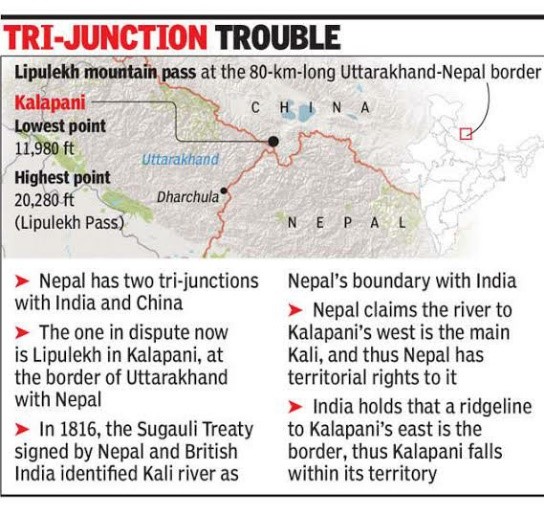 The "China Factor"
BRI vs Indian Projects: China’s deep involvement in Nepal through its Belt and Road Initiative (BRI), including proposed trans-Himalayan railways, directly challenges India’s traditional influence.
Security Concerns
India raises concern over increased Chinese presence near the sensitive Siliguri Corridor ("chicken’s neck").
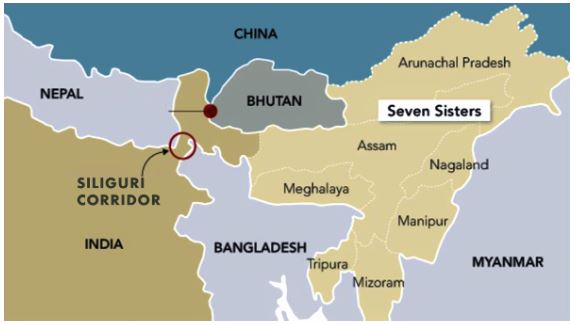 Political Instability & Trust Deficit
"Big Brother" Perception
A persistent feeling in Nepal that India interferes in its domestic politics, a sentiment that peaked during the 2015 blockade, creates a trust deficit .
Government Instability
Frequent government changes in Nepal slow down the implementation of bilateral projects.
Outdated Treaty & Modern Issues
1950 Treaty Revision
Nepal officially considers the treaty "unequal." The Eminent Persons Group (EPG) report suggesting revisions has not been formally accepted by India.
The recruitment of Nepalese Gorkhas has been suspended since 2022 due to Nepal’s objections to the four-year "Agnipath" term, which it believes violates the 1947 Tripartite Agreement.
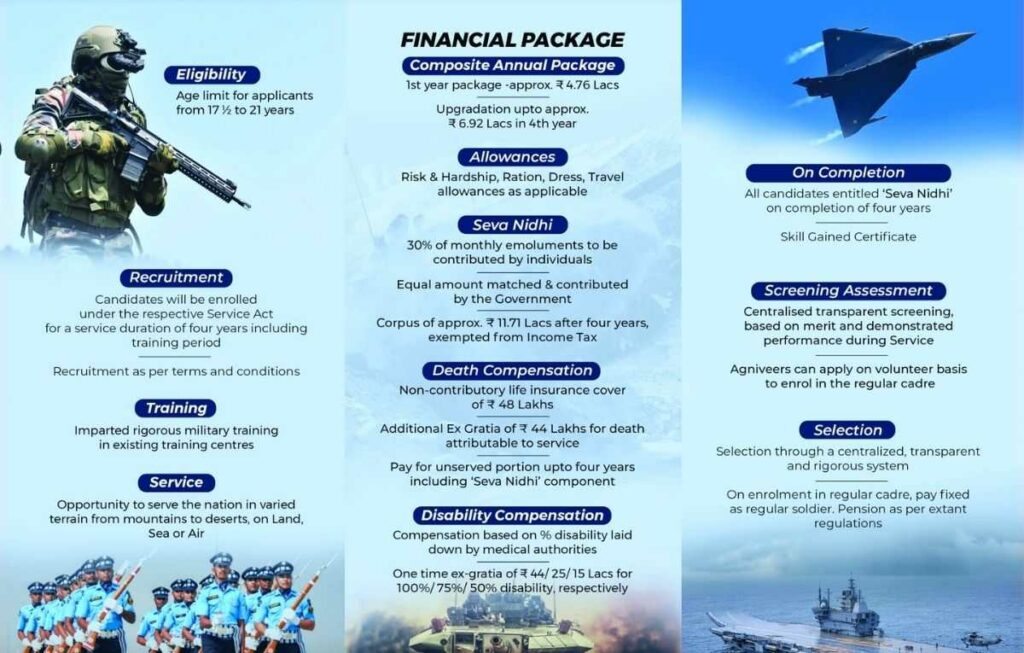 Way Forward for Strengthening Bilateral Ties
Resolve Boundary Irritants
Shift the Kalapani and Susta disputes from public rhetoric to quiet diplomatic channels, empowering technical bodies like the Joint Boundary Working Group to find a solution.
Accelerate Project Delivery
Ensure timely completion of projects like the Arun-III and Pancheshwar Multipurpose Project to enhance India's credibility as a reliable development partner.
Modernise the Treaty Framework
Formally address Nepal's concerns by reviewing the EPG report on the 1950 Treaty. Find a mutually acceptable solution for Gorkha recruitment under the Agnipath scheme to preserve a unique institutional legacy.
Deepen Digital and Soft Power Integration
Expand UPI-NPI linkages to rural areas to benefit workers and tourists. Explore establishing Indian educational hubs like IIT or AIIMS satellite campuses in Nepal.
Promote Trilateral Cooperation
Position India as a regional energy facilitator by continuing to support Nepal's electricity exports to Bangladesh through the Indian grid, strengthening BBIN integration.
The unique India-Nepal partnership is prioritizing "win-win" cooperation—highlighted by 10,000 MW power trade, digital payments, and infrastructure—to cement trust, boost regional economic integration, and stabilize the Himalayan region through sovereign equality and timely project execution.
Source: THEHINDU
|
PRACTICE QUESTION Q. While the new leadership in Kathmandu offers a 'fresh start,' traditional challenges like the Kalapani-Lipulekh dispute and the 'China factor' remain. Critically analyse. 150 words |
The relationship is built on deep-rooted historical, cultural, and geographical ties, often referred to as "Roti-Beti ka Rishta" (ties of food and family). The 1950 Treaty of Peace and Friendship serves as the formal foundation, establishing an open border and allowing citizens of both countries to live and work in either nation without a visa.
The Kalapani dispute is an unresolved territorial issue between India and Nepal concerning the regions of Kalapani, Lipulekh, and Limpiyadhura. The dispute stems from different interpretations of the 1816 Sugauli Treaty and remains a sensitive diplomatic challenge.
China's BRI is a strategic concern for India. While Nepal seeks infrastructure investment from China, India worries about potential "debt-trap" diplomacy. India counters this by offering a more transparent, grant-based, and sustainable development partnership to Nepal.
© 2026 iasgyan. All right reserved