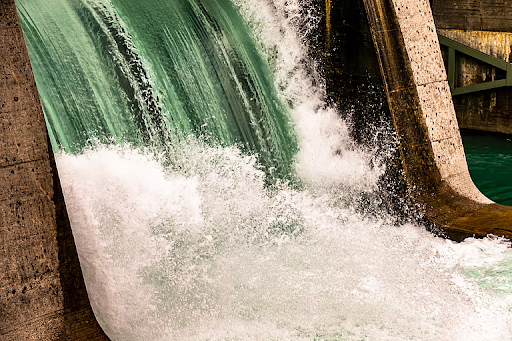
The Union Government will revive the Small Hydropower scheme in Budget 2026 with ₹2,500 crore, targeting 1.5 GW capacity. Focused on hilly and border regions, it promotes run-of-the-river projects, offering viable, decentralized renewable power with minimal ecological impact.
Copyright infringement not intended
Picture Courtesy: DOWNTOEARTH
The Union government is planning to revive the financial support scheme for Small Hydropower (SHP) projects.
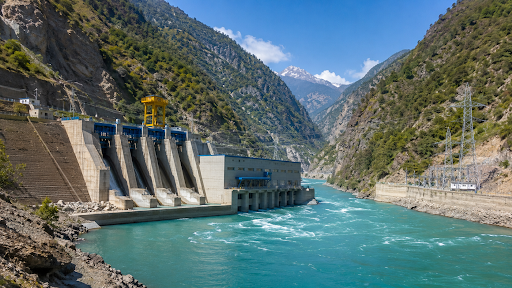
Definition: In India, hydropower projects with an installed capacity of 25 megawatts (MW) or less are classified as SHP projects.
Nodal Ministry: Ministry of New and Renewable Energy (MNRE)
Small hydropower policy, which included Central Financial Assistance (CFA) to boost private involvement was initially introduced in 2009 and revised in 2014.
Tapping Unutilized Potential
India has an identified Small Hydro Power (SHP) potential of over 21,133 MW across 7,133 sites, but the current installed capacity is only around 5.10 GW, untapped potential. (Source: PIB)
Ensuring Grid Stability
Unlike solar and wind, which are intermittent, SHP provides a stable and continuous power supply, crucial for balancing the grid as the share of variable renewables increases.
Decentralized Energy for Remote Areas
SHP projects, designed as 'run-of-the-river' systems, are ideal for electrifying remote and hilly areas where extending the national grid is economically unviable.
Contributing to Climate Goals
SHP is a clean energy source that directly supports the Nationally Determined Contribution (NDC) target of achieving 500 GW of non-fossil fuel-based energy capacity by 2030.
Policy and Financial Hurdles
Financial Viability: Discontinuation of central financial support has made new projects financially unattractive, especially with competition from cheaper solar power.
PPA Issues: Developers face difficulties in securing long-term Power Purchase Agreements (PPAs) at viable tariffs.
Environmental and Social Concerns
Ecological Impact: Cumulative impact of multiple projects in fragile ecosystems like the Himalayas has led to streams drying up, loss of aquatic biodiversity, and livelihood disruption.
Lack of Scrutiny: Rule exempting SHP projects from mandatory Environmental Impact Assessment (EIA) has led to inadequate assessment of their ecological footprint.
Local Opposition: Projects face opposition from local communities due to the disruption of traditional water sources like 'kuhls' (irrigation channels) and 'gharats' (water mills), with poor benefit-sharing mechanisms.
Operational and Technical Issues
Silt Erosion: In Himalayan rivers, high silt levels during monsoons cause rapid erosion of turbine components, leading to high maintenance costs and operational downtime.
Project Delays: Delays in land acquisition and obtaining forest clearances are major bottlenecks (Source: Parliamentary Committee Report).
Viability Gap Funding (VGF)
Government is considering a provision of ₹2,500 crore in VGF to cover 25-30% of project costs, making projects in difficult terrains more viable.
Stricter Monitoring
New guidelines will link financial aid to performance. Projects must generate at least 80% of their projected power to receive full support, with financial penalties for delays.
Strategic Focus
Special focus on developing SHP in hilly and border states like Arunachal Pradesh and Uttarakhand for strategic energy development.
Learning from successful models is key to reviving the sector sustainably.
|
Model |
Key Features |
Outcome |
|
China's Decentralized Model |
Promoted local manufacturing of equipment and provided robust incentives and technical standards. |
Reduced costs, built local capacity, and achieved widespread rural electrification. |
|
Nepal's Community Ownership |
Focused on community-owned and managed micro-hydro projects. |
Empowered local communities, spurred cottage industries, and reduced out-migration. |
|
Putsil Project, Odisha (India) |
A 14 kW micro-hydel project implemented with community consensus, labor contribution, and self-management. |
Demonstrated a sustainable, self-reliant model of decentralized energy without compromising irrigation needs. |
Adopt Basin-wide Assessments
Mandate Cumulative Impact Assessments (CIA) for all projects in a river basin, rather than project-specific EIAs, to protect fragile ecosystems.
Promote Community-Centric Models
Encourage benefit-sharing and community ownership to ensure local buy-in, reduce conflicts, and channel development benefits to affected people.
Strengthen Indigenous R&D
Invest in developing efficient, silt-resistant turbines suited for Indian rivers and promote domestic manufacturing under the 'Make in India' initiative.
Ensure Policy Stability
Provide a long-term, stable policy with predictable tariffs and a single-window clearance mechanism to attract private investment.
Integrate into Hybrid Projects
Promote the integration of SHP with solar and wind to create hybrid renewable energy systems that can provide Round-The-Clock (RTC) power and enhance grid stability.
The Small Hydropower scheme's revival is vital for energy and climate goals, but its success requires a policy that integrates environmental sustainability, community involvement, and financial viability.
Source: DOWNTOEARTH
|
PRACTICE QUESTION Q."Small Hydropower (SHP) projects are the key to balancing ecological preservation with energy security in fragile Himalayan ecosystems." Critically analyze. (250 words) |
Hydropower projects with an installed capacity of 25 megawatts (MW) or less are classified as Small Hydropower (SHP) projects. They are considered a renewable energy source and are managed by the Ministry of New and Renewable Energy (MNRE).
Government aims to revive the SHP scheme to tap into India's vast unutilized potential (over 21,000 MW), enhance grid stability with a stable power source to complement intermittent solar/wind energy, electrify remote and border areas, and contribute to India's climate goals of achieving 500 GW of non-fossil fuel capacity by 2030.
The scheme was discontinued in 2017 due to several factors, including budgetary constraints, significant delays in project completion, and a major policy shift towards solar and wind energy, whose costs were falling rapidly.

© 2026 iasgyan. All right reserved