The SHANTI Bill, 2025 revamps India’s nuclear sector by allowing private operators with up to 49% FDI, repealing legacy laws. It seeks investment to reach 100 GW nuclear capacity by 2047, boost energy security and meet Net Zero goals, while tackling funding and liability hurdles.
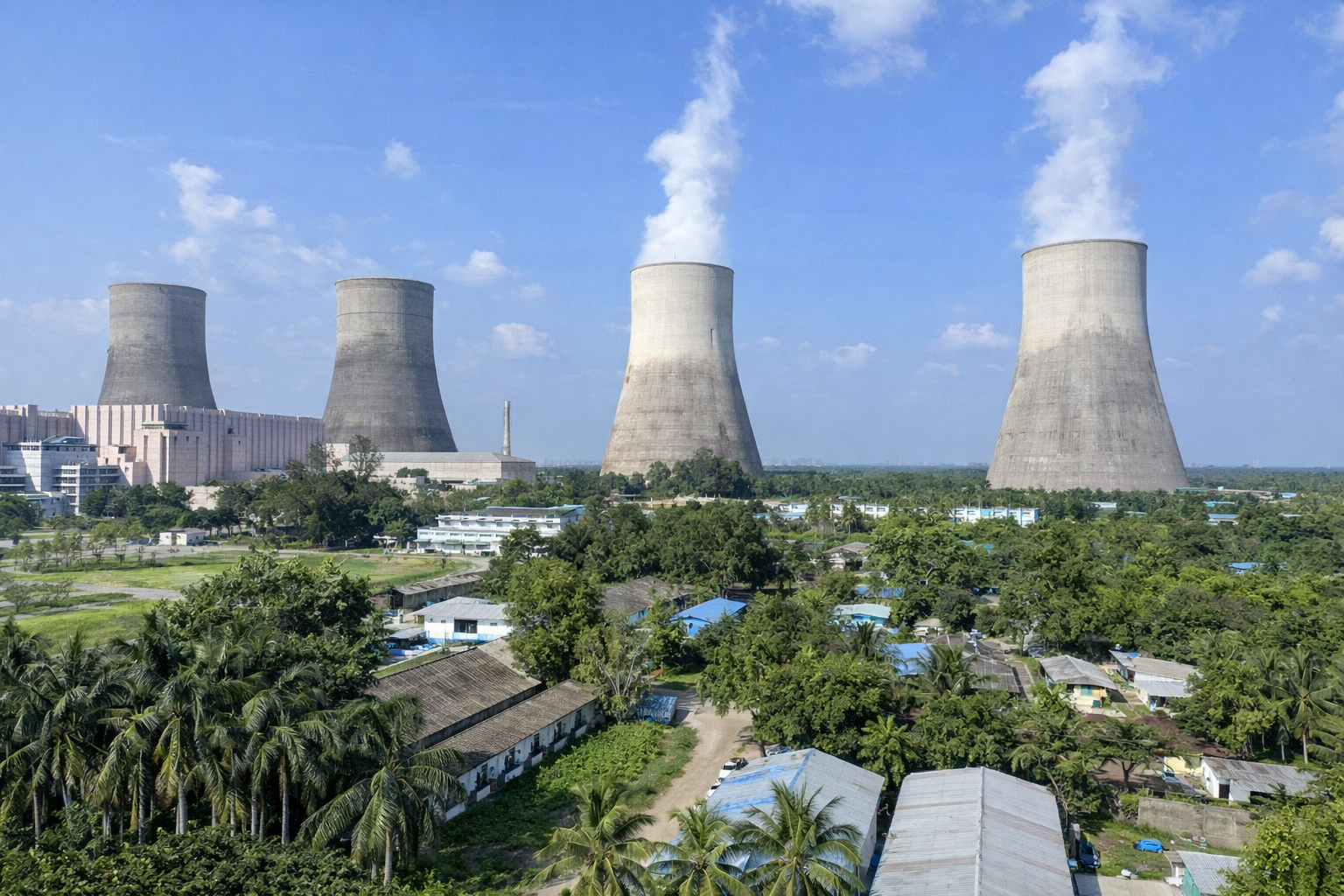
Copyright infringement not intended
Picture Courtesy: ECONOMICTIMES
Context
The Union Government has introduced the Sustainable Harnessing and Advancement of Nuclear energy for Transforming India (SHANTI) Bill 2025 in Lok Sabha.
|
Read all about: SHOULD INDIA AMEND ITS NUCLEAR ENERGY LAWS? l INDIA OPENS UP NUCLEAR SECTOR l NUCLEAR ENERGY MISSION IN BUDGET l NUCLEAR SECTOR OPENS TO PRIVATE |
The Union Government introduced the SHANTI Bill (Atomic Energy Bill, 2025) to reform the nuclear energy sector.
It aims to modernize the legal framework by replacing the Atomic Energy Act, 1962, and the Civil Liability for Nuclear Damage Act, 2010, with a single, unified law.
Outdated legal frameworks have limited India's nuclear sector growth; the proposed reform seeks to address these issues.
Ambitious Climate & Energy Targets
Rising Electricity Demand: India's rising electricity demand, driven by growth and industrialization, needs nuclear power's reliable, 24/7 baseload to complement intermittent solar and wind.
Limitations of Existing Framework
The Bill proposes replacing the Atomic Energy Act, 1962, and the CLND Act, 2010, with a single, modern legal framework.
Private Sector Participation
Allows private companies (Indian & foreign) to set up and operate nuclear power plants, with a proposed equity cap of up to 49% in joint ventures.
Scope of Private Involvement
Opens up project development, construction, operations, fuel fabrication, and equipment manufacturing. Focus on promoting innovation in Small Modular Reactors (SMRs).
Continued State Control
Strategic areas like uranium enrichment, heavy water production, and spent fuel management remain under the exclusive control of the Department of Atomic Energy (DAE).
Regulatory Framework
Confers statutory status on the Atomic Energy Regulatory Board (AERB) to strengthen its independence, authority, and oversight capabilities.
Civil Liability Regime
Proposes a "pragmatic" liability framework, channeling responsibility to the operator, to align with global norms and resolve the supplier liability issue hindering international cooperation.
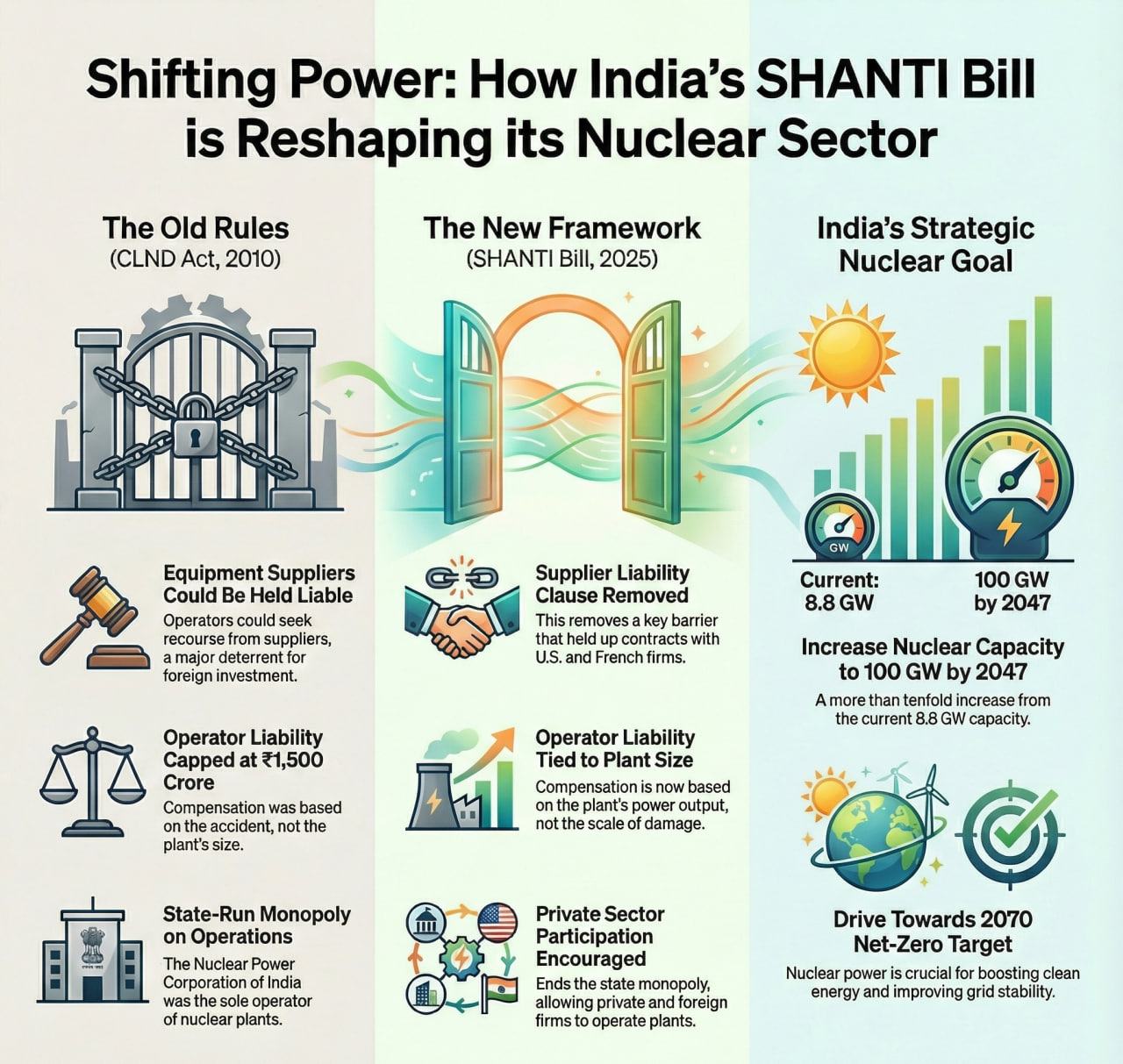
Source: ECONOMICTIMES
|
PRACTICE QUESTION Q. "While allowing private sector participation is crucial for energy security and climate goals, its success depends on a robust regulatory framework and public trust." Critically analyze. 150 words |
The Sustainable Harnessing and Advancement of Nuclear Energy for Transforming India (SHANTI) Bill, 2025, is a proposed law that aims to allow private companies to build, own, and operate nuclear power plants in India. It seeks to replace the existing Atomic Energy Act, 1962, and the Civil Liability for Nuclear Damage Act, 2010.
India has an ambitious target of increasing its nuclear power capacity to 100 GW by 2047. This requires an estimated investment of over $200 billion, which cannot be met by public funds alone. Private participation is essential to bridge this funding gap, enhance operational efficiency, and accelerate project execution to meet India's energy security and climate goals.
Small Modular Reactors (SMRs) are advanced nuclear reactors that are smaller in size and power output compared to conventional large-scale reactors. They are designed to be factory-built and transported to a site for installation, potentially making them more scalable, cost-effective, and quicker to build, which is attractive for private investors.





© 2026 iasgyan. All right reserved