In a rare event, parts of Saudi Arabia saw snowfall after polar air met a moist low-pressure system. Scientists link rising such extremes to Arctic-driven jet stream shifts. The episode exposes climate vulnerability and highlights responses under the Saudi Green Initiative and Vision 2030.
Copyright infringement not intended
Picture Courtesy: INDIATODAY
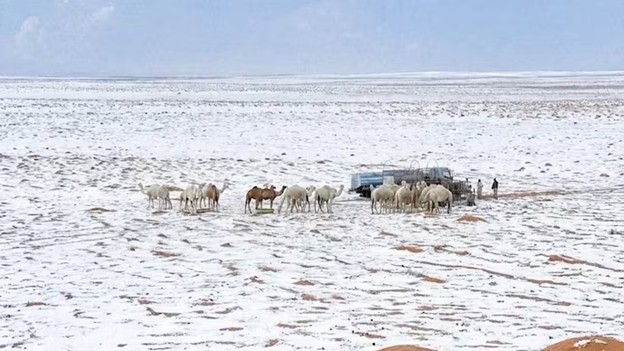
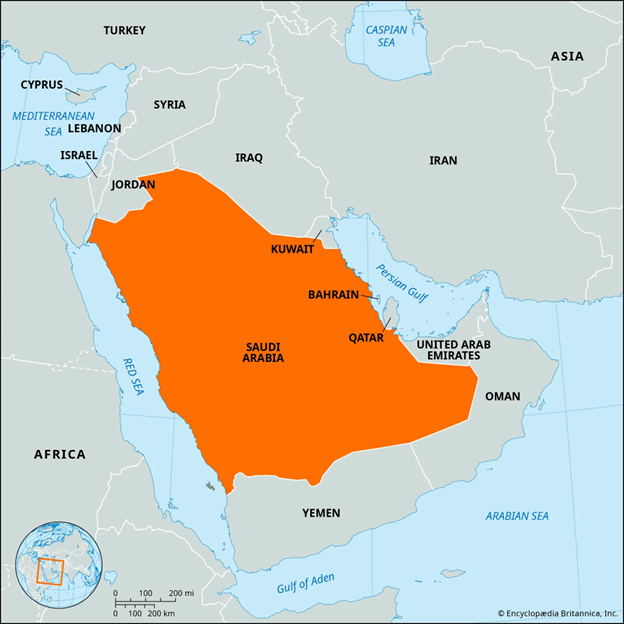
In December 2025, Saudi Arabia's northern and central desert regions saw rare and widespread snowfall, the first of such extent in about 30 years.
Snowfall is a form of solid precipitation consisting of crystalline water ice flakes that fall from clouds and accumulate on the ground.
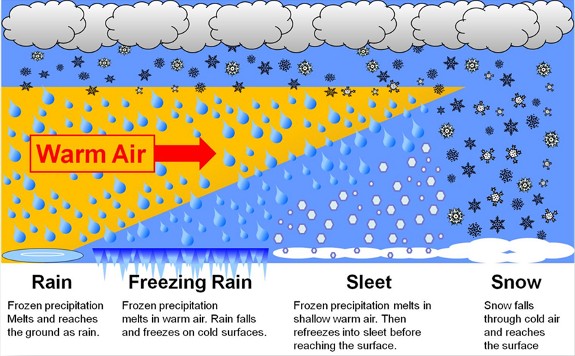
How Snow Forms
Snow forms through a process called deposition, where water vapor in the atmosphere turns directly into ice crystals without first becoming liquid.
Types of Snowfall Events
Characteristics of Fallen Snow
Geographical and Meteorological Factors
The occurrence of snowfall in a desert nation, though uncommon, is directly linked to a unique combination of atmospheric factors.
|
Factor |
Details |
|
Cold Air Mass Intrusion |
A powerful and deep low-pressure system pushed a very cold polar air mass south from Europe and the Mediterranean Sea into the Arabian Peninsula. |
|
Moisture Influx |
Simultaneously, a low-pressure system extending from the Arabian Sea carried significant moisture northward into the region. |
|
Atmospheric Collision |
The collision of this cold, dry polar air with the warm, moist air created atmospheric instability, leading to widespread rain, hailstorms, and, in high-altitude areas where temperatures fell below freezing, heavy snowfall. |
The Climate Change Connection
Recognizing its vulnerability to climate change, Saudi Arabia has integrated environmental goals into its long-term economic and social blueprint, Vision 2030.
These initiatives aim to mitigate climate change and diversify the economy away from fossil fuels.
Source: INDIATODAY
|
PRACTICE QUESTION Q. The recent snowfall in Saudi Arabia is a stark reminder that no region is immune to the cascading effects of climate change. Critically analyze. 150 words |
The snowfall was caused by a specific meteorological event: a strong, cold air mass originating from the north collided with a moist, low-pressure system over the high-altitude regions of Saudi Arabia. This caused the moisture to cool rapidly and fall as snow.
While a single event cannot be solely blamed on climate change, its increasing frequency aligns with scientific models. Climate change, particularly Arctic Amplification, weakens the polar vortex. This creates a wavier, slower jet stream that can dip further south, carrying frigid polar air to regions like the Middle East.
The polar vortex is a large area of low pressure and cold air that surrounds the Earth's poles. Normally, a strong jet stream keeps this cold air contained. When the vortex weakens due to global warming, the jet stream meanders, allowing cold polar air to escape and push south into regions that are typically much warmer.


© 2026 iasgyan. All right reserved