Retail inflation in India has remained at historically low levels due to a sharp fall in food prices, strong base effects, and proactive supply-side interventions by the government. Despite a mild rise in fuel and select non-food prices, overall inflation continues to stay well below the RBI’s comfort zone, reflecting subdued demand conditions and a phase of price stability.
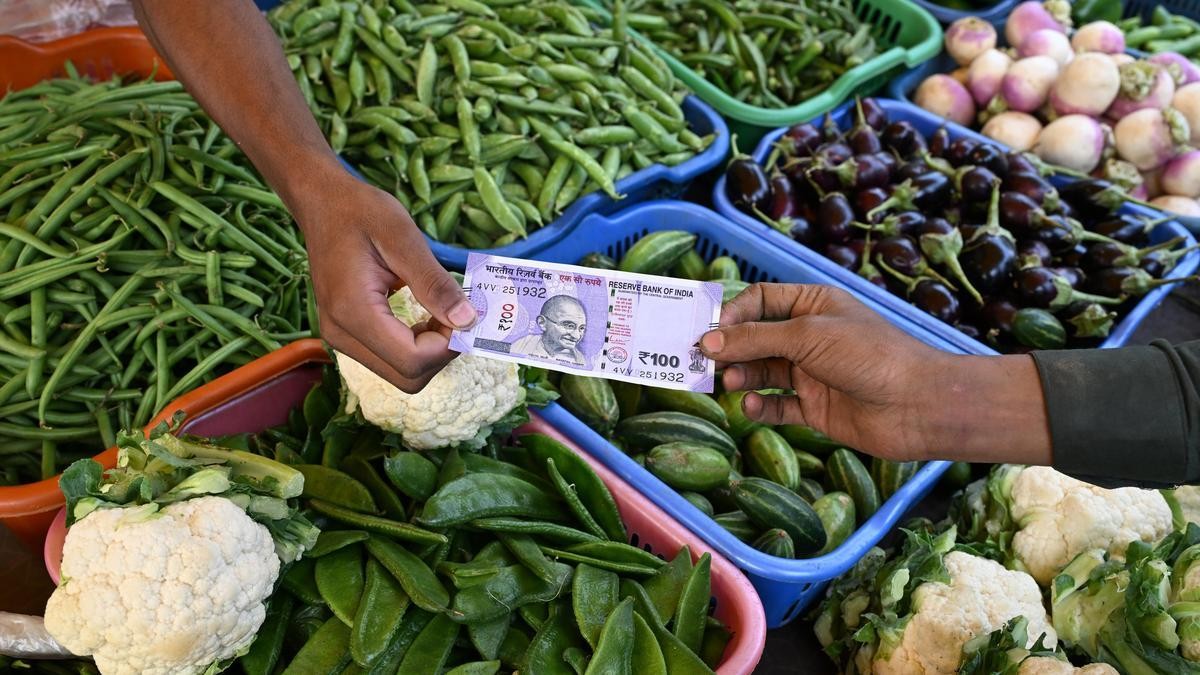
Rise in retail inflation
Copyright infringement not intended
Picture Courtesy: The Hindu
Retail inflation (CPI) in India rose to 0.71 % in November 2025, up from a record low of 0.25 % in October 2025.
|
Must Read: RETAIL INFLATION | INDIA’S RETAIL INFLATION | RETAILS INFLATION & CURRENT DYNAMICS | |
Retail inflation refers to the general increase in prices of goods and services purchased by households for day-to-day consumption, reflecting the cost that consumers actually face in markets and shops.
In India, retail inflation is measured through the Consumer Price Index (CPI), which monitors changes in the prices of a representative basket of essential goods and services commonly consumed by households.
The base year for CPI calculation is 2012, which serves as the reference point for measuring price movements over time.
The CPI data is compiled and released every month by the Ministry of Statistics and Programme Implementation (MoSPI), providing a key indicator of price trends in the economy.
The Reserve Bank of India (RBI) uses CPI inflation as the primary benchmark for monetary policy and seeks to maintain inflation within a target range of 2% to 6%, balancing price stability with economic growth.
Sharp Contraction in Food Prices: Food and beverages account for around 46% of the CPI basket, making food inflation the most decisive factor in retail inflation.
Strong Base Effect: Inflation is measured on a year-on-year basis, and the comparison base for 2025 was unusually high.
In late 2024, food inflation was elevated due to weather shocks and supply disruptions.
Stable Core Inflation
Core inflation (excluding food and fuel) remained contained, reflecting subdued demand-side pressures.
Boosting rural demand and incomes: Low inflation driven by falling food prices can hurt farm incomes. To counter this, the government supports rural purchasing power through:
Rationalising Food Supply Interventions
While aggressive supply-side controls help curb inflation, the government may gradually calibrate interventions to avoid excessive price suppression:
Support to Consumption through Welfare Schemes
Continuation and rationalisation of welfare schemes such as:
These measures reduce distress but also free up household income for discretionary spending, supporting demand-led price normalisation.
Retail inflation in India has remained exceptionally low in recent months, driven mainly by a sharp contraction in food prices, favourable base effects, and proactive supply-side interventions by the government. Despite a marginal uptick due to fuel and select non-food items, inflation continues to stay well below the RBI’s comfort zone, indicating subdued demand pressures. Overall, the trend reflects a phase of price stability, though sustained low inflation calls for careful policy calibration to avoid deflationary risks while supporting growth.
Source: The Hindu
|
Practice Question Retail inflation in India has fallen to historically low levels in recent months. Discuss (150 words). With reference to retail inflation in India, consider the following statements: 1. Retail inflation is measured using the Consumer Price Index (CPI), which reflects price changes faced by households. 2. Food and beverages have the highest weight in the CPI basket, making food prices a key driver of retail inflation. 3. Retail inflation is published by the Reserve Bank of India on a quarterly basis. 4. The RBI uses CPI-based retail inflation as the primary nominal anchor for monetary policy. Which of the statements given above are correct? A. 1 and 2 only Answer: B Explanation · Statement 1 is correct: Retail inflation captures changes in prices paid by consumers and is measured through the Consumer Price Index (CPI). · Statement 2 is correct: Food and beverages carry the largest weight (about 46%) in the CPI basket, making food prices the most influential component of retail inflation in India. · Statement 3 is incorrect: CPI-based retail inflation is published monthly by the Ministry of Statistics and Programme Implementation (MoSPI), not by the RBI and not on a quarterly basis. · Statement 4 is correct: Since 2016, the RBI has adopted CPI inflation as the nominal anchor under the flexible inflation targeting framework, with a target range of 2–6%. |
Retail inflation refers to the increase in prices of goods and services purchased by households, reflecting the cost of living for consumers.
It is measured using the Consumer Price Index (CPI), which tracks price changes of a fixed basket of commonly consumed goods and services.
Retail inflation data is released monthly by the Ministry of Statistics and Programme Implementation (MoSPI).





© 2026 iasgyan. All right reserved