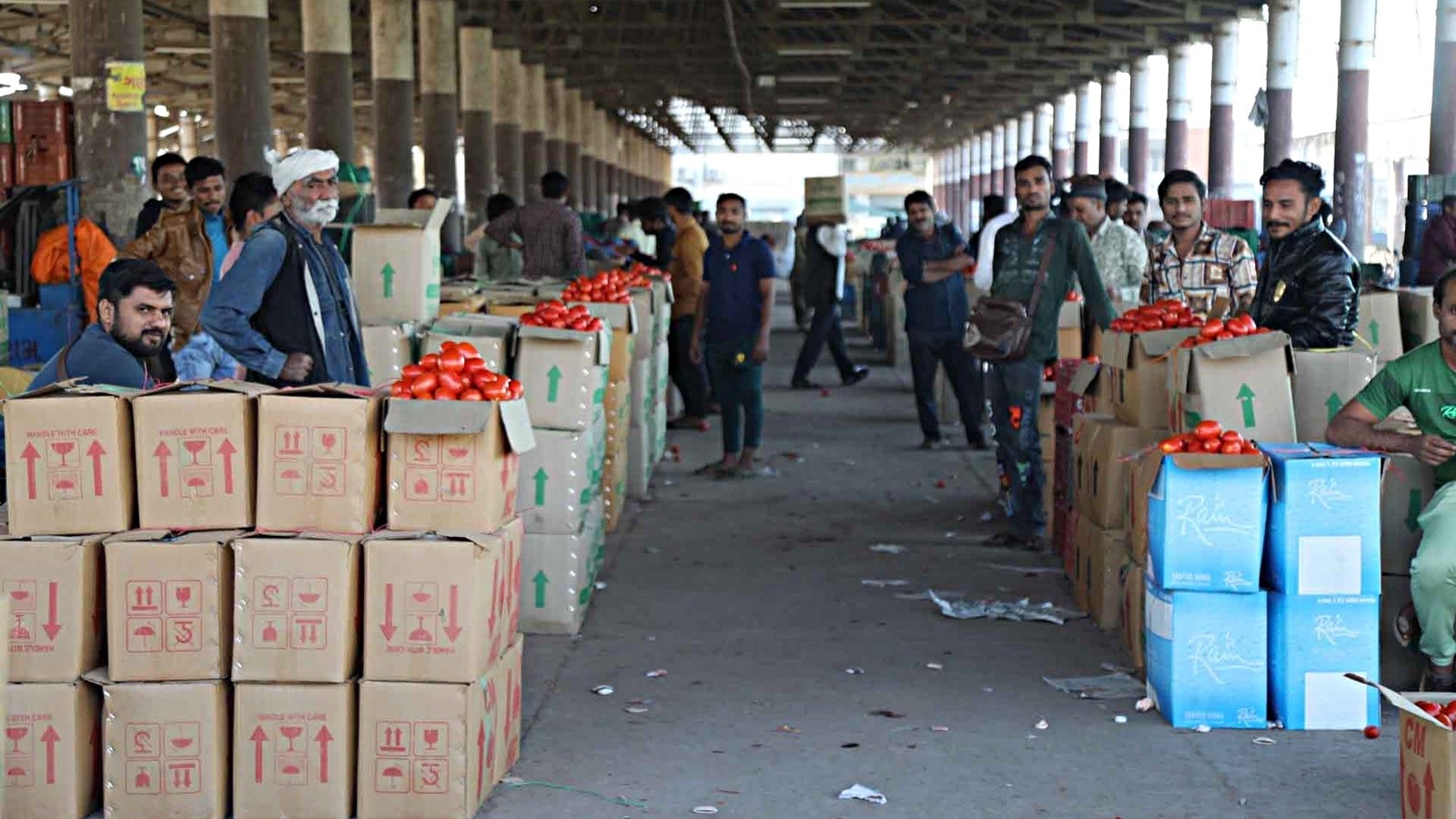
India’s consumption recovery appears uneven and fragile, as recent improvements have been driven more by lower inflation, tax relief, and credit expansion than by strong wage growth. Rural demand has benefited from easing price pressures, while urban spending remains constrained by modest income growth and rising living costs. Increasing household debt and cautious consumer sentiment further highlight the structural weakness in demand. Sustainable consumption growth will depend on broad-based increases in real wages, better employment opportunities, and stronger household financial stability rather than temporary policy stimulus.
Copyright infringement not intended
Picture Courtesy: Indian Express
Context:
In recent years, private consumption i.e. the main driver of India’s GDP has shown signs of uneven recovery despite policy measures such as income tax cuts, GST rate rationalisation, and RBI interest rate reductions. While these steps temporarily boosted spending, especially during festival periods, survey and wage data indicate that household income growth remains weak, particularly in real terms.
|
Must Read: IS CONSUMPTION ENOUGH TO DRIVE GROWTH? | CONSUMPTION-BASED POVERTY ESTIMATES | |
Current status of consumption in India:
Reasons behind low consumption growth in India:
Key highlights of the RBI’s consumer confidence survey:
Challenges related to India’s consumption slowdown:
Government initiatives to boost consumption in India:
Tax relief measures to enhance disposable income: The Government of India reduced individual income tax rates in recent budgets under the new tax regime to put more money in the hands of middle-class taxpayers, a step aimed at boosting consumption, savings, and investment by increasing disposable income.
GST rationalisation to lower prices and stimulate demand: By rationalising Goods and Services Tax (GST) rates on multiple items, the government helped lower retail prices of goods, which encouraged spending on consumer durables and helped revive household demand after earlier subdued price conditions.
Rural employment guarantee through VB-G RAM G Act: The enactment of the Viksit Bharat–Guarantee for Rozgar and Ajeevika Mission (Gramin) Act, 2025 expanded rural employment guarantees from 100 to 125 days, increasing rural incomes and reducing income uncertainty for households dependent on rural labour markets.
Boosting job creation through employment linked incentives: The Pradhan Mantri Viksit Bharat Rozgar Yojana, with an outlay of around ₹1 lakh crore and a target to create over 3.5 crore jobs, is designed to generate formal employment, thereby increasing wages, stabilising incomes and supporting consumption growth.
Credit expansion and financial inclusion support: The government introduced new credit assessment models enabling public sector banks to extend over ₹52,300 crore in loans to nearly 4 lakh borrowers, facilitating easier access to credit for households and small businesses, which can help support consumption and entrepreneurial activity.
Targeted rural livelihoods and entrepreneurship support: Programmes like the Start-up Village Entrepreneurship Programme (SVEP) have received renewed budget support (over ₹18 crore in UP alone) to promote rural self-employment, boost incomes of Self-Help Groups (SHGs), and expand non-farm economic activities.
Increased allocations for rural and social welfare schemes: Ahead of Budget 2026–27, the government has signalled higher budget allocations for schemes such as MGNREGA, PM-KISAN, and PMAY, which support essential consumption by stabilising rural income and improving access to housing, though within fiscal constraints.
Way Forward:
Promote income-led rather than debt-led growth: Policy focus should shift from temporary tax relief and credit expansion to sustained growth in household incomes, as long-term consumption can only be supported when wages rise steadily across sectors.
Boost labour-intensive manufacturing: Encouraging sectors such as textiles, food processing, leather, toys, and electronics assembly can generate large-scale employment, helping raise wages and expand the base of income earners who drive mass consumption.
Strengthen rural non-farm employment: Expanding rural industries, agro-processing clusters, and services can reduce dependence on agriculture and provide stable, year-round income, making rural demand less vulnerable to monsoon shocks.
Enhance MSME productivity and formalisation: Improving access to affordable credit, technology, and market linkages for MSMEs can increase productivity and profitability, enabling firms to pay better and more stable wages.
Increase female labour force participation: Improving childcare support, safe transport, skilling, and workplace flexibility can bring more women into the workforce, thereby raising household incomes and overall consumption capacity.
Invest in skill development linked to industry: Aligning skilling programmes with industry demand ensures workers move into higher-productivity and better-paying jobs, which strengthens wage growth and long-term spending power.
Conclusion:
India’s consumption recovery remains fragile because it is being supported more by low inflation and credit expansion than by strong, broad-based wage growth. For demand to become durable and inclusive, policy must focus on raising employment quality, productivity, and real incomes rather than relying only on temporary stimulus measures.
Source: Indian Express
|
Practice Question Q. India’s consumption recovery remains fragile due to weak wage growth rather than lack of fiscal stimulus. Discuss. (250 words) |
Income-led consumption refers to spending driven by sustained increases in household wages and earnings, rather than temporary factors like tax cuts or borrowing.
Consumption improved temporarily due to lower inflation, festive purchases, and easier access to credit, which boosted purchasing power without a parallel rise in incomes.
Lower inflation increases real purchasing power, but if inflation rises again without matching wage growth, households cut discretionary spending.



© 2026 iasgyan. All right reserved